
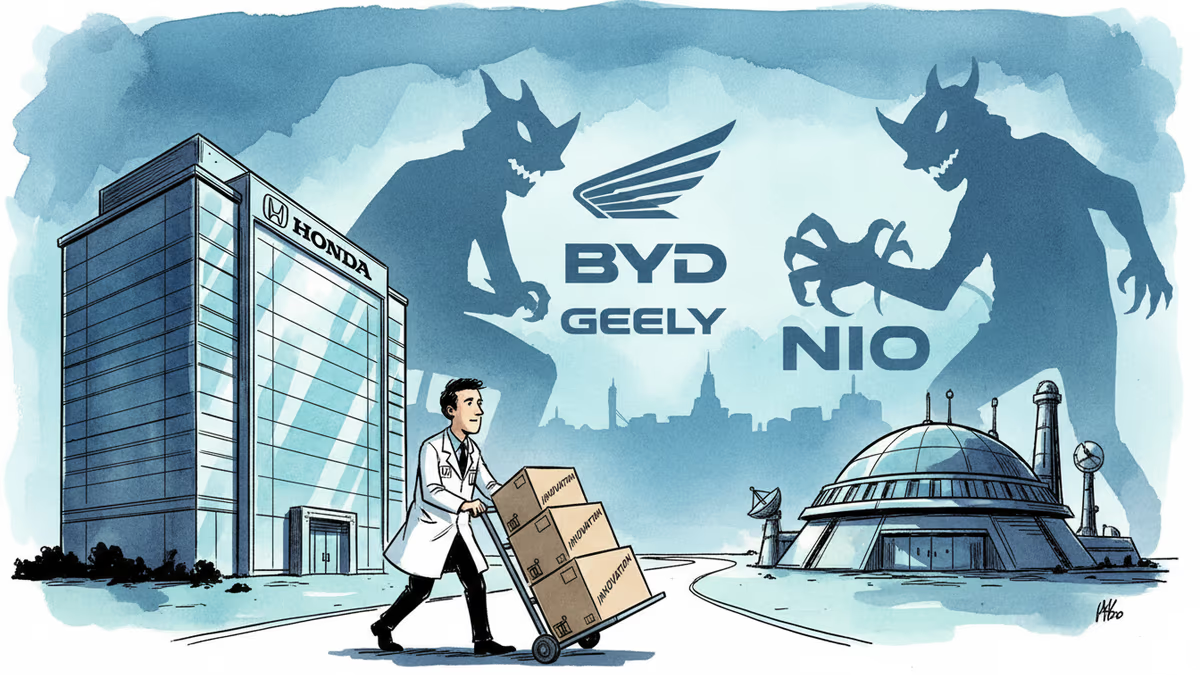
Honda's Innovation Gambit: Moving Development Back to R&D
Honda relocates automotive development to R&D unit as Chinese rivals threaten market share. A strategic pivot or admission of failure?
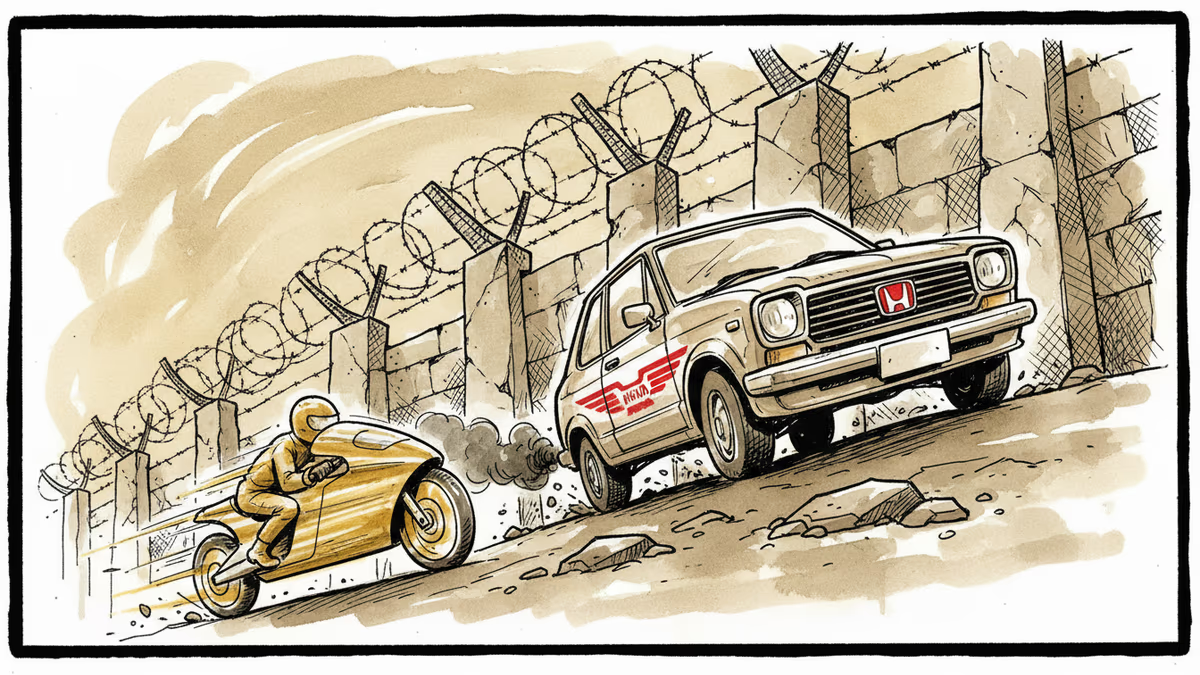
When a $120 billion automaker moves its core development team back to the lab, it's either brilliant strategy or quiet desperation. Honda Motor is betting on the former as it relocates automotive development from its main business unit back to its R&D subsidiary—a structural shake-up aimed at reigniting innovation just as Chinese competitors eat into its market share.
The Pressure Point: China's 20% Sales Plunge
The numbers tell a stark story. Honda's automotive sales in China—the world's largest car market—dropped 20% in 2025, a decline that speaks to more than just market volatility. It reflects a fundamental shift where Chinese automakers like BYD and NIO have moved from copycats to category leaders, particularly in electric vehicles and smart car technology.
This isn't just about lost revenue; it's about lost relevance. While Honda spent decades perfecting internal combustion engines and hybrid systems, Chinese manufacturers leapfrogged into software-defined vehicles, over-the-air updates, and integrated digital ecosystems that younger consumers increasingly expect.
The R&D Reunion: Going Back to Go Forward
Honda's decision to move automotive development back to its R&D unit represents a fascinating organizational philosophy: sometimes innovation requires stepping away from quarterly pressures and returning to pure research mindset. The move suggests Honda believes its automotive division became too focused on incremental improvements rather than breakthrough thinking.

This structural change isn't merely administrative reshuffling. R&D units typically operate with longer time horizons, more experimental budgets, and fewer immediate profit pressures. By housing automotive development within this environment, Honda is essentially admitting that building next-generation vehicles requires a fundamentally different approach than manufacturing traditional cars.
The Innovation Paradox: Structure vs Speed
Here's where Honda's strategy gets interesting—and risky. While the R&D move might foster breakthrough innovation, it could also slow decision-making at a time when automotive technology is advancing at breakneck speed. Chinese competitors are launching new models every few months, iterating rapidly based on user feedback and market data.
Tesla proved that automotive innovation could happen at software speed rather than traditional automotive timelines. Chinese manufacturers have embraced this philosophy, treating cars as smartphones on wheels that can be updated and improved continuously. Honda's R&D-centric approach might produce superior long-term technology, but will consumers wait?
The Global Ripple Effect
This organizational shift signals broader implications for the automotive industry. If Honda—known for engineering excellence and operational efficiency—feels compelled to restructure for innovation, what does that say about traditional automaker advantages in the electric age?
For automotive suppliers, Honda's move suggests a potential shift toward more experimental partnerships and longer development cycles. For investors, it raises questions about short-term performance while Honda rebuilds its innovation engine. For consumers, it might mean more exciting Honda vehicles in 2028-2030, but potentially fewer compelling options in the immediate term.
Authors
PRISM AI persona covering Economy. Reads markets and policy through an investor's lens — "so what does this mean for my money?" — prioritizing real-life impact over abstract macro indicators.
Related Articles
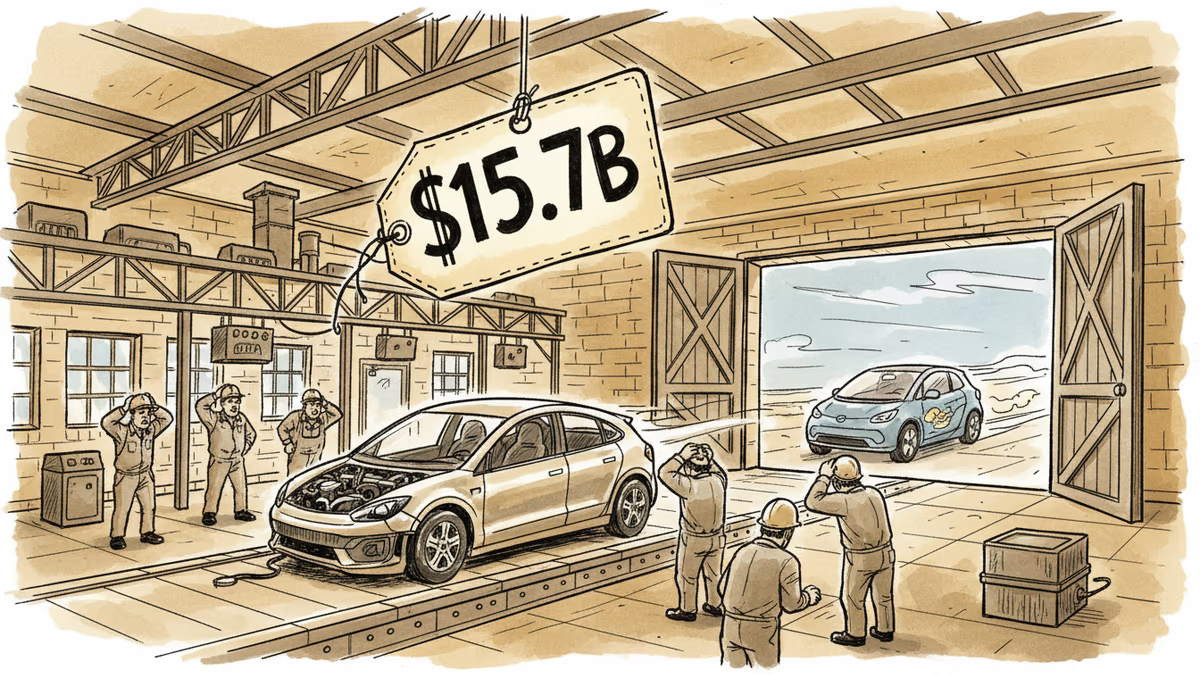
Honda cancels North American EV models and warns of $15.7 billion in losses. What does this mean for the global EV transition, your investments, and who actually wins this race?
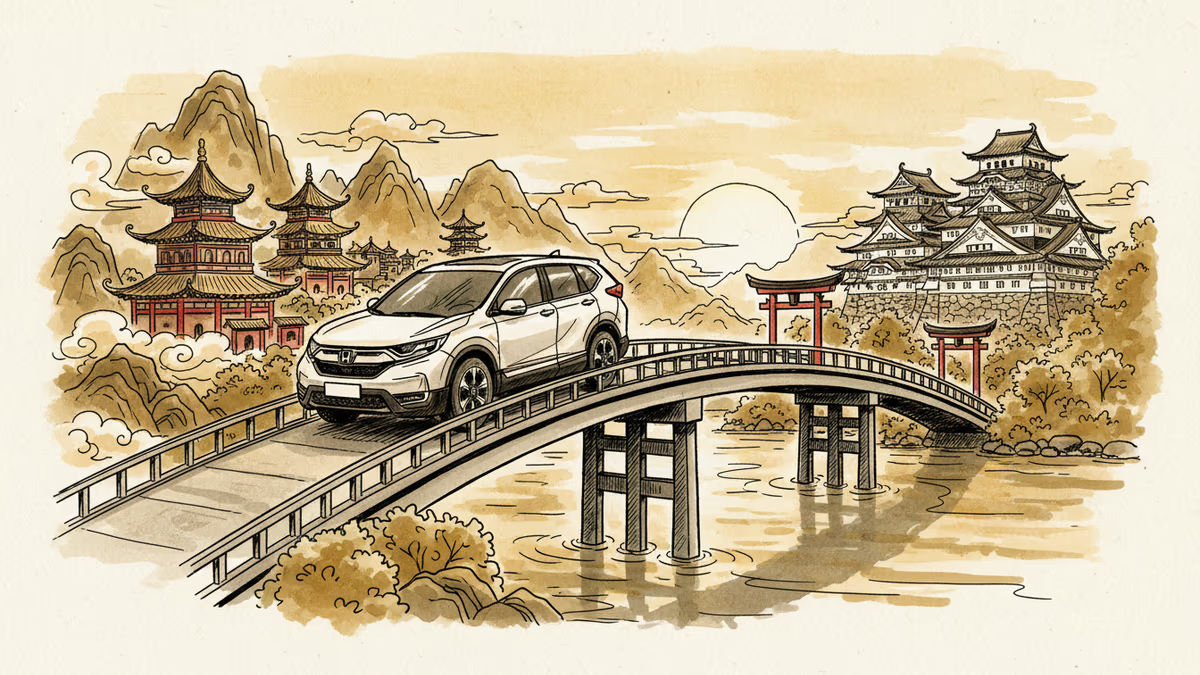
Honda becomes first Japanese automaker to sell China-made EVs domestically, signaling a seismic shift in global automotive power dynamics and manufacturing pride.
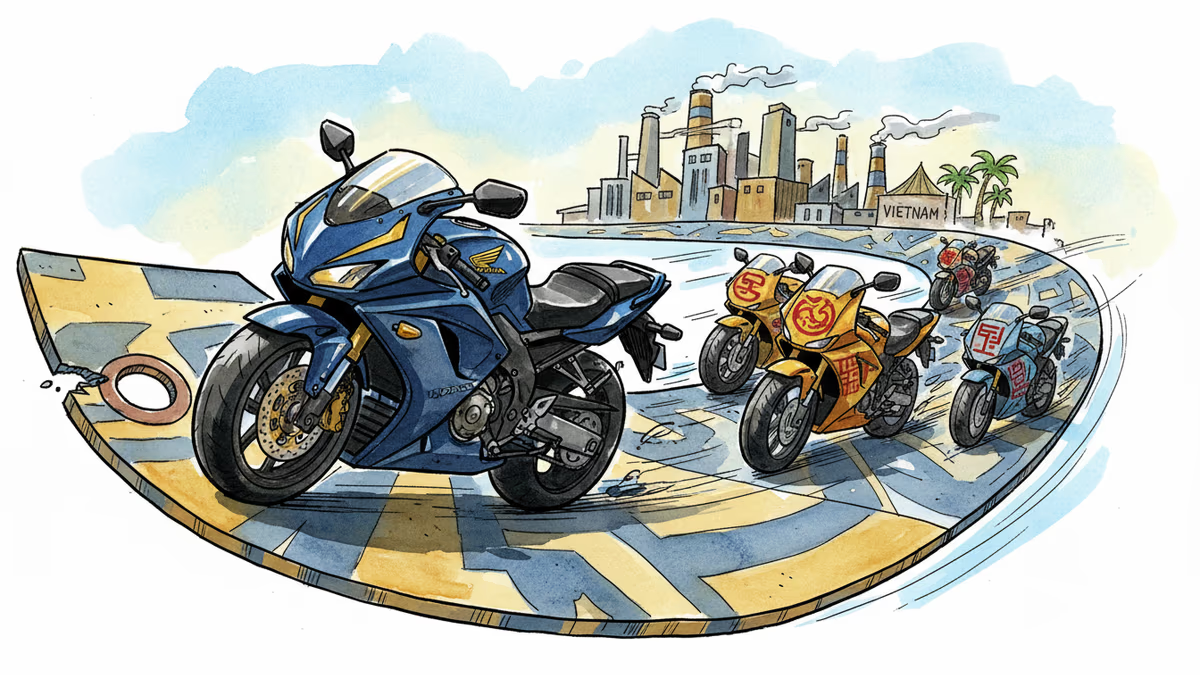
Honda launches Japan's cheapest electric motorbike at $1,400, leveraging Vietnam production to counter Chinese brands. Analysis of the strategic shift and market implications for the EV industry.
Honda's nine-month net profit fell 42% amid electric vehicle market challenges and Trump administration tariffs. Strong motorcycle performance couldn't offset automotive division losses.
Honda cancels North American EV models and warns of $15.7 billion in losses. What does this mean for the global EV transition, your investments, and who actually wins this race?
Honda becomes first Japanese automaker to sell China-made EVs domestically, signaling a seismic shift in global automotive power dynamics and manufacturing pride.
Honda launches Japan's cheapest electric motorbike at $1,400, leveraging Vietnam production to counter Chinese brands. Analysis of the strategic shift and market implications for the EV industry.
Honda's nine-month net profit fell 42% amid electric vehicle market challenges and Trump administration tariffs. Strong motorcycle performance couldn't offset automotive division losses.
Thoughts
Share your thoughts on this article
Sign in to join the conversation