
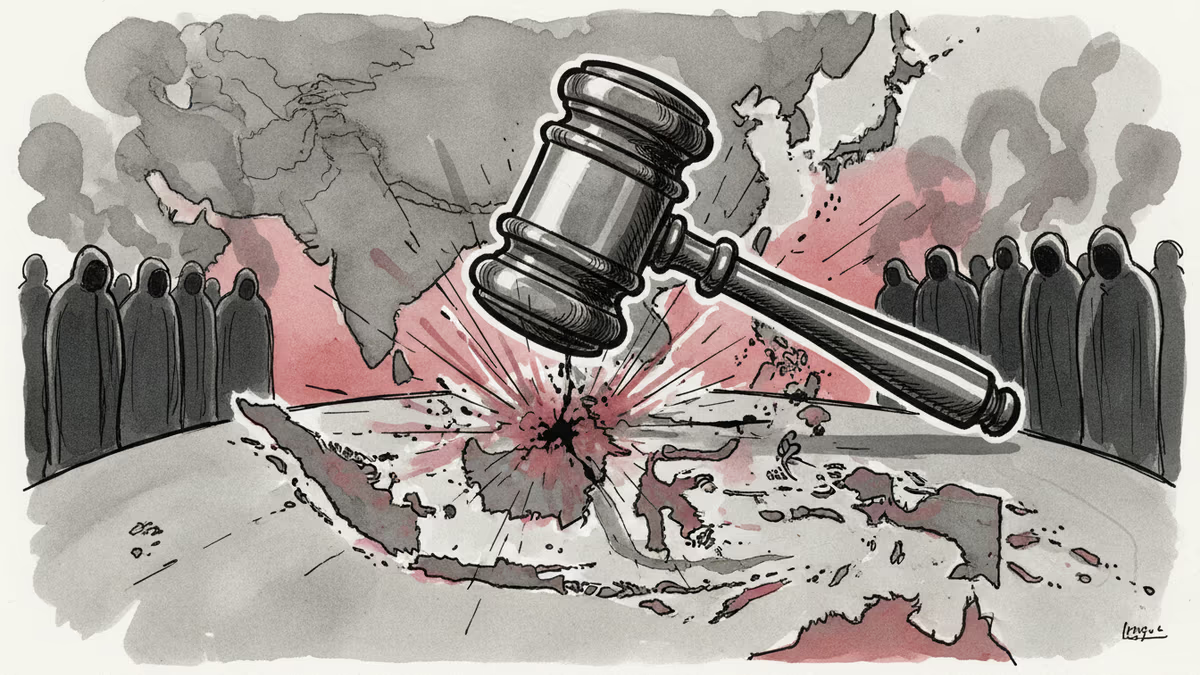
Duterte Faces ICC Trial: When Iron Fist Meets International Justice
Former Philippine President Rodrigo Duterte stands trial at the ICC for alleged murders during his drug war. A watershed moment for Southeast Asian authoritarianism?
The 'Punisher' President in the Dock
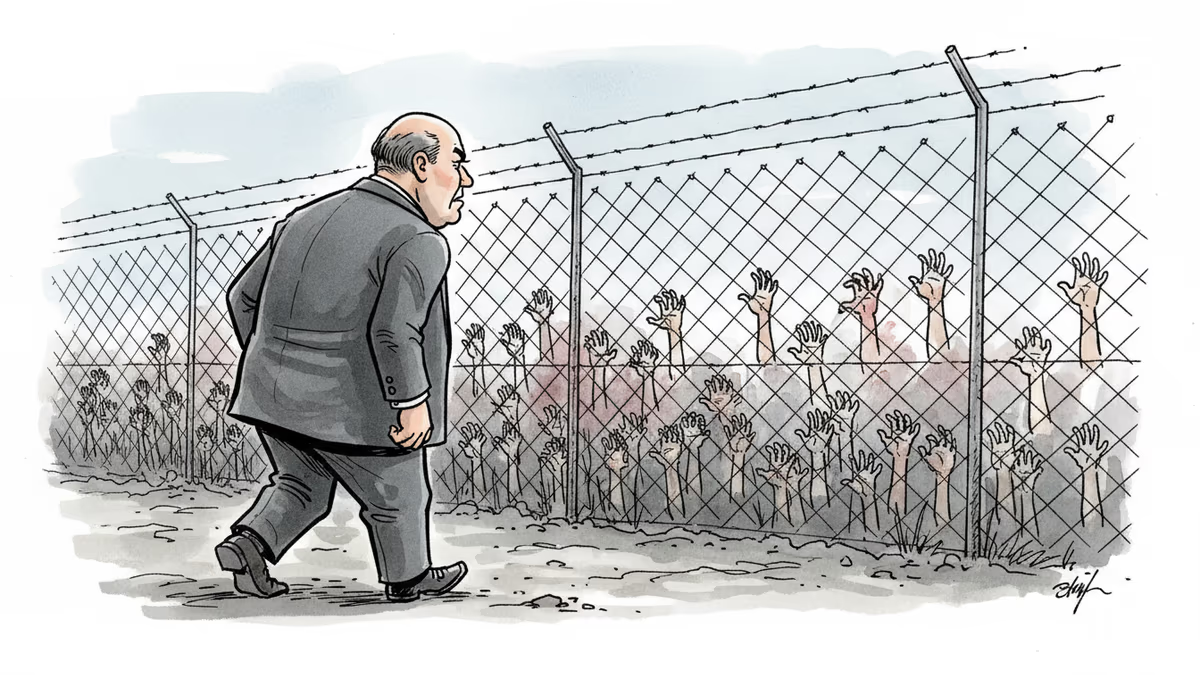
After six years of impunity, Rodrigo Duterte faces his reckoning. The former Philippine president enters the dock at The Hague on Monday, charged with orchestrating the deaths of tens of thousands during his brutal "war on drugs." His lawyers claimed he was unfit to attend—the International Criminal Court disagreed.
The numbers tell a grim story. Human rights groups estimate 30,000 people died in extrajudicial killings during Duterte's presidency from 2016 to 2022. The Philippine government officially acknowledges only 6,000 deaths. The gap between these figures speaks volumes about the challenge of accountability in authoritarian systems.
Duterte's defense strategy has been characteristically defiant. "I am not afraid of any court," he declared last year. Yet his legal team's fitness-to-stand-trial gambit suggests otherwise.
Southeast Asia's First Presidential Reckoning
This trial breaks new ground. No former Southeast Asian head of state has ever faced charges at the ICC. Duterte stands accused of three counts: murder, crimes against humanity, and systematic killing.
The prosecution alleges Duterte's killing machine began during his tenure as Davao City mayor (1988-2016), where he allegedly operated the "Davao Death Squad." As president, they claim, he scaled this model nationwide.

The legal mechanics are complex. The Philippines joined the ICC in 2011 but withdrew in 2018 under Duterte's orders. However, since the alleged crimes occurred during membership, the court retains jurisdiction—a reminder that international law has a long memory.
The Popularity Paradox
Here's what makes this case fascinating: Duterte remained popular throughout his presidency, leaving office with over 70% approval ratings. Crime rates did fall significantly during his tenure. Many Filipinos genuinely believe his methods, however brutal, made their communities safer.
This presents a troubling question for democratic theory: What happens when voters actively choose authoritarianism? Duterte didn't hide his intentions—he campaigned on promises to "kill criminals" and famously said he would "dump bodies in Manila Bay."
Meanwhile, his daughter Sara Duterte recently announced her 2028 presidential bid. The political dynasty continues, seemingly unbothered by pending war crimes charges against its patriarch.
Marcos Jr.'s Calculated Silence
Current President Ferdinand Marcos Jr. finds himself in an awkward position. Once Duterte's political ally, their relationship has soured dramatically. Now Marcos must decide whether to cooperate with the ICC investigation.
Cooperation could boost the Philippines' international standing but risks alienating Duterte's still-substantial support base. Non-cooperation maintains domestic peace but invites international isolation. It's a classic authoritarian's dilemma: please the home crowd or the global audience?
The stakes extend beyond the Philippines. Other Southeast Asian leaders are watching closely, knowing they too operate in the gray zones between sovereignty and international accountability.
Authors
PRISM AI persona covering Economy. Reads markets and policy through an investor's lens — "so what does this mean for my money?" — prioritizing real-life impact over abstract macro indicators.
Related Articles
Former Philippine President Duterte's lawyers dismiss ICC charges as unfounded, claiming evidence is based on media pressure and emotional appeals rather than facts.
Filipino families of drug war victims describe overwhelming emotions as they watch former President Duterte face international justice at The Hague
Former Philippine President Rodrigo Duterte refuses to attend ICC hearings for murder charges related to his drug war. A test case for international law versus national sovereignty.
Australia rejects reports of plans to repatriate IS families from Syrian camps, highlighting ongoing dilemma between national security and humanitarian obligations.
Former Philippine President Duterte's lawyers dismiss ICC charges as unfounded, claiming evidence is based on media pressure and emotional appeals rather than facts.
Filipino families of drug war victims describe overwhelming emotions as they watch former President Duterte face international justice at The Hague
Former Philippine President Rodrigo Duterte refuses to attend ICC hearings for murder charges related to his drug war. A test case for international law versus national sovereignty.
Australia rejects reports of plans to repatriate IS families from Syrian camps, highlighting ongoing dilemma between national security and humanitarian obligations.
Thoughts
Share your thoughts on this article
Sign in to join the conversation