

China's New Taiwan Playbook for 2026: Why Beijing is Trading Military Drills for TV Dramas
Analysts suggest Beijing is recalibrating its Taiwan policy, shifting from overt military threats to a sophisticated 'soft power' campaign involving cultural propaganda and governance visions in late 2025.
In a significant recalibration of its Taiwan strategy, Beijing appears to be shifting tactics from overt military intimidation to a more sophisticated campaign of cultural and political influence. According to analysts cited by the South China Morning Post, recent months have seen China scale back military posturing while simultaneously ramping up a multi-pronged effort to win hearts and minds on both sides of the strait, signaling a potential new phase in its long-term goal of reunification.
This strategic pivot comes amid a complex geopolitical landscape, where Beijing may perceive a reduced likelihood of intervention from the United States, Taiwan's most critical international supporter. The new approach focuses on shaping public perception and outlining a vision for post-reunification governance, moving beyond simple threats of force.
For decades, Beijing has viewed Taiwan, a self-ruled democracy, as a renegade province to be unified with the mainland, by force if necessary. This has traditionally involved frequent military exercises and air-defense zone incursions to pressure Taipei.
The Cultural and Propaganda Offensive
Beijing has recently launched several high-profile initiatives aimed at normalizing its claim over Taiwan in the eyes of the mainland public and projecting a sense of shared identity. This includes:
- Satellite Imagery: A mainland Chinese commercial satellite, Jilin-1, released high-resolution images of Taiwan, including the critical Hsinchu Science Park. The images were widely promoted on Chinese social media with the narrative of viewing "home."
- State-Sponsored Media: The first state-supervised television drama detailing the history of communist spies in Taiwan was produced and aired, aiming to frame historical narratives.
- National Commemoration: The establishment of the first national commemoration day related to Taiwan, embedding the island into the mainland's official historical and national calendar.
Laying the Groundwork for Governance
Beyond cultural messaging, Beijing has also begun to articulate its vision for a post-reunification Taiwan more clearly. The report notes the unveiling of "fresh policy slogans" that outline potential governance models. This move suggests an attempt to create an impression of inevitability and to present a more concrete, albeit state-controlled, alternative to Taiwan's current democratic system.
Every inch of Taiwan belongs to mainland China.
— Beijing's official messaging, as reported by SCMP
This content is AI-generated based on source articles. While we strive for accuracy, errors may occur. We recommend verifying with the original source.
Related Articles
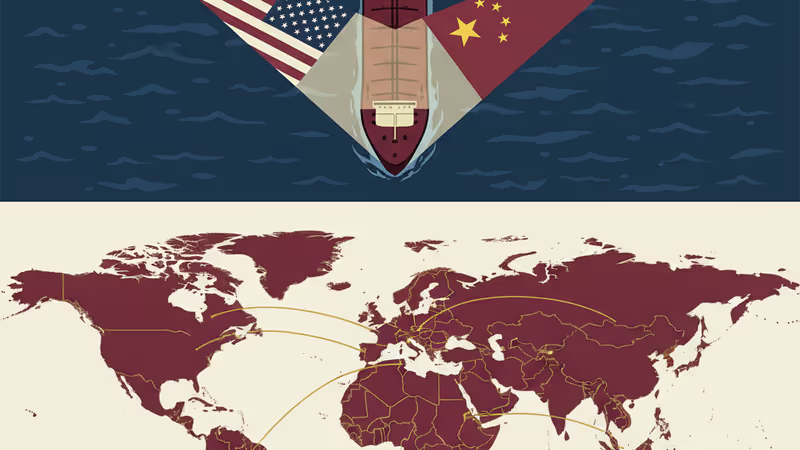
China condemned the US for seizing a Venezuelan oil tanker, calling it a 'serious violation of international law.' The US claims the vessel was part of a 'shadow fleet' trafficking stolen oil.
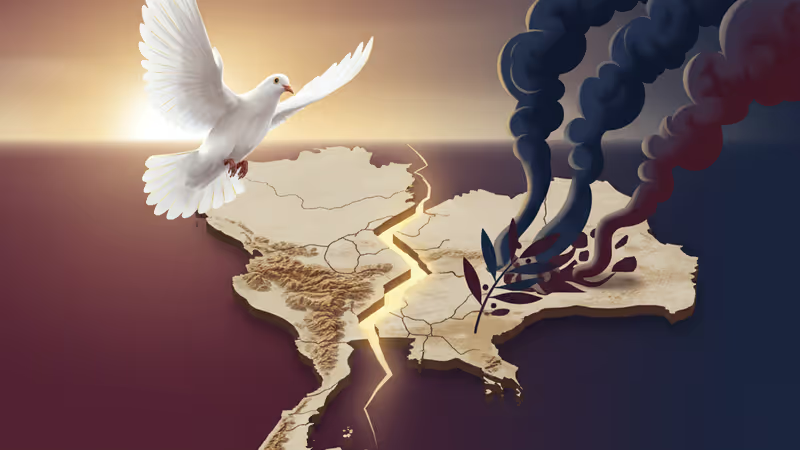
Thailand and Cambodia have agreed to military talks to halt border clashes, but new fighting erupted just hours later, putting ASEAN's mediation efforts to the test.
A Chinese father and his 6-year-old son were deported from the U.S. after being separated, a move an activist calls a coercive tactic to force the father's compliance.
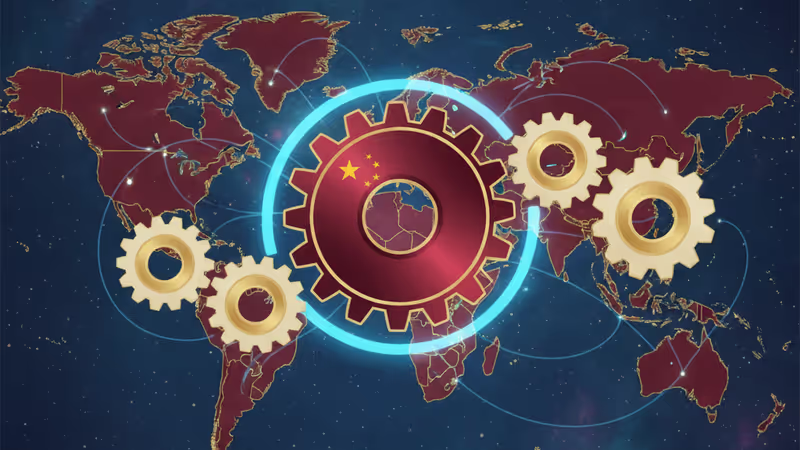
China is set to impose an export licensing system on steel products from January 1, a strategic move seen as an attempt to cool rising trade tensions with its new, vital export partners in the developing world.