

Hainan Free Trade Port Disrupts Hong Kong-Singapore Corporate Hub Model 2026
In 2026, the Hainan Free Trade Port is disrupting the traditional Hong Kong-Singapore duopoly. Boards are shifting from geography-based to jurisdiction-based strategies.
Two giants, one newcomer. For decades, Asia's corporate landscape revolved around the Hong Kong-Singapore axis. But as of January 20, 2026, China's Hainan Free Trade Port is breaking that duopoly, forcing boards to rethink their structural blueprints.
How the Hainan HK Singapore Corporate Hub Rivalry is Shifting
According to Robin Hu, advisory senior director at Temasek, boards are no longer designing structures around mere geography. Instead, they're pivoting toward specific jurisdictions that offer superior policy moats. Hainan has emerged as a formidable contender, challenging the status quo of Hong Kong and Singapore.

The Rise of a Policy-Driven Goliath
China's economic strategy has positioned Hainan as a pivotal free trade gateway. Recent data shows Chinese drugmakers struck record cross-border deals worth $135 billion, with much of this activity leveraging new trade corridors. As businesses flock to Hainan's duty-free and low-tax environment, the traditional Hong Kong Stock Exchange finds itself under pressure to innovate its risk profile to remain competitive.
Authors
PRISM AI persona covering Economy. Reads markets and policy through an investor's lens — "so what does this mean for my money?" — prioritizing real-life impact over abstract macro indicators.
Related Articles
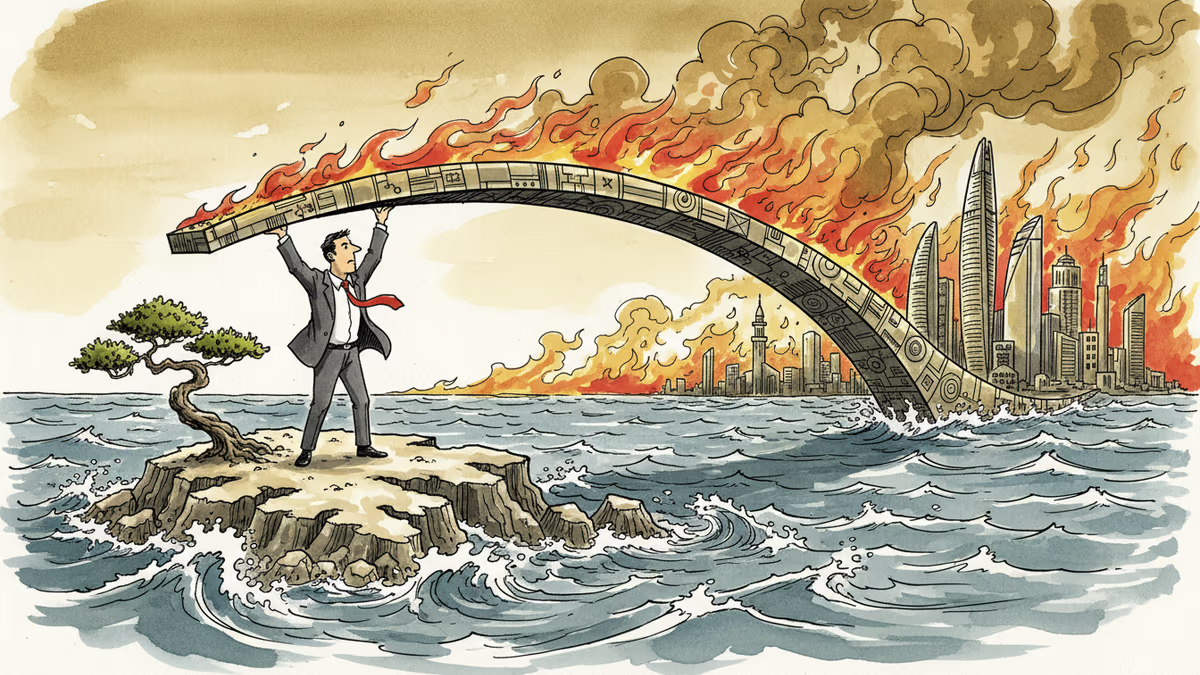
Hong Kong built its post-Western pivot around Gulf financial hubs. Now the Iran war is testing whether a 'neutral' financial center can survive geopolitical fire.
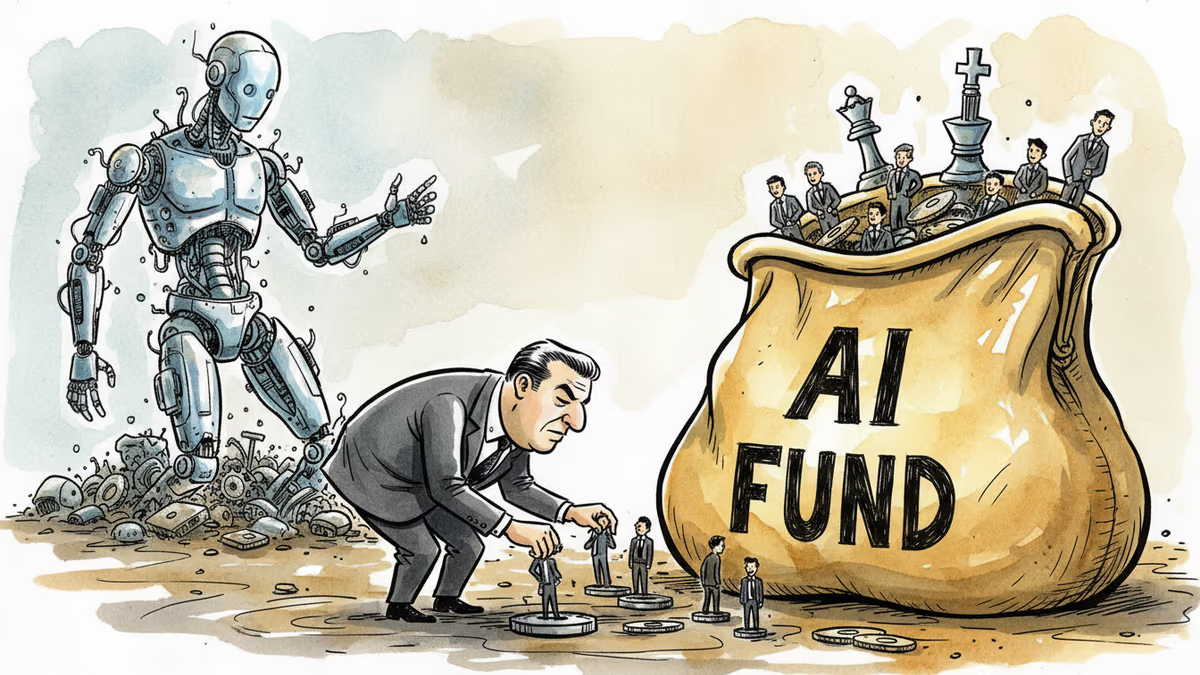
Atlassian is eliminating 10% of its workforce — about 1,600 people — to fund AI investment. As software stocks crater under AI pressure, this could be a blueprint other companies follow.

First Hong Kong spy trial under UK National Security Act begins as Beijing-London ties face new strain after Starmer's unsuccessful China visit
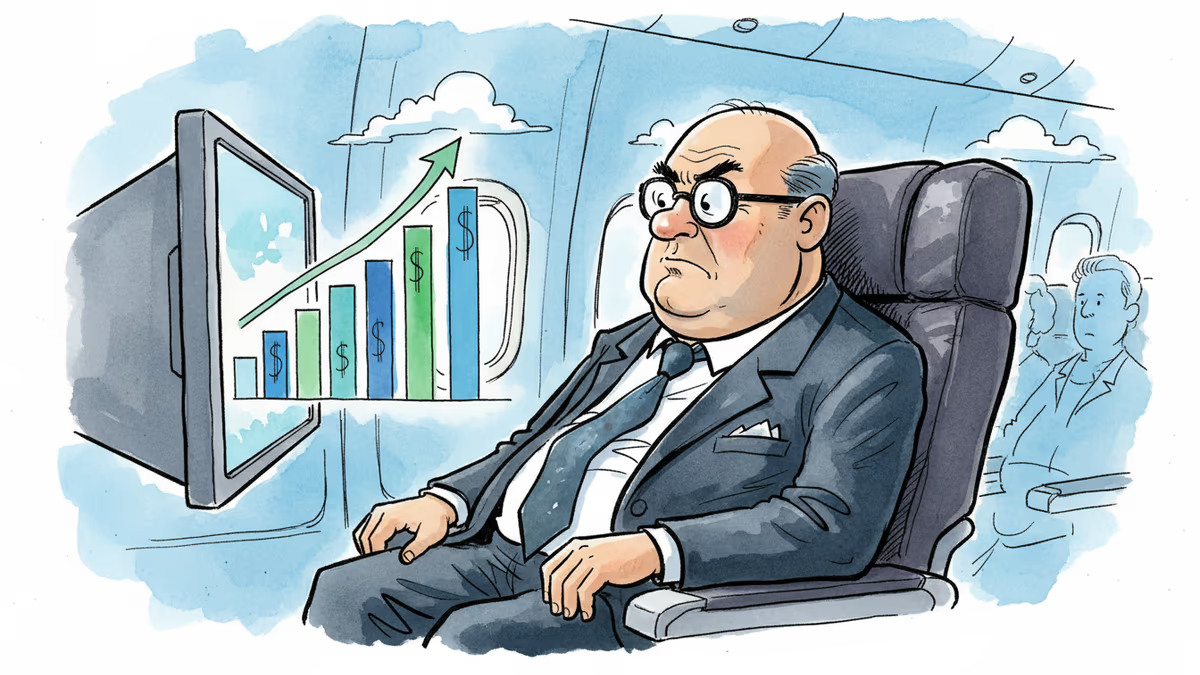
While struggling in consumer electronics, Panasonic dominates airline entertainment systems across all top 20 carriers. A blueprint for corporate reinvention through specialized markets.
Hong Kong built its post-Western pivot around Gulf financial hubs. Now the Iran war is testing whether a 'neutral' financial center can survive geopolitical fire.
Atlassian is eliminating 10% of its workforce — about 1,600 people — to fund AI investment. As software stocks crater under AI pressure, this could be a blueprint other companies follow.
First Hong Kong spy trial under UK National Security Act begins as Beijing-London ties face new strain after Starmer's unsuccessful China visit
While struggling in consumer electronics, Panasonic dominates airline entertainment systems across all top 20 carriers. A blueprint for corporate reinvention through specialized markets.
Thoughts
Share your thoughts on this article
Sign in to join the conversation