
Japan's High-Stakes Bet: Nuclear Restart Signals a Nation Grappling with Its Tech Future
As 2025 closes, TEPCO's decision to restart the world's largest nuclear plant is more than an energy play. It's a sign of Japan wrestling with aging infrastructure, seismic threats, and its place in the AI era.
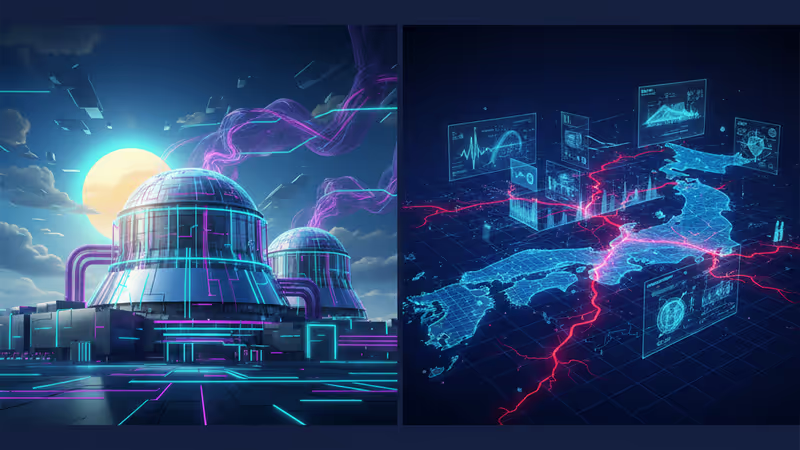
As 2025 draws to a close, Japan is making a pivotal bet on its technological future. TEPCO has reportedly finalized plans to restart Unit 6 of its Kashiwazaki-Kariwa nuclear power plant—the world's largest—on January 20th of next year. This isn't just an energy decision; it's a powerful symbol of a nation forced to confront its aging infrastructure, ever-present natural disaster threats, and its role in the dawning age of AI.
The move to bring the massive plant back online is a direct response to the urgent need for energy independence, a critical foundation for the country's high-tech ambitions. From advanced semiconductor fabrication to its burgeoning space program, Japan's future as an R&D powerhouse depends on a stable, high-capacity power grid. The restart is a calculated risk, balancing deep-seated public safety concerns with the strategic necessity of powering innovation.
But the headwinds are stiff. The economic environment has grown harsher, with 10-year government bond yields recently surging to 2.1%, a 26-year high. This spike in borrowing costs complicates funding for everything from massive energy projects to desperately needed infrastructure maintenance. Recent incidents, such as a series of retaining wall collapses, serve as a stark reminder that the country's physical foundations are aging. Coupled with newly released detailed simulations for the much-feared Great Tokyo Earthquake, it's clear Japan is in a race against time to fortify its core.
While wrestling with these foundational 'legacy' problems, the 'new' tech wave waits for no one. As director James Cameron recently highlighted in discussions about his creative process, AI is an undeniable force reshaping global industries. Japan now faces a dual challenge: it must execute a massive, capital-intensive overhaul of its physical world while simultaneously competing for leadership in the virtual, AI-driven future. It's a high-wire act of managing the present while building the future.
This content is AI-generated based on source articles. While we strive for accuracy, errors may occur. We recommend verifying with the original source.
Related Articles

ChatGPT is launching a 'Year in Review' feature, summarizing your 2025 conversations with stats and a personalized, AI-generated pixel art image. See how your year's prompts get visualized.
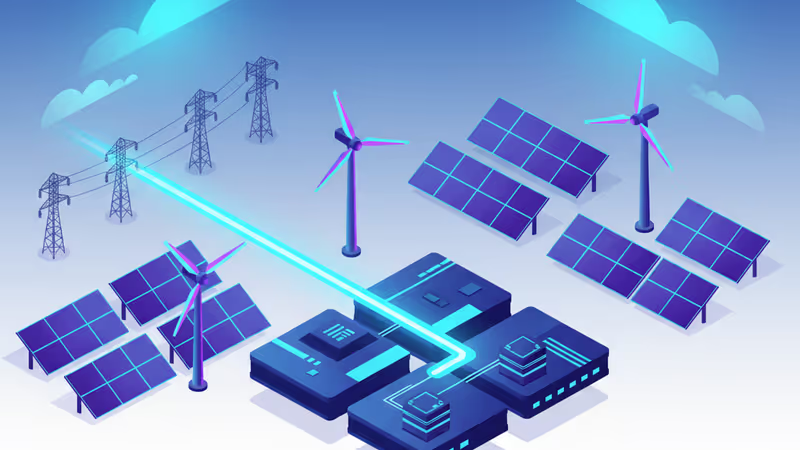
Alphabet is acquiring clean energy developer Intersect Power for $4.75 billion to build its own power supply for AI data centers, a move to bypass strained local energy grids amid surging demand.

A brutal year for tech jobs. Over 240,000 positions were eliminated in 2025. PRISM breaks down why this wasn't just about cost-cutting, but a fundamental industry reset driven by the race for AI supremacy.

Silicon Valley is pitching AI companions as the cure for loneliness. From vandalized NYC subway ads to expert warnings, this is your guide to why we're not buying it.