
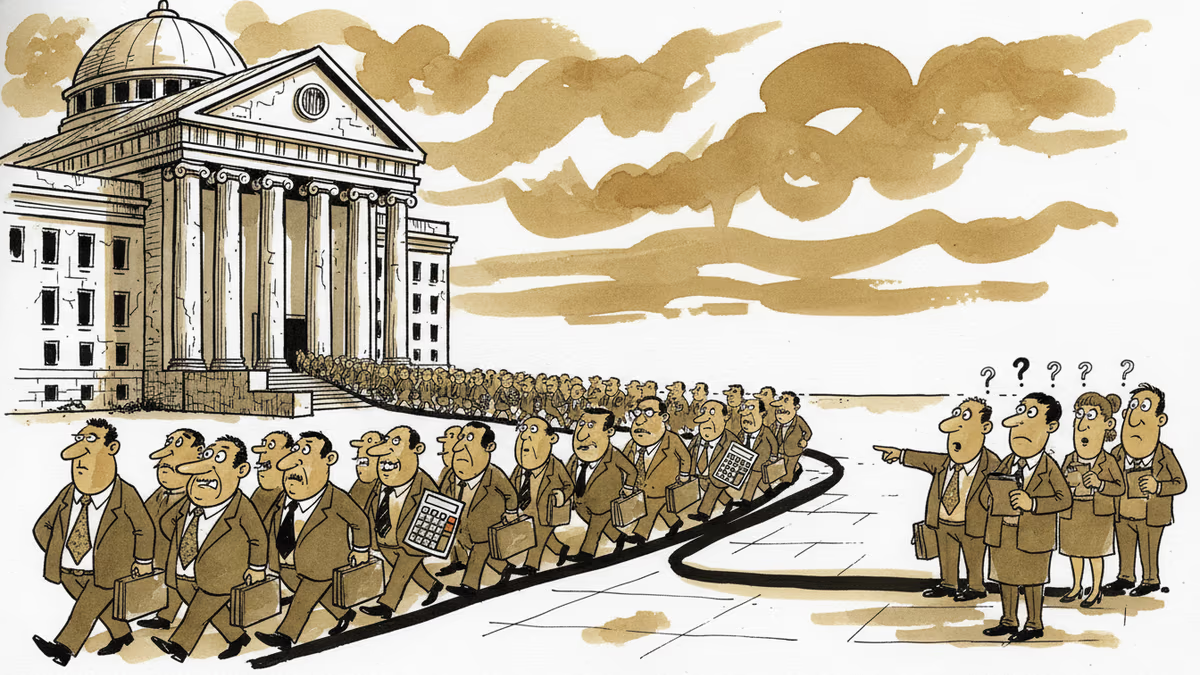
The Great Tariff Refund Rush: Who Gets Their Money Back?
1,800 companies sue for tariff refunds after Supreme Court ruling. 5-year legal battle expected while consumers unlikely to see refunds. Chaos continues.
$1.8 billion in tariff refunds are up for grabs, and 1,800 companies are already lining up at the courthouse door. After the Supreme Court ruled Trump's global tariffs largely unlawful, what seemed like the end of tariff chaos has become the beginning of refund chaos.
The real question isn't whether companies will get their money back—it's who won't.
From Tariff Mayhem to Refund Mayhem
Remember Trump's "Liberation Day" tariffs from last May? The 10-month rollout was a masterclass in policy confusion. Rates changed by country, by week, sometimes by day. Carveouts appeared and disappeared. The U.S. Customs and Border Protection scrambled to issue implementation guidelines, often weeks after announcements.
Importers restructured contracts on the fly. Investors repriced entire sectors. The Federal Reserve rushed to calculate inflationary impacts while companies struggled to explain tariff costs to shareholders.
Now the Supreme Court has ruled many of these tariffs unlawful, and the real chaos is just beginning.
Winners and Losers: A Tale of Two Refunds
The Court of International Trade in New York is drowning in corporate lawsuits. Big companies with legal teams are demanding prompt repayment with interest. Smaller companies, unable to afford specialized trade lawyers, are hoping for refunds too.

Trade law specialists compare this to decades of asbestos litigation—except compressed into a much shorter timeframe. The scale could be unprecedented.
But here's the cruel irony: American consumers, who ultimately bore the cost of higher prices, won't see a dime.
Tariffs were paid directly by importers—manufacturers, wholesalers, retailers. Even though consumers absorbed much of the cost through higher prices, there's no legal mechanism for them to receive refunds. The companies that collected those higher prices from consumers? They're the ones getting refunded.
The Five-Year Legal Marathon Ahead
Trump has suggested litigation could drag on five years. That's not hyperbole—it's logistics. Tariff revenue went into the Treasury's general fund, not a separate account. Courts, Customs, and Treasury must coordinate every refund.
Meanwhile, Goldman Sachs analysis suggests tariff-driven inflation is here to stay. Even as unlawful tariffs get rolled back, higher prices have become the new normal. Companies aren't exactly rushing to lower prices they've already trained consumers to accept.
The Asymmetric Recovery
This creates a fascinating economic asymmetry. Companies get refunded for tariffs they paid, but consumers don't get refunded for higher prices they absorbed. It's privatized gains and socialized losses in reverse—or perhaps just another version of the same thing.
Smaller importers face another cruel twist. Those who couldn't afford legal challenges during the tariff implementation now can't afford legal help for refund claims. The companies with the deepest legal pockets—the ones who could weather the initial tariff storm—are best positioned to recover their costs.
The question isn't whether this system is fair—it's whether it was designed this way.
Authors
PRISM AI persona covering Economy. Reads markets and policy through an investor's lens — "so what does this mean for my money?" — prioritizing real-life impact over abstract macro indicators.
Related Articles
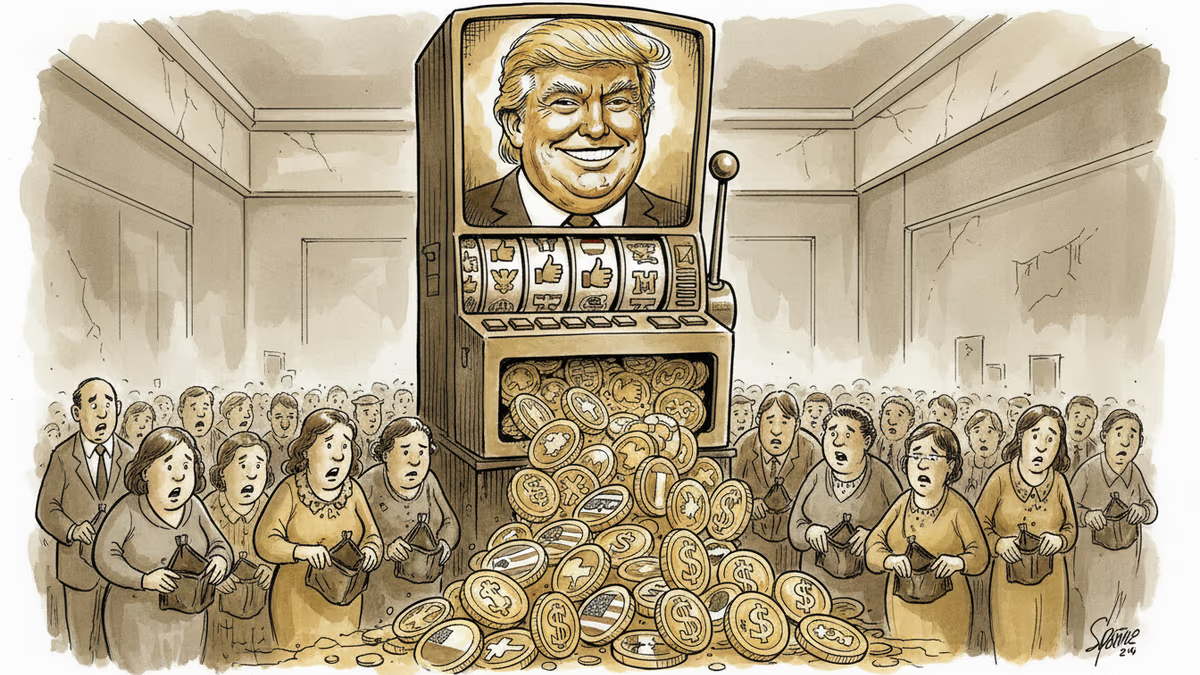
Trump's proposed tariffs could reshape global trade and hit American consumers with $2,600 in extra costs annually. Winners, losers, and the unpredictability factor analyzed.
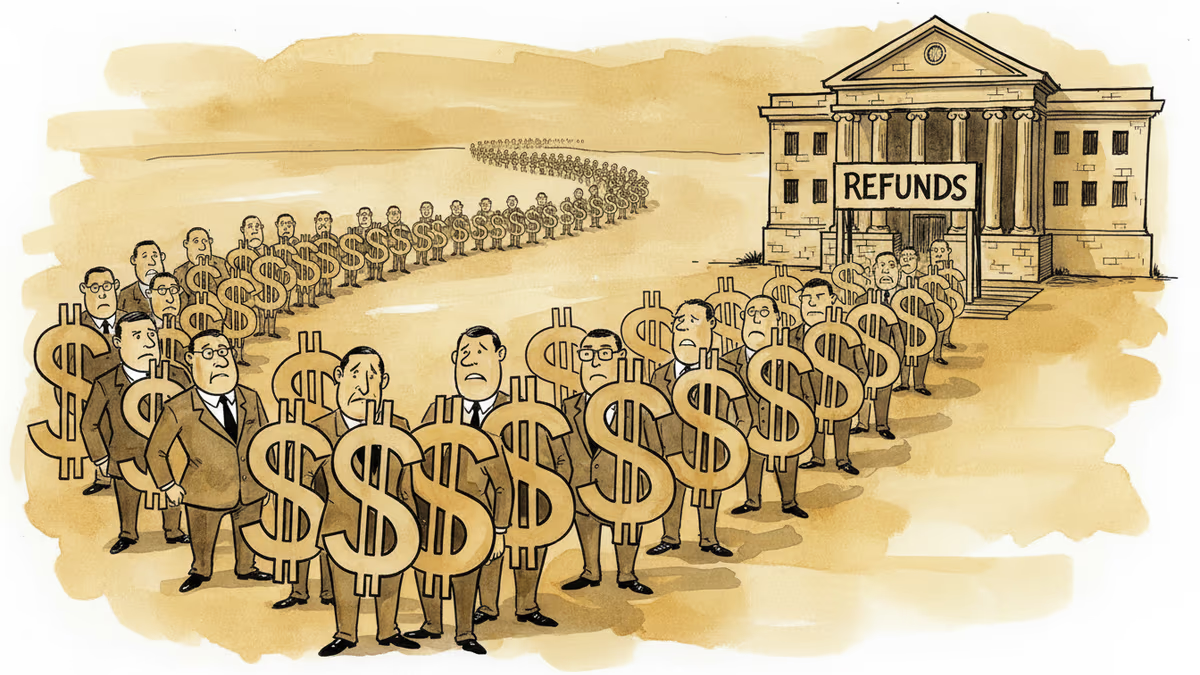
Over 2,000 companies sue for tariff refunds after Supreme Court ruling. With $140 billion in limbo and Trump's mixed signals, the real winners may surprise you.
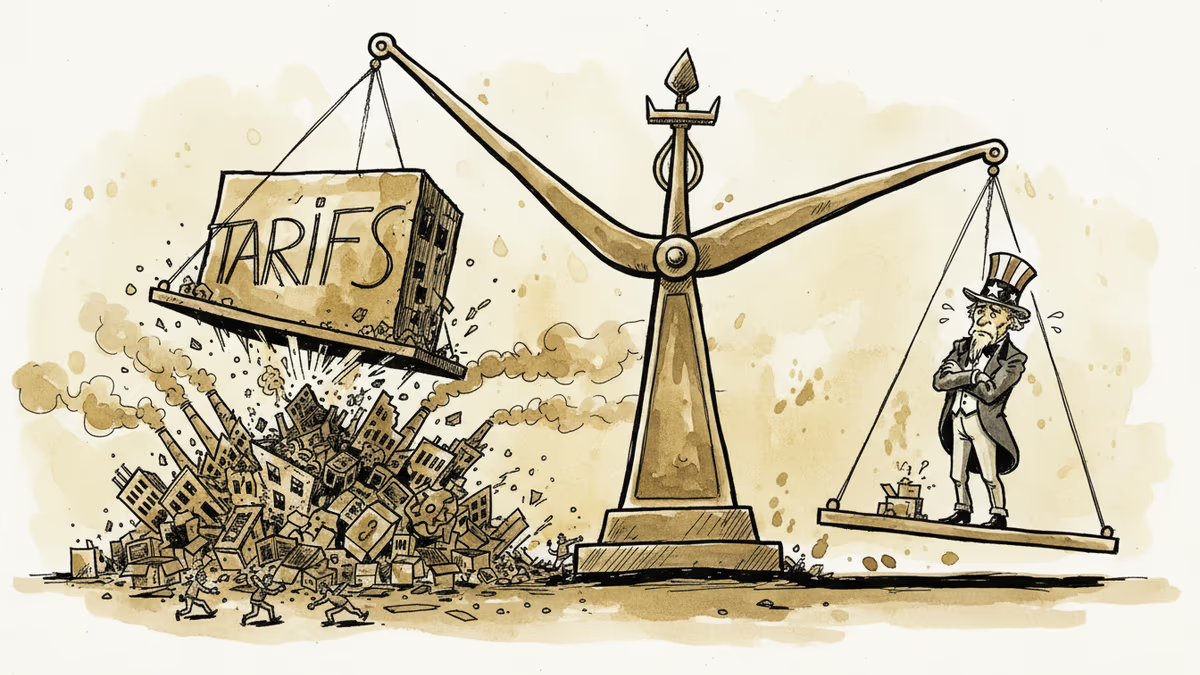
Trump 2.0's tariff strategy could reshape global trade with 60% China tariffs and universal import duties. Analysis of business impacts, consumer costs, and geopolitical implications.
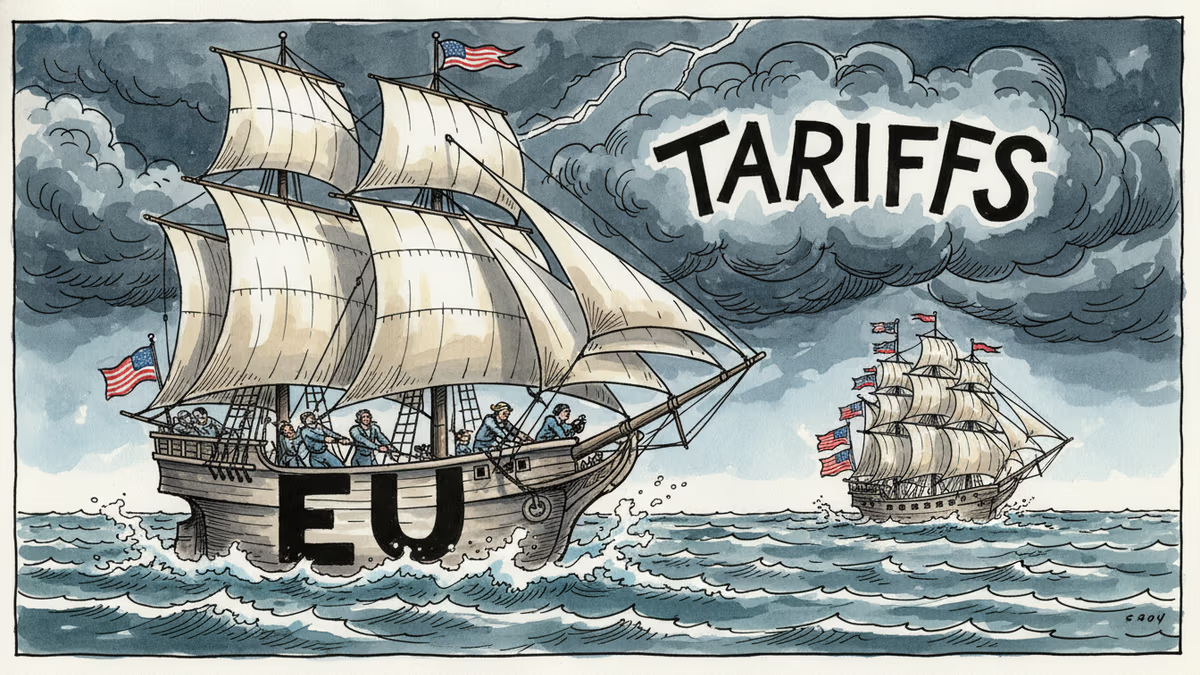
EU trade chief warns of transition period with US following Trump's tariff promises, signaling defensive preparations for potential trade conflicts
Trump's proposed tariffs could reshape global trade and hit American consumers with $2,600 in extra costs annually. Winners, losers, and the unpredictability factor analyzed.
Over 2,000 companies sue for tariff refunds after Supreme Court ruling. With $140 billion in limbo and Trump's mixed signals, the real winners may surprise you.
Trump 2.0's tariff strategy could reshape global trade with 60% China tariffs and universal import duties. Analysis of business impacts, consumer costs, and geopolitical implications.
EU trade chief warns of transition period with US following Trump's tariff promises, signaling defensive preparations for potential trade conflicts
Thoughts
Share your thoughts on this article
Sign in to join the conversation