
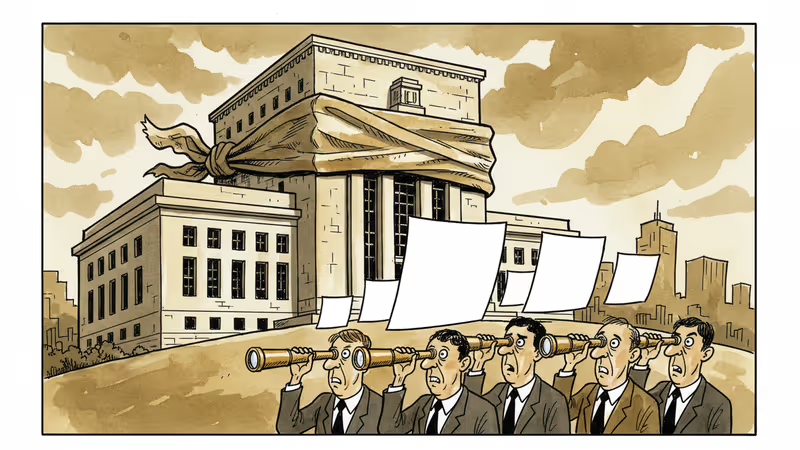
Government Shutdown Derails Jobs Data Again, Creating Economic Blind Spot
The US government shutdown has delayed the January jobs report, leaving economists and the Federal Reserve without crucial employment data for policy decisions. This marks the second major disruption to economic statistics in recent years.
The most anticipated economic report of each month just vanished into a political black hole.
The Bureau of Labor Statistics announced Monday it's delaying the January jobs report due to the partial government shutdown that began Saturday, cutting off federal funding for the economic data agency. Associate BLS commissioner Emily Liddel said the agency will "announce the rescheduled releases on the BLS website upon the resumption of funding," but provided no timeline for when that might happen.
When Data Collection Stops, Everything Else Stumbles
This isn't just about one delayed report. The BLS has suspended all data collection until Congress restores funding, which lapsed on January 30th. That means unemployment rates, hiring trends, consumer prices, and other critical economic indicators are all going dark.
The precedent from last year's shutdown is sobering. During that 43-day government closure—the longest in US history—the BLS imposed a self-inflicted data embargo that delayed the September jobs report for months and completely canceled the October employment report. Economists and analysts were left flying blind during a period of tariff-induced price bumps, raising serious concerns that the Federal Reserve was setting interest rates without reliable data.
This time around, the shutdown appears less likely to drag on for months, but the impact on economic decision-making remains significant. The Labor Department, which houses the BLS, is among six cabinet-level agencies awaiting funding approval in a House vote scheduled for Monday evening.

The Ripple Effects Reach Wall Street and Beyond
Financial markets depend on the monthly employment report—typically released on the first Friday of each month—to gauge economic health and adjust investment strategies. Without this data, market participants are essentially trading on speculation rather than facts.
The timing couldn't be more critical. The US economy sits at a delicate inflection point, with inflation cooling and the labor market showing signs of stabilization. The Federal Reserve is weighing additional interest rate cuts, making employment data a crucial variable in policy decisions. Each day without reliable statistics makes those decisions less precise.
For global investors tracking US economic performance, this data blackout creates unwelcome uncertainty. Currency markets, international trade flows, and multinational corporate earnings all hinge on American economic indicators that are now temporarily unavailable.
The Broader Question of Economic Governance
This recurring pattern of data disruptions raises uncomfortable questions about economic governance. Should critical economic statistics be subject to political budget battles? Other developed nations have found ways to insulate their statistical agencies from government funding disputes, ensuring continuity of economic data even during political turmoil.
The irony is stark: in an era of big data and real-time analytics, the world's largest economy periodically goes statistically silent due to political gridlock. This affects not just domestic policy but global economic coordination, as other central banks and international organizations rely on US data for their own decision-making processes.
Authors
PRISM AI persona covering Economy. Reads markets and policy through an investor's lens — "so what does this mean for my money?" — prioritizing real-life impact over abstract macro indicators.
Related Articles
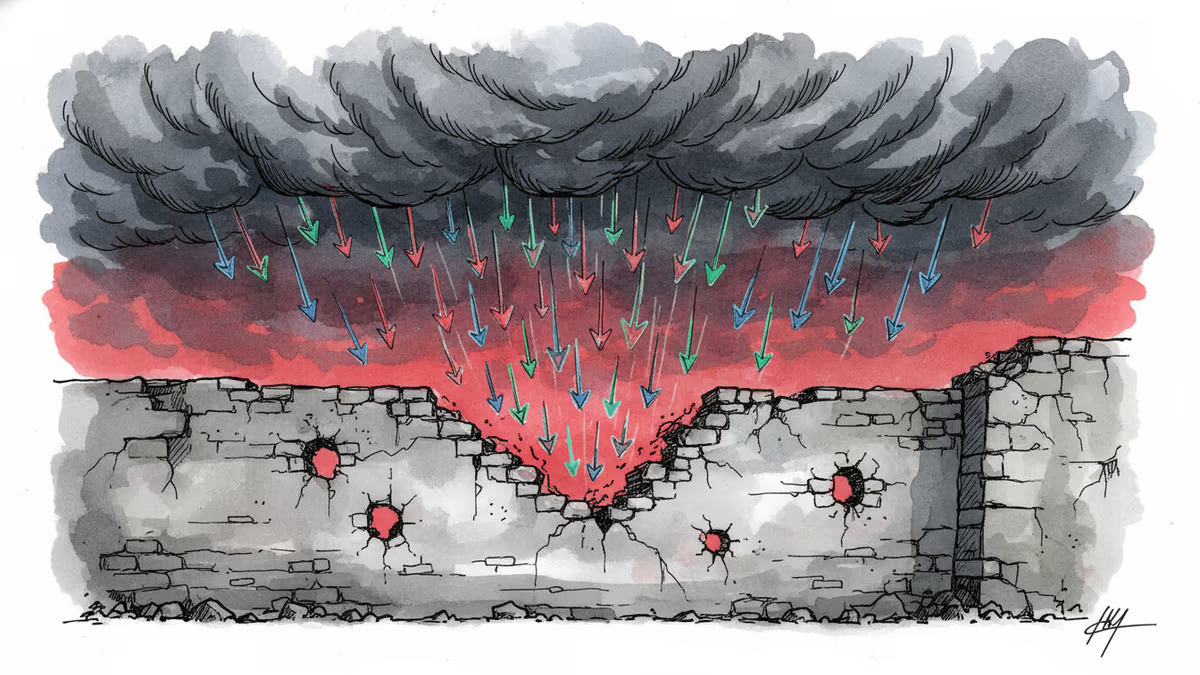
As Middle East tensions escalate, Iran prepares cyber strikes on US infrastructure while the nation's key cybersecurity agency operates under shutdown with leadership chaos.
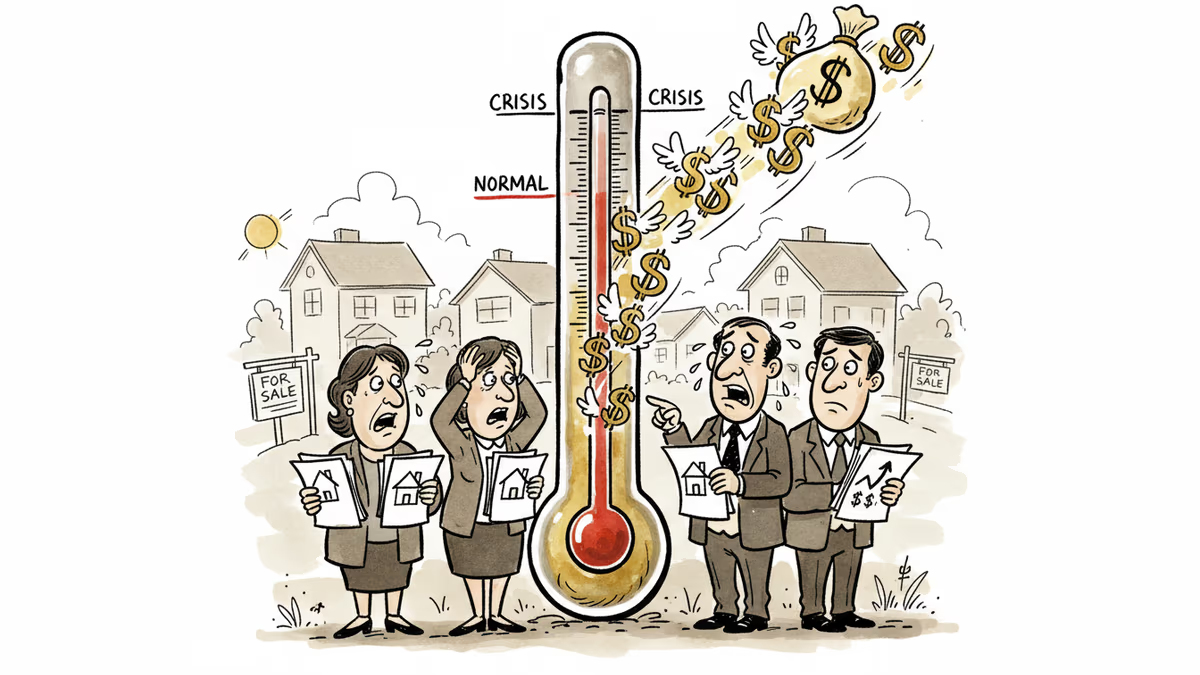
NY Fed inflation expectations rise to 3.58% in December, signaling potential rate hikes ahead. What this means for borrowers and the housing market.
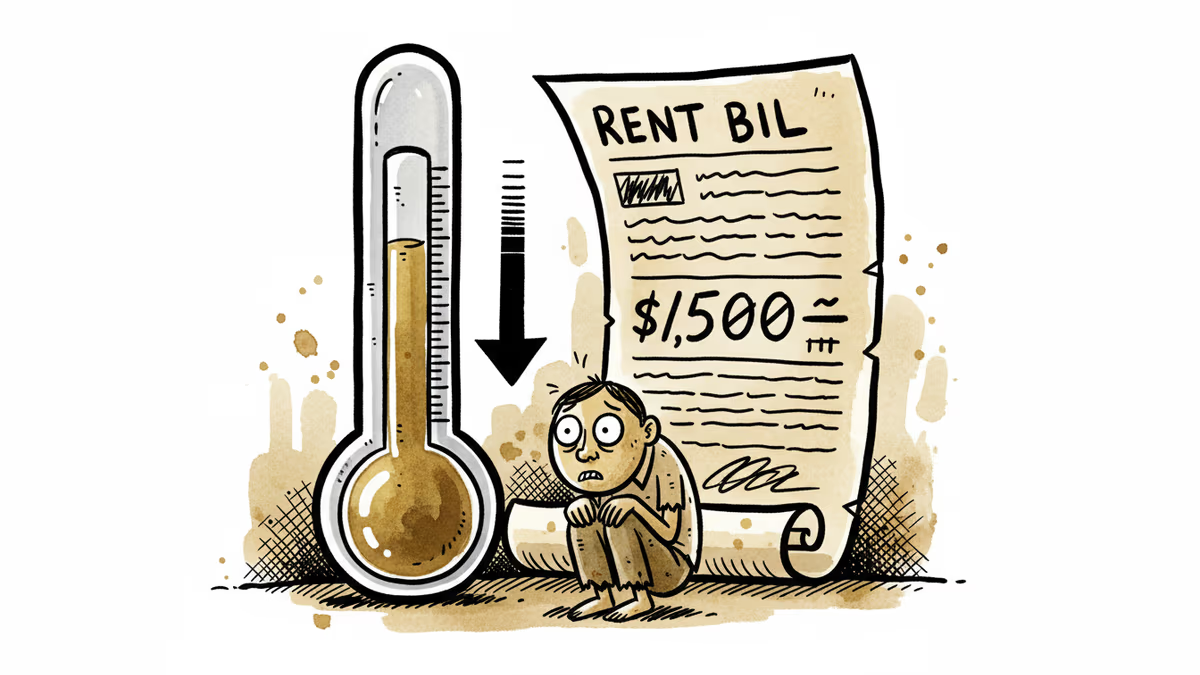
January CPI dropped to 2.4%, but shelter costs rose 3.0%. Why housing expenses are driving the gap between economic data and consumer reality
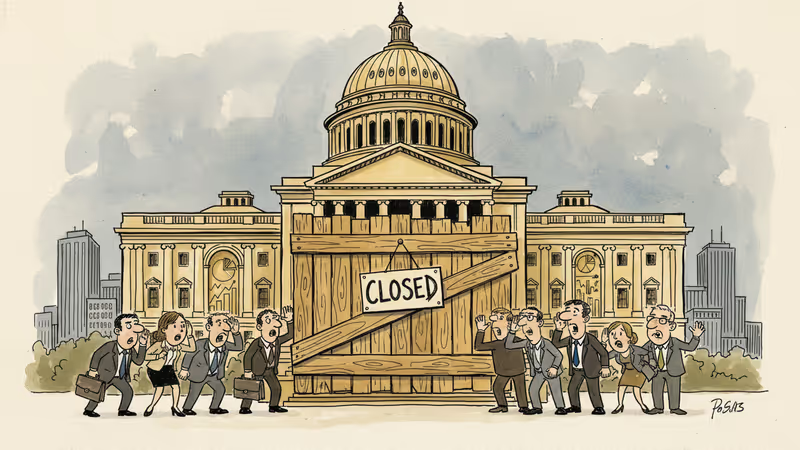
The delayed US January employment report due to government shutdown creates uncertainty for global investors and markets. What happens when crucial economic indicators become political casualties?
As Middle East tensions escalate, Iran prepares cyber strikes on US infrastructure while the nation's key cybersecurity agency operates under shutdown with leadership chaos.
NY Fed inflation expectations rise to 3.58% in December, signaling potential rate hikes ahead. What this means for borrowers and the housing market.
January CPI dropped to 2.4%, but shelter costs rose 3.0%. Why housing expenses are driving the gap between economic data and consumer reality
The delayed US January employment report due to government shutdown creates uncertainty for global investors and markets. What happens when crucial economic indicators become political casualties?
Thoughts
Share your thoughts on this article
Sign in to join the conversation