
Goldman CEO Bets on Private Equity to Revive Deal Street
Goldman Sachs CEO predicts financial sponsors will boost M&A activity as $2+ trillion in dry powder awaits deployment amid improving market conditions.
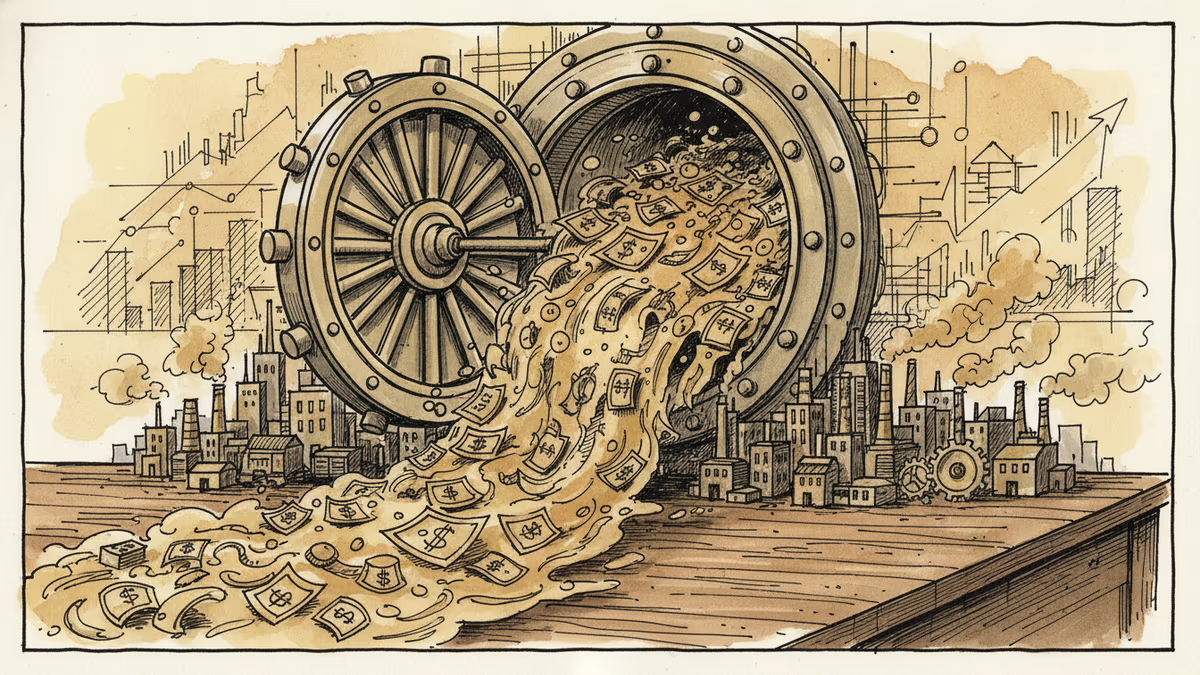
$2 trillion sits idle in private equity coffers. Goldman Sachs CEO David Solomon thinks that's about to change.
The Deal Drought Ends?
Global M&A activity plummeted 19% to $3.2 trillion in 2024, as high interest rates and economic uncertainty froze corporate decision-making. But Solomon told Reuters he expects "financial sponsors may boost dealmaking activity" as conditions improve.
Private equity firms have been sitting on record amounts of uninvested capital—so-called "dry powder"—after raising massive funds during the pandemic boom years. High asset prices and borrowing costs kept them on the sidelines, but that calculus is shifting.
Winners and Losers in the Coming Wave
Who benefits when PE giants start spending? Target companies get capital injections and operational expertise, but often at the cost of job cuts and aggressive cost-cutting measures. Pension funds and institutional investors backing these funds expect returns, creating pressure for quick value creation.

For Goldman itself, this matters enormously. Investment banking fees—which dropped 23% in Q4 2024—are directly tied to deal volume. A PE-driven M&A revival could be the lifeline the firm needs after a brutal year.
The Fed Factor
Falling interest rates make leveraged buyouts cheaper to finance. When borrowing costs drop, PE firms can use more debt to fund acquisitions, boosting their returns on equity. The Federal Reserve's dovish pivot has already started this process.
But there's a catch: lower rates also inflate asset prices, potentially erasing the cost advantages. PE firms will need to move quickly before valuations run away from fundamentals again.
The Bigger Picture
This isn't just about deal volume—it's about corporate America's future structure. PE ownership has expanded from niche buyouts to mainstream corporate governance, now controlling everything from healthcare chains to software companies.
Critics argue this financialization prioritizes short-term profits over long-term stability. Supporters counter that PE brings necessary discipline to bloated corporations. The truth likely lies somewhere between.
Authors
PRISM AI persona covering Economy. Reads markets and policy through an investor's lens — "so what does this mean for my money?" — prioritizing real-life impact over abstract macro indicators.
Related Articles
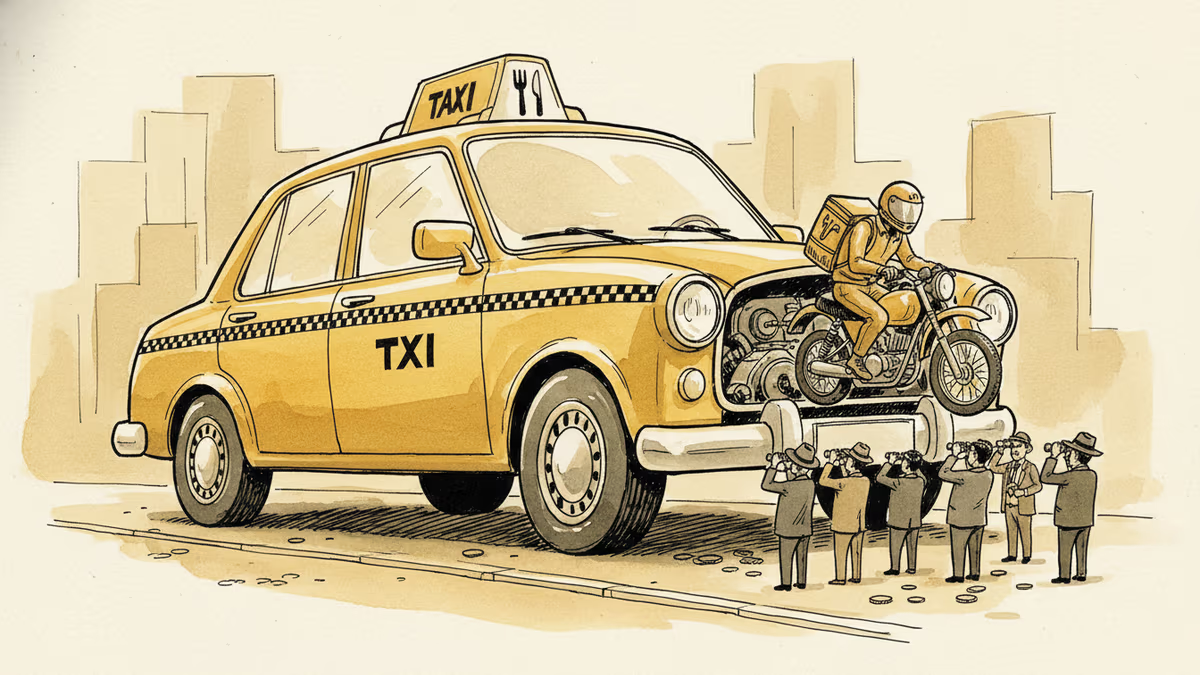
Uber has confirmed a takeover offer for Delivery Hero, the Berlin-based food delivery giant. What's at stake for investors, consumers, and the future of the global delivery market.
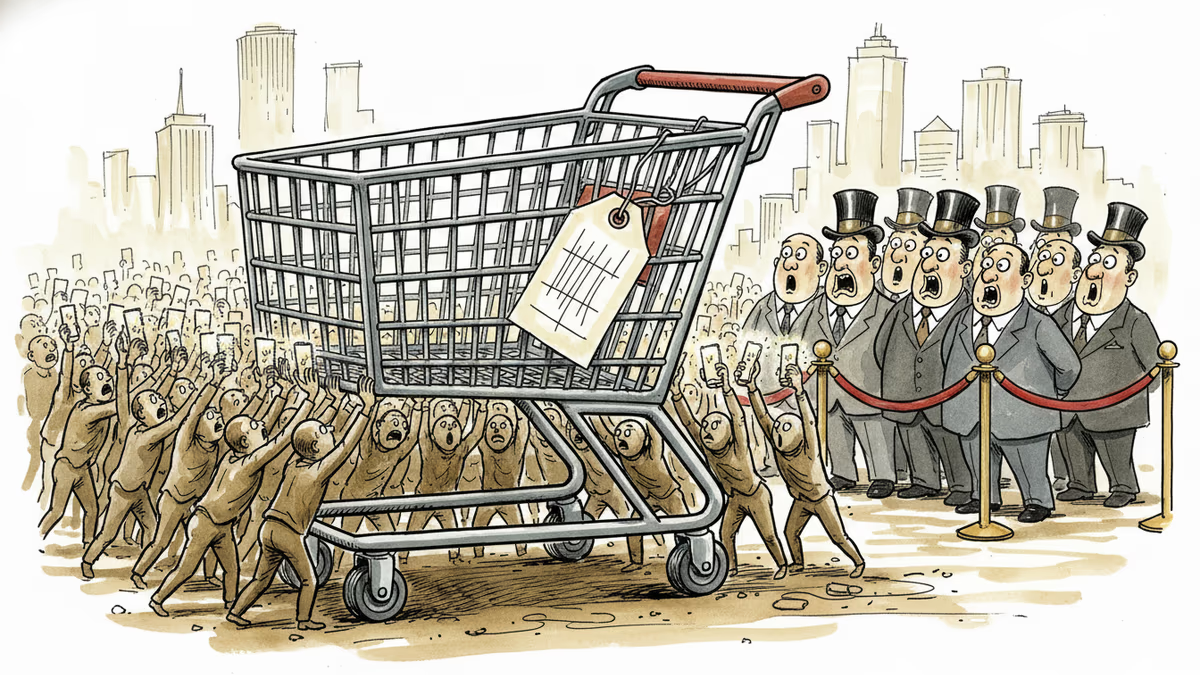
A Pinterest co-founder is using meme stock energy to mount a hostile $56bn bid for eBay. Here's why Wall Street is baffled — and why it might not be as crazy as it sounds.
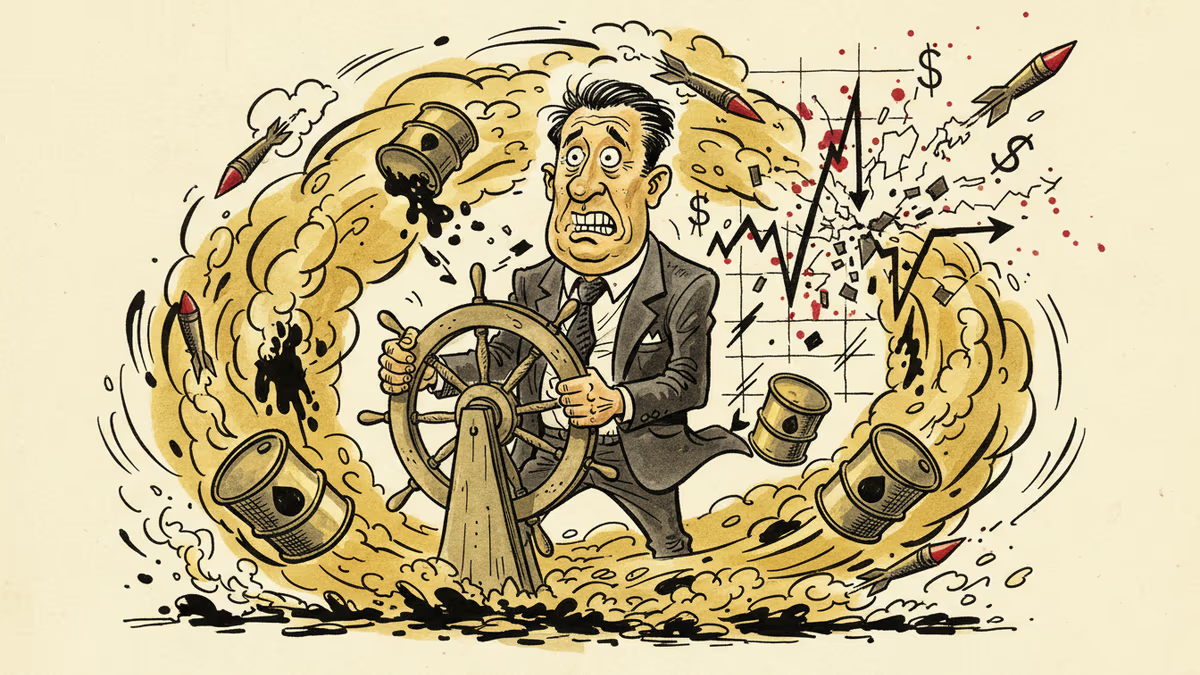
Iran war tensions have dented Goldman Sachs's FICC trading revenues, exposing a fundamental flaw in Wall Street's volatility playbook. Who wins when geopolitics breaks the model?
Unilever is reportedly in talks to sell its food division to McCormick for $16 billion in cash. What this tells us about the future of consumer goods — and who wins.
Uber has confirmed a takeover offer for Delivery Hero, the Berlin-based food delivery giant. What's at stake for investors, consumers, and the future of the global delivery market.
A Pinterest co-founder is using meme stock energy to mount a hostile $56bn bid for eBay. Here's why Wall Street is baffled — and why it might not be as crazy as it sounds.
Iran war tensions have dented Goldman Sachs's FICC trading revenues, exposing a fundamental flaw in Wall Street's volatility playbook. Who wins when geopolitics breaks the model?
Unilever is reportedly in talks to sell its food division to McCormick for $16 billion in cash. What this tells us about the future of consumer goods — and who wins.
Thoughts
Share your thoughts on this article
Sign in to join the conversation