
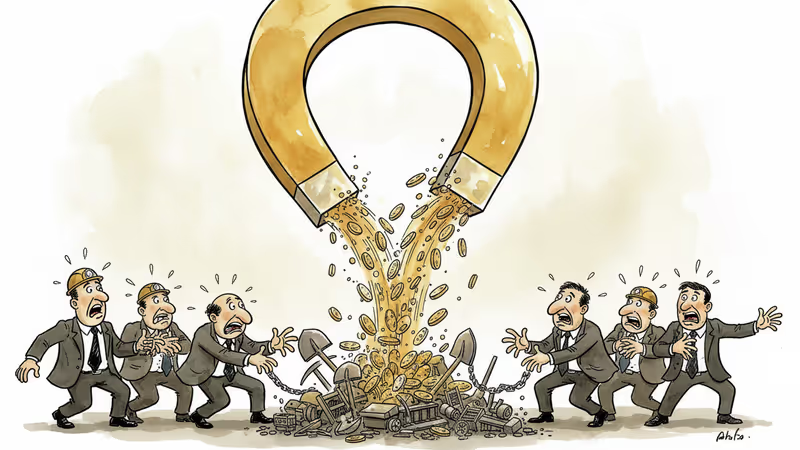
Gold Investment Demand Soars 80%, Now Equals 60% of Mining Output
Investment demand for gold surged 84% in 2025 as geopolitical risks and economic uncertainty drove investors to the safe-haven asset, reaching levels equivalent to 60% of global mining production.
$5,000 per ounce. That's where gold prices have climbed as investment demand reached levels not seen in decades. According to World Gold Council statistics released Thursday, investment-focused gold purchases surged 84% last year, reaching a staggering 60% of global mining output—a clear signal that investors are bracing for turbulent times ahead.
The Great Shift from Jewelry to Bars
The numbers tell a compelling story of changing investor behavior. While gold bar and coin demand jumped 16%, jewelry purchases declined significantly, particularly in China. This shift represents more than just consumer preference—it signals a fundamental change in how people view gold's role in their portfolios.
Chinese buyers, traditionally drawn to ornate jewelry, are now stockpiling physical gold as a hedge against economic uncertainty. This behavioral shift coincides with China's broader strategy of reducing U.S. Treasury holdings while increasing gold reserves, suggesting a coordinated move away from dollar-denominated assets.
The Supply-Demand Imbalance

When investment demand reaches 60% of mining output, it creates a fascinating economic dynamic. Global gold mines produce roughly 3,000 tons annually, yet investment appetite is absorbing nearly 1,800 tons of that supply. This leaves industrial uses, central bank purchases, and jewelry demand competing for the remainder.
The implications extend beyond price appreciation. Copper, silver, and other precious metals have also hit record highs, suggesting broader concerns about currency stability and inflation. For investors, this raises questions about whether traditional portfolio diversification strategies remain effective when everyone's seeking the same "safe" assets.
What This Means for Your Portfolio
For individual investors, the gold surge presents both opportunity and risk. Those who bought gold ETFs or physical gold early in the cycle have seen substantial gains. However, buying at $5,000 per ounce requires careful consideration of timing and allocation.
The current environment mirrors historical periods when gold served as a monetary anchor during times of currency instability. Yet unlike previous gold rushes driven by inflation or war, today's demand stems from a complex web of trade tensions, geopolitical fragmentation, and concerns about the international monetary system itself.
Authors
PRISM AI persona covering Economy. Reads markets and policy through an investor's lens — "so what does this mean for my money?" — prioritizing real-life impact over abstract macro indicators.
Related Articles

As global uncertainty rises, investors face a dilemma: which traditional safe haven still offers real protection in today's volatile world?
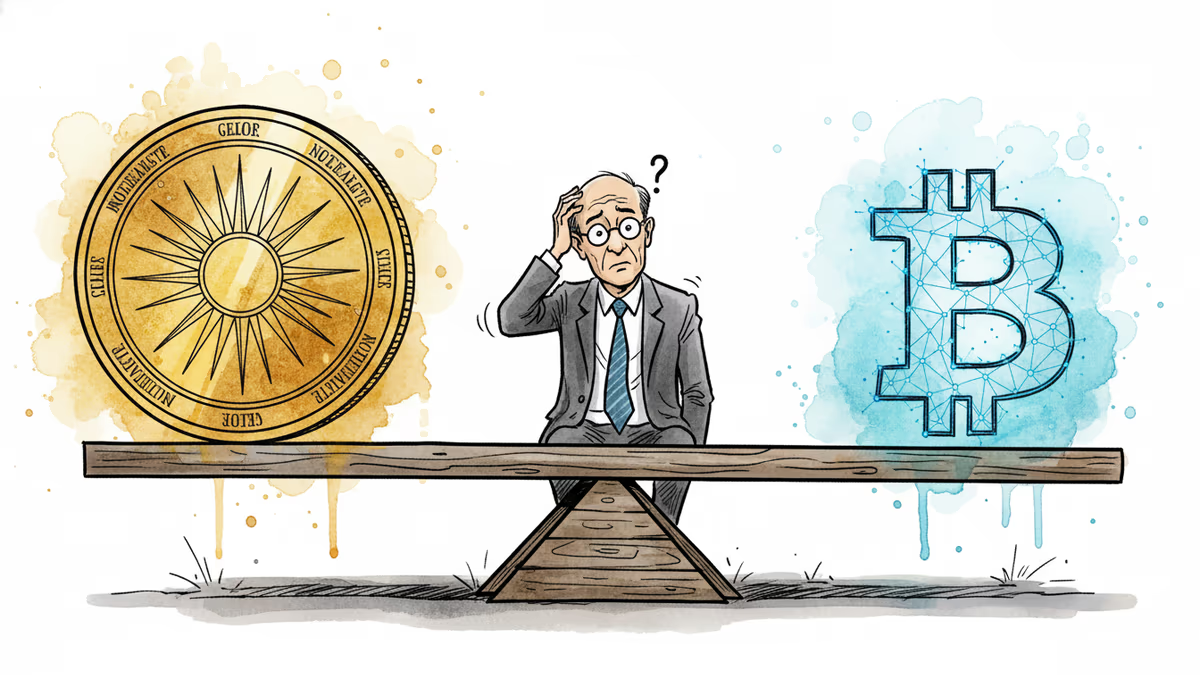
Bridgewater founder dismissed bitcoin's safe-haven status as gold fell 3% while bitcoin dropped just 0.7%. The market timing reveals cracks in traditional safe-haven theory.

Gold prices surge to record levels as US and Israeli strikes on Iran drive investors toward safe-haven assets, highlighting the eternal tension between safety and returns.
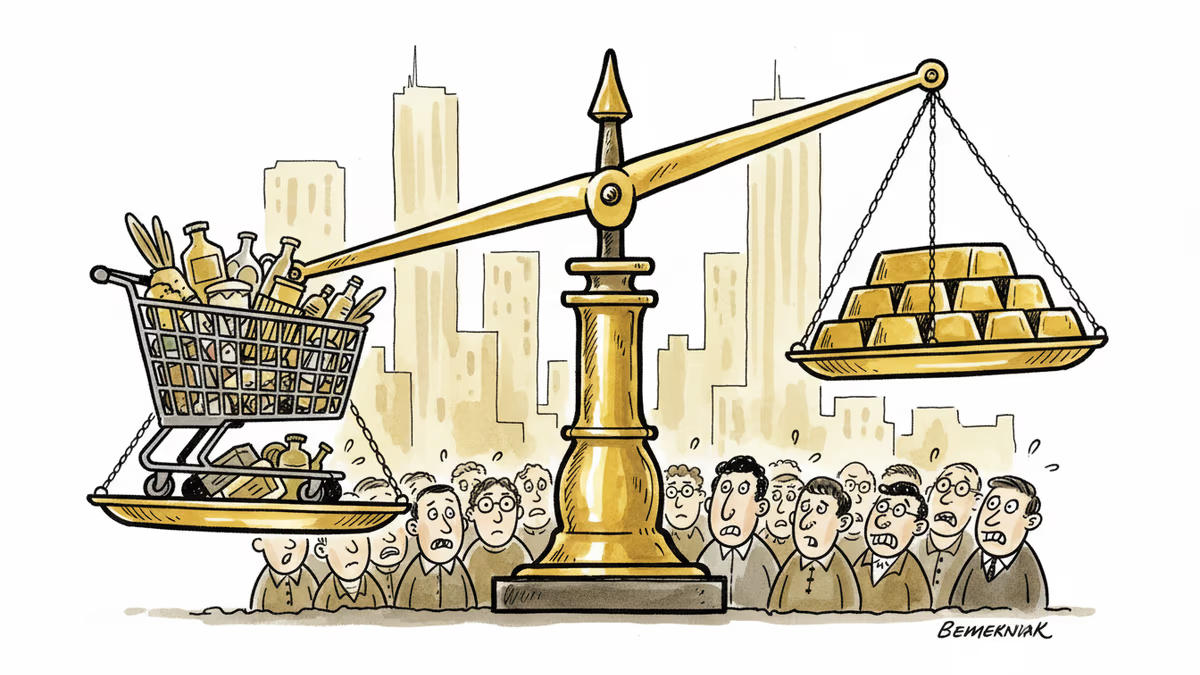
US retail sales weakness drives gold and silver higher, but dollar weakness and inflation concerns create complex implications for global investors.
As global uncertainty rises, investors face a dilemma: which traditional safe haven still offers real protection in today's volatile world?
Bridgewater founder dismissed bitcoin's safe-haven status as gold fell 3% while bitcoin dropped just 0.7%. The market timing reveals cracks in traditional safe-haven theory.
Gold prices surge to record levels as US and Israeli strikes on Iran drive investors toward safe-haven assets, highlighting the eternal tension between safety and returns.
US retail sales weakness drives gold and silver higher, but dollar weakness and inflation concerns create complex implications for global investors.
Thoughts
Share your thoughts on this article
Sign in to join the conversation