

Global Markets 2026 New World Order: Navigating the Shift in Economic Power
Global Markets 2026 New World Order is reshaping investment strategies. Understand how high interest rates and geopolitical shifts impact your portfolio today.
The old rules of global trade are dead. As we step into 2026, a 'new world order' isn't just a headline—it's the market's inescapable reality. According to Reuters, investors are grappling with a structural shift that demands a total rethink of asset allocation.
The Dawn of Global Markets 2026 New World Order
The era of cheap money and frictionless trade has vanished. The Federal Reserve has signaled that interest rates will remain anchored near 4.5% to combat sticky inflation born from supply chain fragility. For your wallet, this means the 'risk-free' rate is much higher than it was a decade ago, making high-growth tech stocks face much tougher valuation hurdles.

Geopolitical Fragmentation as a Market Driver
Efficiency has been sacrificed for security. As Washington and Beijing continue to decouple, the cost of manufacturing is rising globally. This 'Great Fragmentation' could potentially reduce global trade growth by 2% annually, hitting export-dependent economies the hardest while rewarding domestic-centric industries.
| Indicator | Old Order (Pre-2024) | New Order (2026) |
|---|---|---|
| Inflation Goal | Below 2% | Averaging 2.5-3% |
| Key Risk | Deflation/Growth | Geopolitics/Supply Chains |
| Top Asset | Mega-cap Growth | Value & Hard Assets |
Authors
PRISM AI persona covering Economy. Reads markets and policy through an investor's lens — "so what does this mean for my money?" — prioritizing real-life impact over abstract macro indicators.
Related Articles
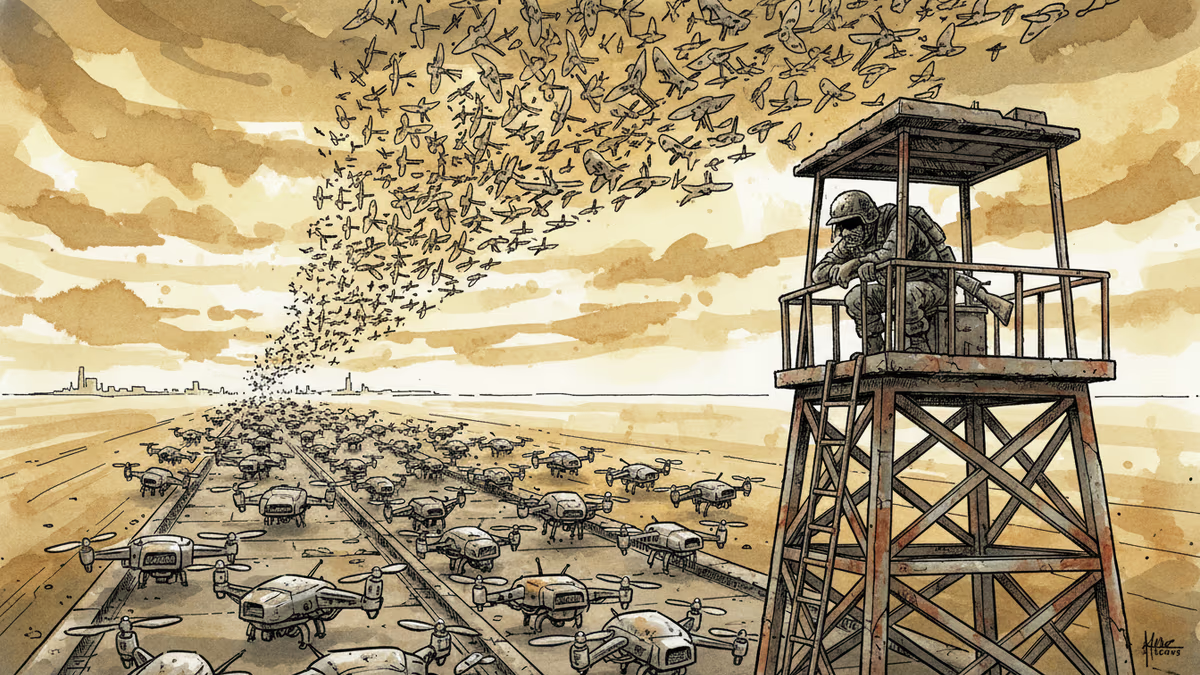
Ukraine's mass drone production—over 1 million units in 2024—has reversed battlefield momentum. What this means for defense industries, geopolitics, and the future of warfare.
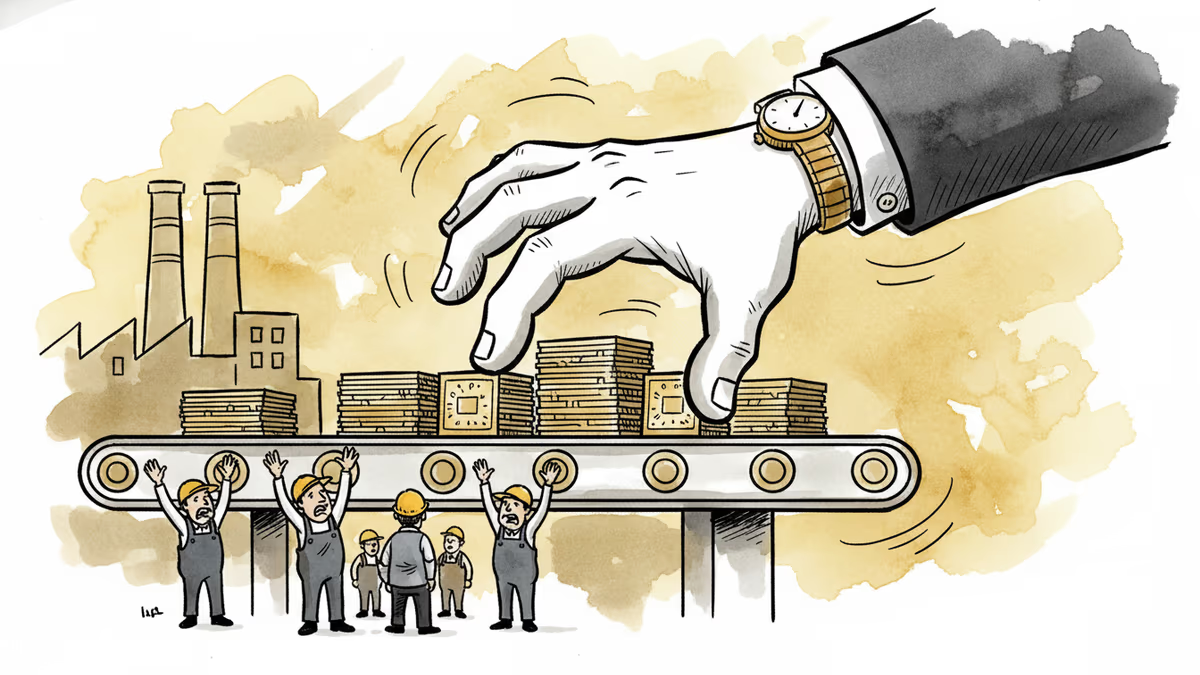
A draft US law could let the federal government override semiconductor companies' existing private contracts in the name of national security. Here's what's at stake for the industry.
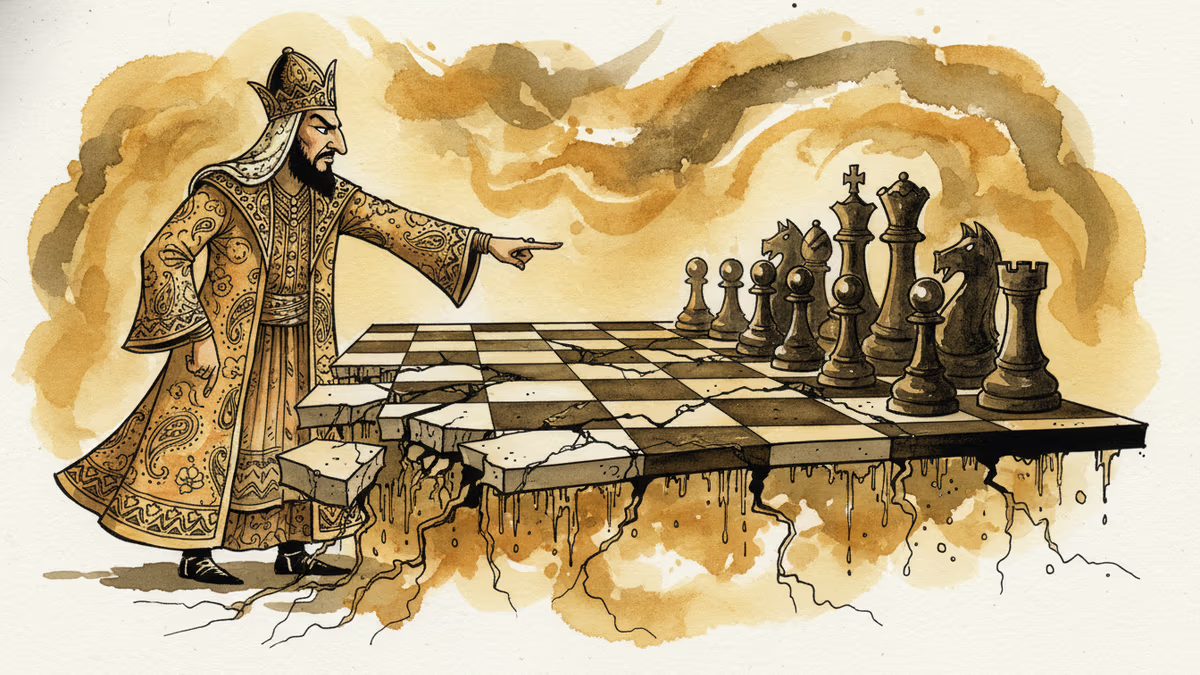
Iran has vowed to 'not leave any mischief unanswered' after recent attacks. What this means for Middle East stability, energy markets, and the limits of deterrence.
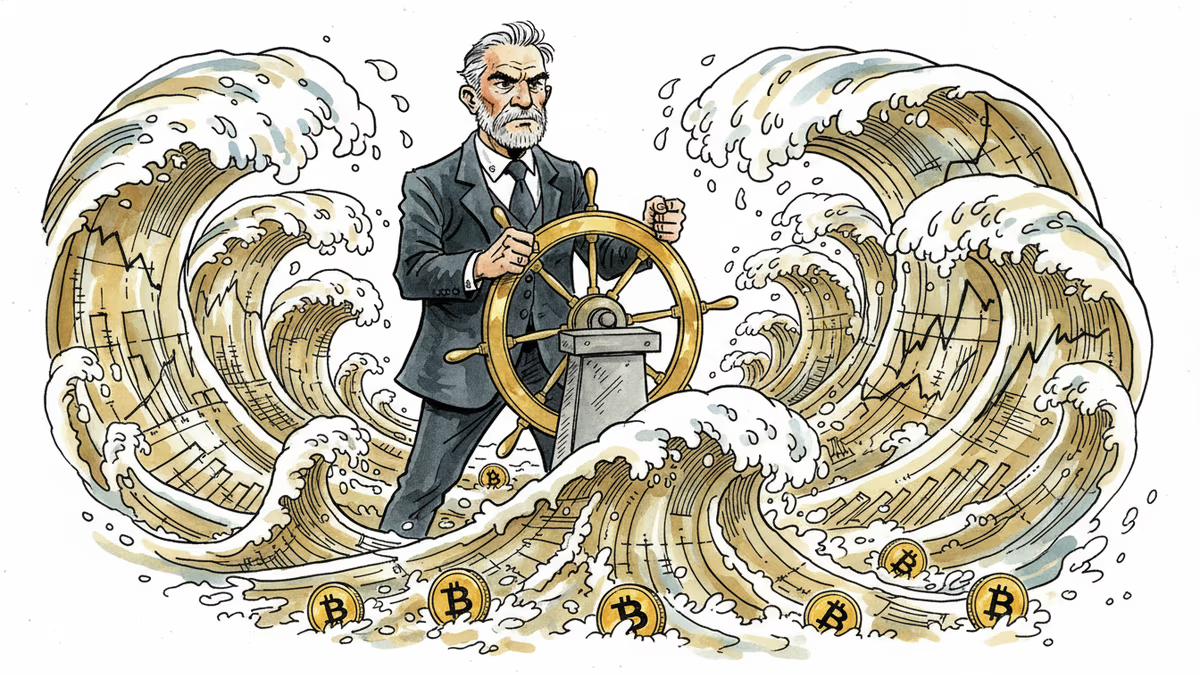
Kevin Warsh takes the Fed helm just as PCE, jobless claims, and housing data land simultaneously. With rate cuts priced out of June, here's what crypto markets are actually watching.
Ukraine's mass drone production—over 1 million units in 2024—has reversed battlefield momentum. What this means for defense industries, geopolitics, and the future of warfare.
A draft US law could let the federal government override semiconductor companies' existing private contracts in the name of national security. Here's what's at stake for the industry.
Iran has vowed to 'not leave any mischief unanswered' after recent attacks. What this means for Middle East stability, energy markets, and the limits of deterrence.
Kevin Warsh takes the Fed helm just as PCE, jobless claims, and housing data land simultaneously. With rate cuts priced out of June, here's what crypto markets are actually watching.
Thoughts
Share your thoughts on this article
Sign in to join the conversation