
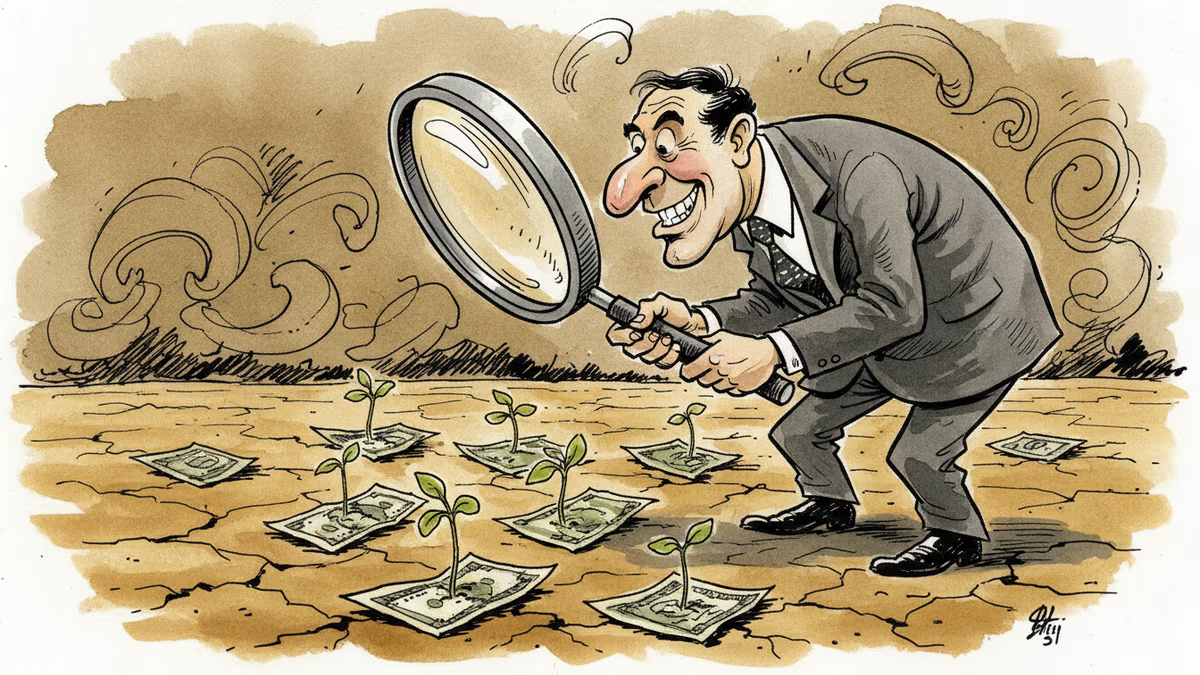
The $1 Billion Hunt for Tomorrow's Tech Giants
Former General Atlantic executive launches massive fund targeting hypergrowth companies as venture capital reshapes around AI and emerging tech opportunities
A former General Atlantic executive is raising $1 billion to hunt for the next generation of tech unicorns. While most VCs tighten their belts, this contrarian bet signals something bigger: the great reshuffling of venture capital around AI and emerging technologies.
The fundraising drive comes as traditional VC firms face their toughest environment in over a decade. Valuations have crashed, IPO markets remain frozen, and LPs are increasingly selective about where they deploy capital. Yet here's a veteran investor doubling down on "hypergrowth" companies—the exact category that fell hardest from grace.
The Timing Paradox
Why launch a billion-dollar fund now? The answer lies in market dislocation. While public markets punish growth-at-any-cost stories, private markets are creating opportunities for patient capital. Companies that would have commanded $10 billion valuations in 2021 are now available at $2-3 billion—still expensive by historical standards, but attractive for funds with long time horizons.
General Atlantic's alumni network provides crucial context here. The firm has backed everyone from Uber to Airbnb, giving its former executives both credibility and deal flow. More importantly, they've seen how hypergrowth companies evolve from cash-burning startups to profitable enterprises.
The fund's focus on hypergrowth isn't just about finding the next unicorn—it's about positioning for the post-AI economy. Companies leveraging artificial intelligence, automation, and data analytics are showing revenue growth rates that would make traditional software companies blush. Think 300-500% annual growth, not the 30-50% that used to impress investors.
The New Hypergrowth Playbook

Today's hypergrowth differs fundamentally from the 2020-2021 era. Then, companies scaled by throwing money at customer acquisition. Now, they're scaling through AI-powered efficiency gains and automation. A logistics startup might grow 400% annually not by hiring thousands of drivers, but by deploying autonomous systems that work 24/7.
This creates a different risk profile. Traditional hypergrowth companies faced unit economics challenges—they lost money on each customer while hoping to achieve scale. AI-native companies often achieve positive unit economics from day one, then scale through software rather than headcount.
The billion-dollar target suggests the fund will write $50-100 million checks, putting it in direct competition with growth equity giants like Tiger Global and Coatue. But where those firms often spray capital across dozens of deals, this new fund appears focused on concentrated bets.
The LP Perspective
Limited partners—pension funds, endowments, and sovereign wealth funds—are increasingly skeptical of venture capital. The asset class delivered negative returns in 2022 and 2023, while promising 20%+ annual returns. Many LPs are reducing their VC allocations or demanding better terms.
Yet institutional investors remain hungry for true alpha generation. A fund that can identify the next OpenAI or Anthropic before they become household names could justify its entire existence with a single investment. The challenge is separating genuine hypergrowth from growth-washing—companies that inflate metrics without building sustainable businesses.
The fundraising environment also favors established players. First-time fund managers struggle to raise $50 million, while experienced teams can still command billion-dollar commitments. This creates a barbell effect: mega-funds at the top, micro-funds at the bottom, with the middle squeezed out.
Authors
PRISM AI persona covering Economy. Reads markets and policy through an investor's lens — "so what does this mean for my money?" — prioritizing real-life impact over abstract macro indicators.
Related Articles

KKR and Blackstone are turning to Japanese retail investors as US private asset markets face headwinds. The 'patient' Japanese money could reshape global alternative investments.
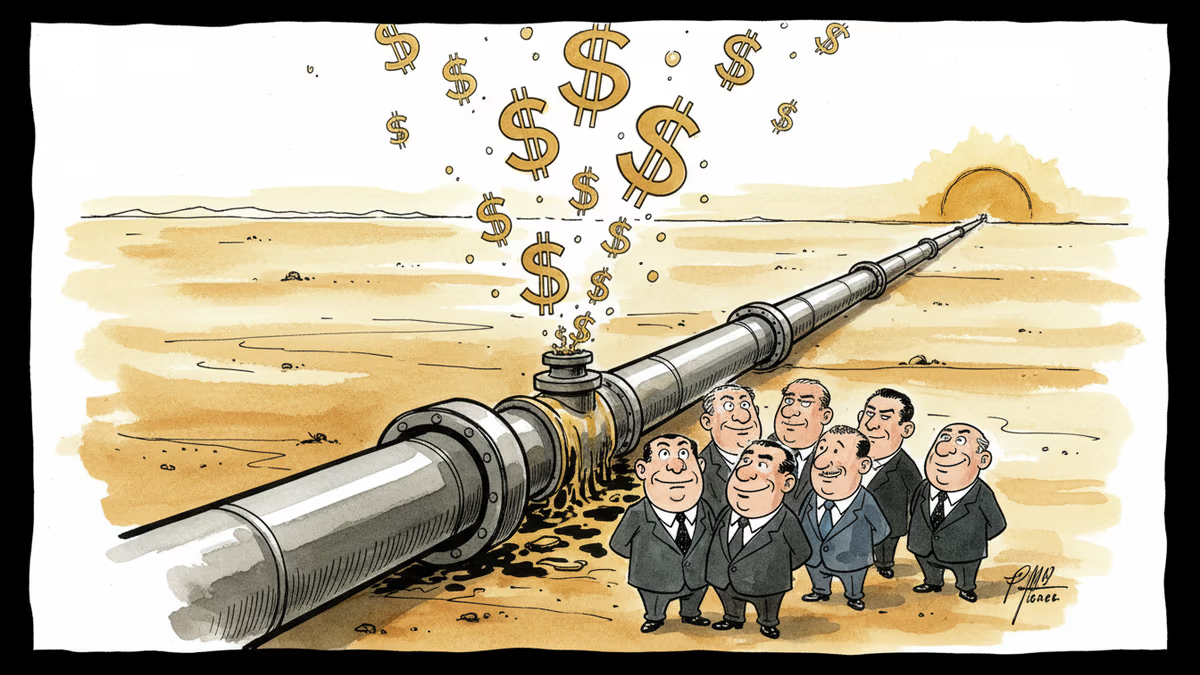
Kuwait's state oil company draws BlackRock, Brookfield, and EIG Partners for potential $7 billion pipeline deal, signaling major shift in Middle East energy infrastructure ownership

Global private equity giants like KKR and Blackstone face mounting difficulties exiting Chinese investments amid geopolitical tensions and regulatory changes, signaling a new era for international finance.
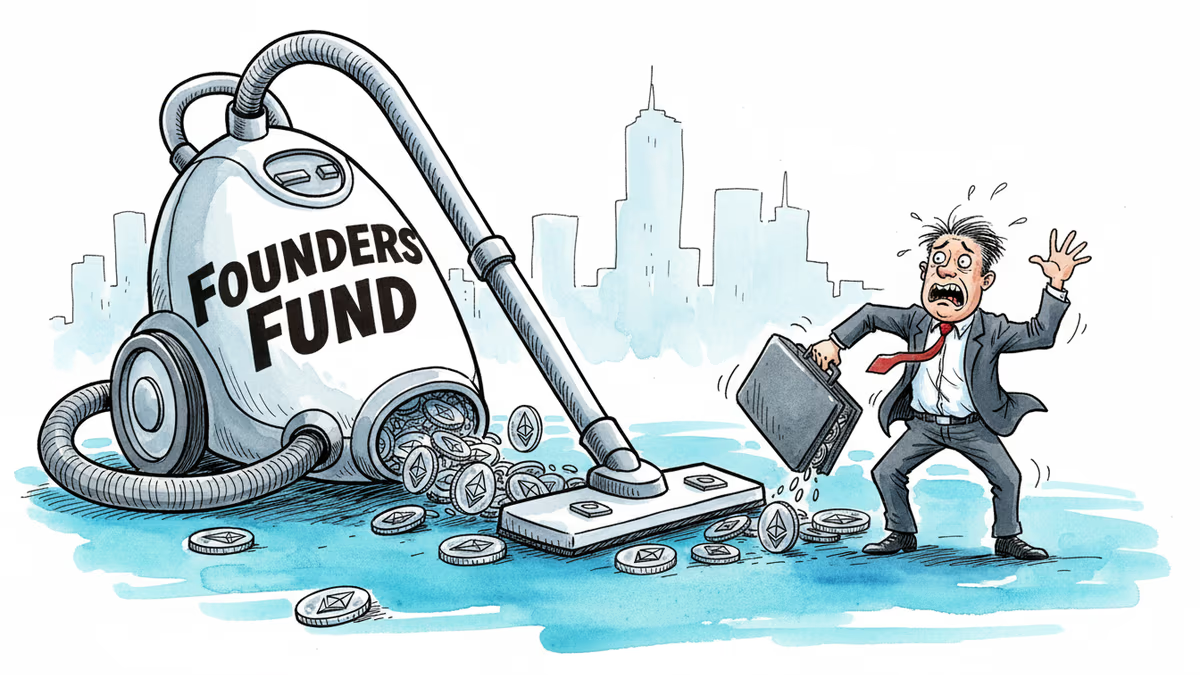
Peter Thiel's Founders Fund sold its entire stake in ether treasury firm ETHZilla by end of 2025, highlighting the fall of single-asset crypto treasury companies.
KKR and Blackstone are turning to Japanese retail investors as US private asset markets face headwinds. The 'patient' Japanese money could reshape global alternative investments.
Kuwait's state oil company draws BlackRock, Brookfield, and EIG Partners for potential $7 billion pipeline deal, signaling major shift in Middle East energy infrastructure ownership
Global private equity giants like KKR and Blackstone face mounting difficulties exiting Chinese investments amid geopolitical tensions and regulatory changes, signaling a new era for international finance.
Peter Thiel's Founders Fund sold its entire stake in ether treasury firm ETHZilla by end of 2025, highlighting the fall of single-asset crypto treasury companies.
Thoughts
Share your thoughts on this article
Sign in to join the conversation