
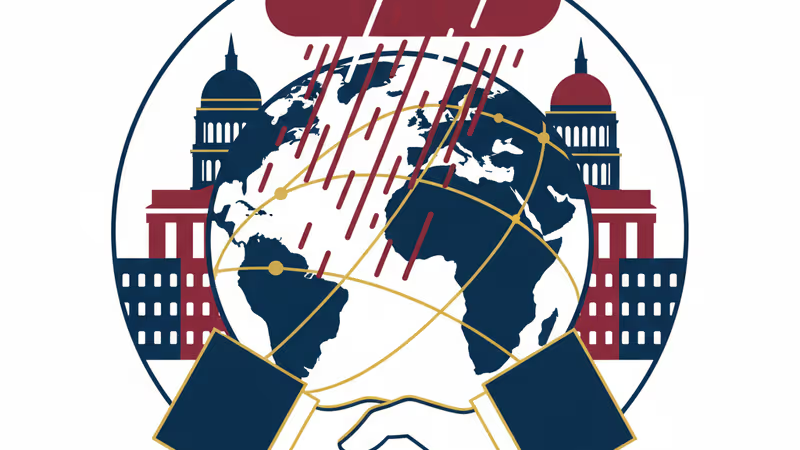
Gaza's Winter of Discontent: How Rain Becomes a Geopolitical Accelerant
Analysis of how winter rains in Gaza are a geopolitical accelerant, stress-testing the ceasefire and amplifying a humanitarian crisis with global implications.
The Lede: Beyond the Headlines
While global attention remains fixed on ceasefire negotiations and military strategy, a more elemental force is reshaping the Gaza conflict: the weather. Heavy winter rains are not merely a footnote to a humanitarian crisis; they are a geopolitical accelerant, stress-testing a fragile truce, amplifying pressure on regional powers, and creating a potential catalyst for a new, more desperate phase of instability. For global leaders and executives, this is a case study in how climate and conflict create a dangerous feedback loop, with second-order effects that ripple far beyond the immediate disaster zone.
Why It Matters: The Cascade Effect
The convergence of extreme weather and mass displacement in Gaza has created a multi-faceted crisis with significant global implications:
- Stress on Diplomacy: The deteriorating conditions on the ground shrink the window for diplomatic maneuvering. Mediators like Qatar, Egypt, and the United States face mounting pressure to secure a more permanent solution as the humanitarian situation becomes a daily, visible emergency. The risk of the truce collapsing under the weight of the crisis grows with every downpour.
- Humanitarian System Failure: This is a live demonstration of the 21st-century humanitarian aid system at its breaking point. Logistical chokepoints, security risks, and now impassable, flooded terrain highlight the inadequacy of traditional aid delivery in a complex, compound crisis. The failure to provide basic shelter and warmth will have long-term consequences for public health and regional stability.
- The Narrative Battlefield: In the information war, images of children shivering in flooded tents are incredibly potent. This visual evidence of suffering will intensify international public pressure on the Israeli government and its allies, potentially influencing foreign policy and driving deeper diplomatic divides.
The Analysis: Weather as a Weapon and a Variable
Historically, weather has always been a decisive factor in conflict, from Napoleon's retreat from Moscow to the mud seasons of the Ukrainian front. What's different in Gaza is the context: a contained, densely populated urban area where millions are displaced into makeshift shelters with no resilience. The crisis is not just one of military action, but of systems collapse, where basic infrastructure to manage something as predictable as winter rain has been obliterated.
From a geopolitical standpoint, the situation creates competing pressures. For Israel, the humanitarian fallout complicates its strategic objectives and damages its standing on the world stage. For Hamas, the suffering of the civilian population serves as a powerful tool for galvanizing international condemnation of Israel. For neighboring countries like Egypt, the specter of a completely unlivable Gaza raises the deeply destabilizing possibility of a massive, uncontrollable refugee crisis on its border.
The current UN-reported death toll from hypothermia and building collapses is a grim early indicator. As temperatures drop further and disease vectors like cholera thrive in stagnant water, the crisis will escalate from one of exposure to one of epidemic, placing an impossible burden on a shattered healthcare system.
PRISM Insight: The Rise of 'Clima-Conflict' Tech
This crisis underscores a critical emerging field: technology for humanitarian resilience in conflict zones amplified by climate change. The inadequacy of simple tarpaulin sheets signals a market failure and an innovation opportunity. Watch for accelerating investment and R&D in several key areas:
- Advanced Shelter Solutions: Beyond tents, the demand is for rapidly deployable, insulated, and durable modular shelters. Companies specializing in material science and pre-fabricated structures are pivotal here.
- Predictive Logistics AI: Standard supply chain software is insufficient. The next frontier is AI-driven platforms that can model weather patterns, predict infrastructure failures (like flooded roads), and dynamically reroute aid convoys in real-time.
- Low-Bandwidth MedTech: With infrastructure destroyed, remote health monitoring becomes critical. Expect a push for ruggedized, low-power devices and telehealth platforms capable of operating on degraded networks to track for signs of hypothermia and waterborne diseases.
PRISM's Take: A Glimpse into Future Conflicts
The rains lashing Gaza are more than a weather event; they are a glimpse into the future of conflict. The clear delineation between a man-made war and a natural disaster is blurring. In an era of increasing climate volatility, environmental conditions will no longer be a passive backdrop to conflict but an active participant. The strategic challenge for nations, NGOs, and corporations will be to build resilience against these compound crises. The international community's response—or lack thereof—to the preventable deaths from cold and rain in Gaza will not only determine the immediate future of this conflict but will also set a dangerous precedent for how the world handles the next one.
Related Articles
President Trump quietly signed a record defense bill, but its contents reveal a major policy clash with Congress over Ukraine aid and NATO, signaling deep US strategic uncertainty.
Kazakhstan's new 'LGBT propaganda' law isn't just a domestic issue. It's a geopolitical signal with major implications for tech firms and foreign investors.

Beyond a talent grab, OpenAI's hiring of George Osborne is a geopolitical play to shape global AI regulation. PRISM analyzes the implications for tech and state power.
The conviction of media mogul Jimmy Lai is not just a legal ruling. It's a strategic move in China's global information warfare, redefining political risk.