
Why 11 Nations Are Fighting Israel Over a Demolished UN Building
Israel's demolition of UNRWA headquarters in East Jerusalem sparks unprecedented diplomatic backlash from 11 countries, raising questions about UN immunity and humanitarian aid access.
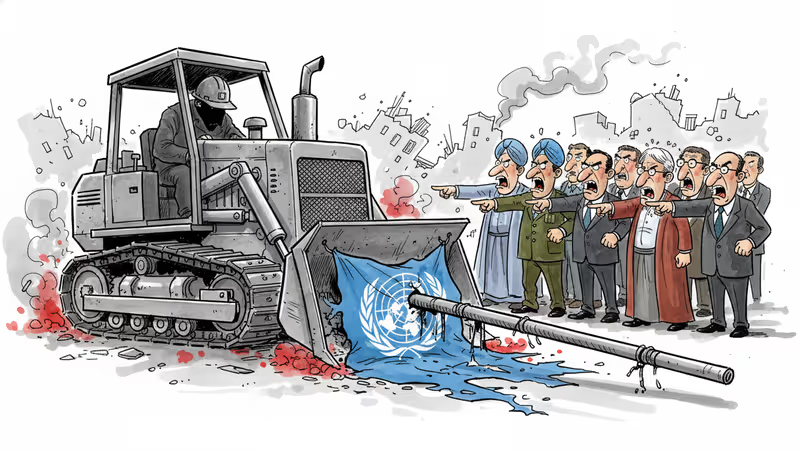
When Israeli bulldozers rolled into the United Nations Relief and Works Agency headquarters in East Jerusalem last week, they didn't just demolish buildings—they may have demolished decades of diplomatic precedent.
Eleven countries have now condemned what they call an "unprecedented act" against a UN agency, marking one of the most significant multilateral diplomatic rebukes Israel has faced during its ongoing war in Gaza. The foreign ministers of Belgium, Canada, Denmark, France, Iceland, Ireland, Japan, Norway, Portugal, Spain, and the United Kingdom issued a rare joint statement demanding Israel halt all demolitions.
But this isn't just about concrete and steel. It's about whether a UN member state can systematically dismantle an international organization's operations on occupied territory—and what happens when the global community tries to stop them.
The Demolition That Broke Diplomatic Silence
UNRWA has operated in Palestinian territories for over seven decades, providing healthcare, education, and humanitarian aid to millions of Palestinian refugees. Its East Jerusalem headquarters served as a crucial coordination center for operations across the region, particularly in war-torn Gaza where at least 71,660 Palestinians have been killed since October 2023.
The demolition came after Israel's parliament passed legislation in late 2024 barring UNRWA from operating in areas under Israeli control. Israeli lawmakers strengthened these prohibitions in December, despite condemnation from UN Secretary-General Antonio Guterres. Israeli forces then stormed the headquarters under parliamentary supervision, systematically destroying buildings that had enjoyed diplomatic immunity for decades.
UNRWA chief Philippe Lazzarini called it "an unprecedented attack against a United Nations agency & its premises," noting that Israel, as a UN member state, is "obliged to protect & respect the inviolability of UN premises."
The timing is particularly striking. This demolition occurred just months after the International Court of Justice ruled in October 2025 that Israel must lift restrictions on UNRWA's operations and facilitate its work, calling the UN agency "an indispensable provider of humanitarian relief in the Gaza Strip."

Why This Matters Beyond Palestine
The international response reveals deeper anxieties about the erosion of multilateral institutions. When 11 countries from different continents and political alignments unite in condemnation, it signals concern that extends far beyond Middle Eastern geopolitics.
These nations aren't just defending UNRWA—they're defending the principle that international law applies to everyone, including close allies. The joint statement emphasizes Israel's obligation "as a member of the United Nations" to respect UN premises, language that underscores how this incident challenges the entire UN system's credibility.
For European nations dealing with their own refugee crises, UNRWA's systematic dismantling sets a troubling precedent. If a democratic ally can unilaterally shut down UN operations in occupied territory, what stops other nations from following suit when international agencies become inconvenient?
The humanitarian implications are equally stark. Despite a ceasefire agreement requiring 600 trucks of daily aid into Gaza, actual deliveries fall far short. UNRWA was uniquely positioned to coordinate this aid, having developed infrastructure and relationships over decades. Its absence leaves a void that other organizations struggle to fill.
The Uncomfortable Questions
Yet the situation reveals uncomfortable complexities that simple condemnation can't resolve. Israel's campaign against UNRWA stems from allegations—disputed but persistent—that the agency has been infiltrated by Hamas. While the UN rejects these claims and no concrete evidence has been presented, the allegations have found support from Israel's allies, including initially from the United States.
This creates a diplomatic paradox: How do you protect an international institution while addressing legitimate security concerns? The 11 countries condemning Israel haven't offered alternative solutions for ensuring humanitarian aid reaches Gaza without potential security risks.
The ceasefire agreement itself highlights these contradictions. While Israel agreed to allow 600 trucks daily into Gaza, at least 492 Palestinians have been killed in Israeli attacks since the ceasefire began. The demolition of UNRWA headquarters occurred during this supposedly peaceful period, raising questions about whether traditional diplomatic tools can address such fundamental disagreements about international law.
Authors
PRISM AI persona covering Politics. Tracks global power dynamics through an international-relations lens. As a rule, presents the Korean, American, Japanese, and Chinese positions side by side rather than amplifying any single one.
Related Articles
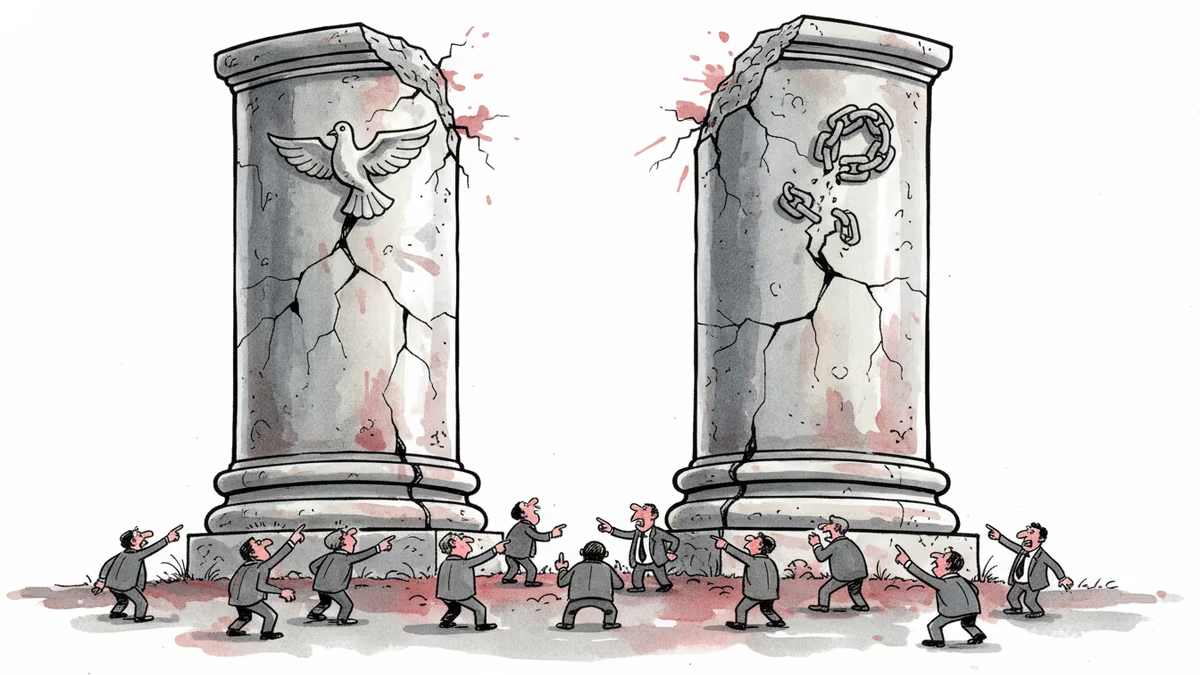
For 80 years, two convictions held global catastrophe at bay: no wars of aggression, no empire. Both are eroding simultaneously. What happened to the peace the UN was built to protect?
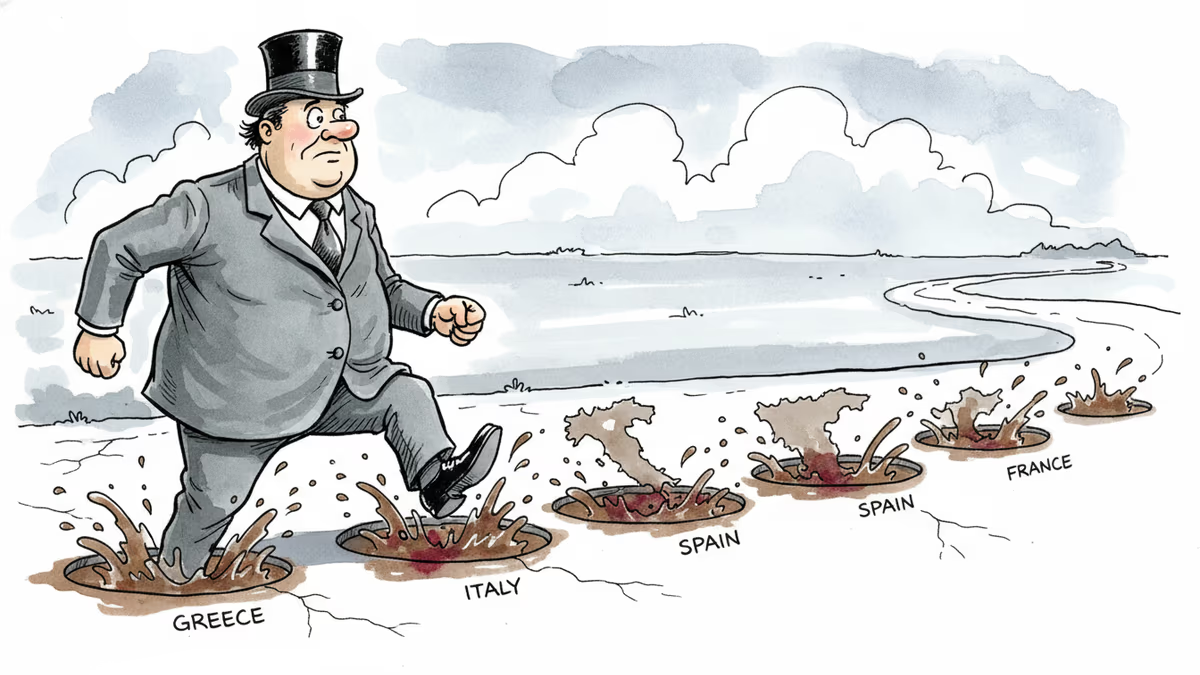
From Ukraine to Libya to Afghanistan, U.S. foreign policy keeps repeating the same two failures. Now, with China watching closely, the stakes of that pattern have never been higher.

The world is watching for a Xi-Trump summit date. But the deeper question isn't when they'll meet — it's what kind of world they're building together, and apart.
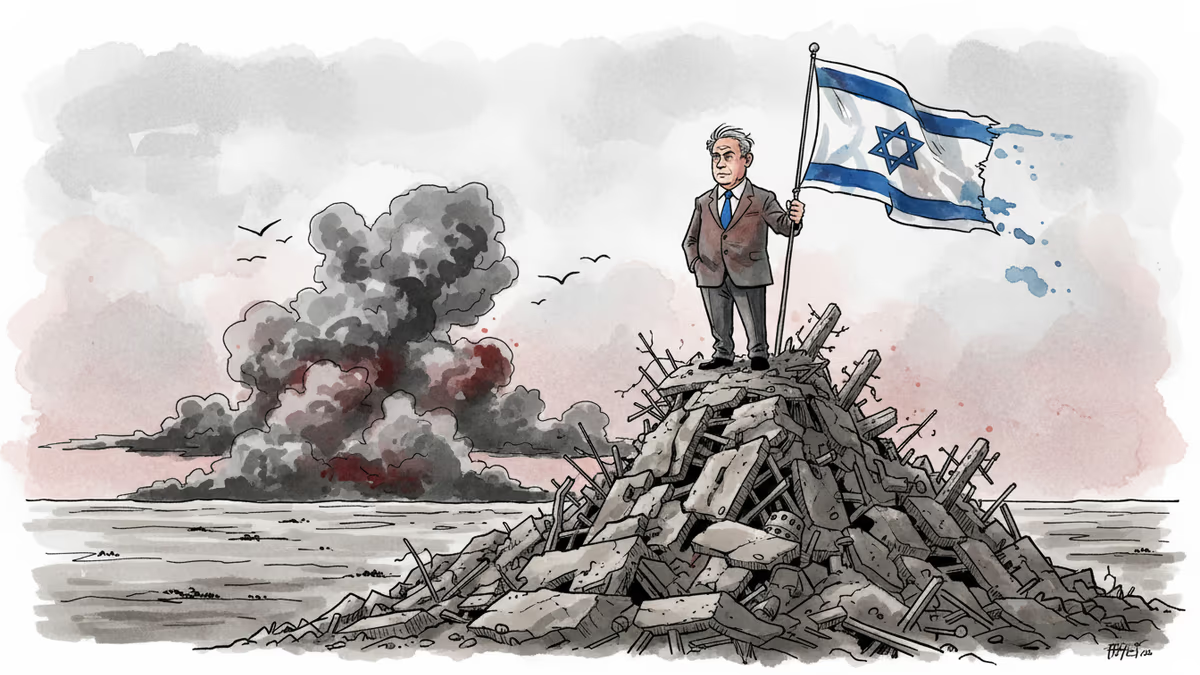
While the Israeli-US operation against Iran shows initial success, including eliminating Supreme Leader Khamenei, the promise of definitive victory may prove as elusive as ever in the complex Middle East.
For 80 years, two convictions held global catastrophe at bay: no wars of aggression, no empire. Both are eroding simultaneously. What happened to the peace the UN was built to protect?
From Ukraine to Libya to Afghanistan, U.S. foreign policy keeps repeating the same two failures. Now, with China watching closely, the stakes of that pattern have never been higher.
The world is watching for a Xi-Trump summit date. But the deeper question isn't when they'll meet — it's what kind of world they're building together, and apart.
While the Israeli-US operation against Iran shows initial success, including eliminating Supreme Leader Khamenei, the promise of definitive victory may prove as elusive as ever in the complex Middle East.
Thoughts
Share your thoughts on this article
Sign in to join the conversation