

Two Cable Romances, One Night, Two New Highs
tvN's 'Filing for Love' hit 9.4% ratings in episode 6 while JTBC's 'We Are All Trying Here' also peaked simultaneously. What does this rare double-climb tell us about Korean cable drama in 2026?
On the same night, two competing cable romance dramas each hit their personal best. In a TV landscape where one show's gain usually means another's loss, that's worth pausing on.
On May 10, episode 6 of tvN's Filing for Love posted a 9.4% nationwide average rating (Nielsen Korea) — the show's highest figure yet, landing at the midpoint of its run. Simultaneously, JTBC's We Are All Trying Here also notched a new peak. Two different networks, two different romantic premises, climbing together.
What 9.4% Actually Means
For a Korean cable drama in 2026, 9.4% is genuinely significant. The benchmark matters because Korean terrestrial (free-to-air) weekend dramas — the traditional ratings kings — now routinely average in the 7–9% range. A cable drama approaching double digits is encroaching on territory that broadcast networks once held exclusively.
tvN has crossed 10% only a handful of times in its drama history: Crash Landing on You peaked at 21.7% in 2020, Twenty-Five Twenty-One at 12.8% in 2022. If Filing for Love clears that threshold in its second half, it joins a short, commercially significant list.
The timing of this peak also matters structurally. Episode 6 is the final installment of the show's first half — typically a narrative inflection point where cliffhangers drive viewership upward. The real test comes in the back half: whether the audience holds, grows, or drifts. A 9.4% midpoint high is a strong position to build from, but K-drama second-half drops are common enough that it can't be taken as a guarantee.
Why Both Shows Rose Together

The simultaneous climb of two romance dramas on competing networks challenges a basic assumption of TV scheduling: that audiences have a fixed appetite, and feeding one show starves another.
The answer may lie in differentiation. Filing for Love leans into workplace-comedy energy — bureaucratic meet-cutes, office tension, light stakes. We Are All Trying Here occupies warmer, more emotionally weighted territory, closer to a relationship drama about effort and exhaustion in modern life. These aren't the same show for the same viewer. They're adjacent emotional experiences that don't fully cannibalize each other's audience.
There's also a broader context. The first half of 2026 on Korean streaming has been dominated by high-budget genre content — thrillers, sci-fi, crime procedurals — from Netflix and Disney+. That concentration at the top of the market may be creating a vacuum in the middle: viewers who want something lower-stakes, emotionally legible, and completable in a weekend sitting. Cable romance, with its tight episode counts and familiar grammar, fills that gap efficiently.
The Business Layer Underneath the Numbers
For CJ ENM (which distributes tvN content internationally) and JTBC Studios, a strong domestic Nielsen rating isn't just a vanity metric — it's a negotiating tool. Verified viewership figures directly influence licensing fees with Asian streaming platforms like Viki and regional OTT services. A show that proves its audience domestically commands higher pre-sale prices abroad.
This is where cable drama retains an advantage that Netflix originals don't have: transparency. Netflix reports viewing hours selectively and on its own terms. Nielsen ratings are imperfect — they don't capture streaming catch-up views fully — but they're independently verified and publicly available. That transparency keeps cable drama legible to advertisers and rights buyers in a way that opaque streaming metrics cannot replicate.
The irony is that the very format that streaming was supposed to make obsolete — the weekly broadcast with public ratings — remains the industry's most trusted proof of concept.
This content is AI-generated based on source articles. While we strive for accuracy, errors may occur. We recommend verifying with the original source.
Related Articles

MBC's action-comedy Fifties Professionals introduces Kwon Yul as an unpredictable new antagonist. Here's why this drama's premise matters beyond the casting news.
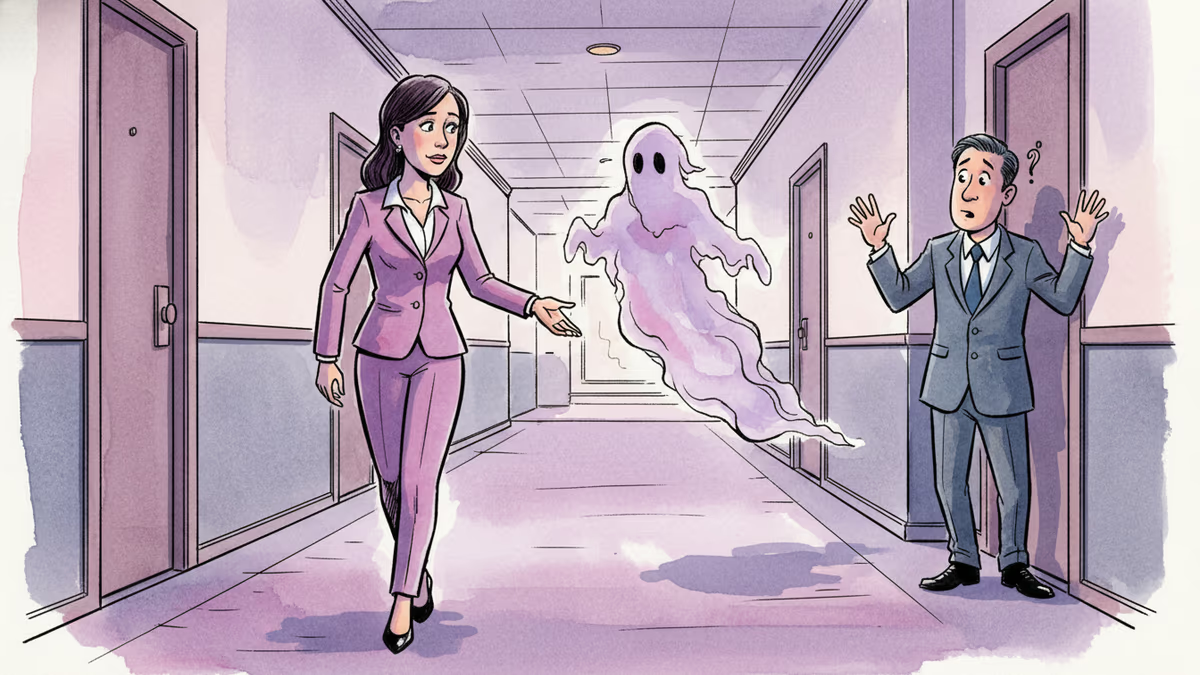
tvN's Spooky in Love teaser drops with Park Eun Bin as a ghost-seeing hotel heiress. Behind the occult romance lies a calculated industry strategy worth unpacking.
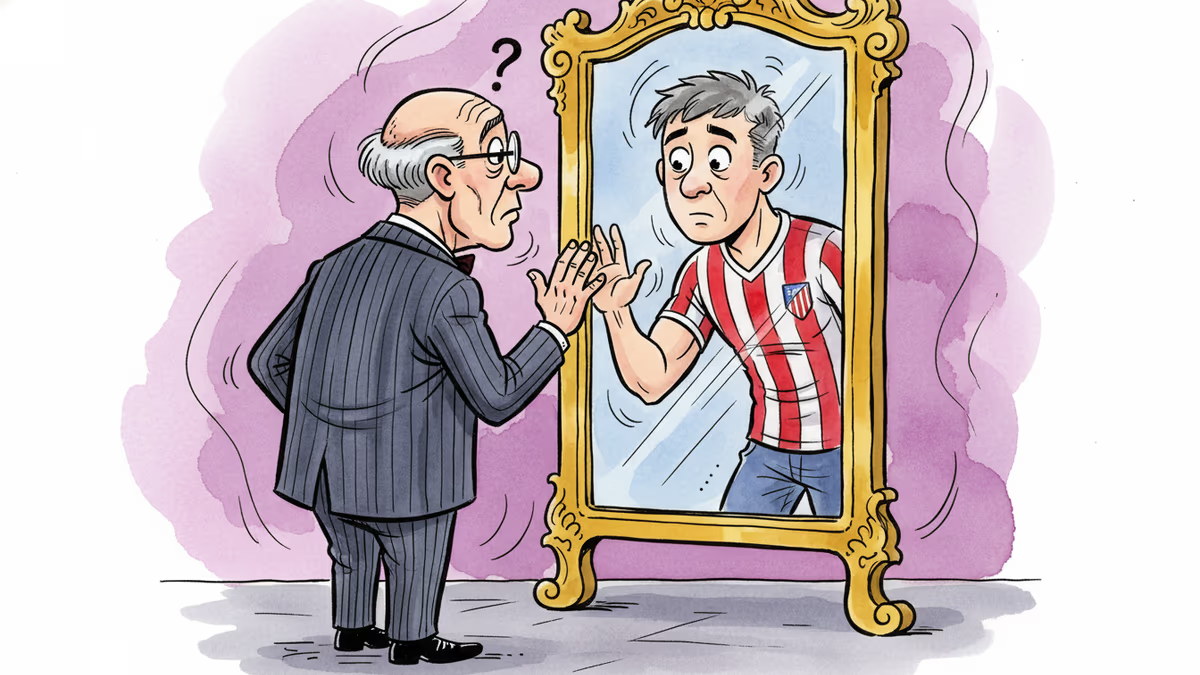
JTBC's Reborn Rookie pairs veteran actor Son Hyun Joo with idol-turned-actor Lee Jun Young in a body-swap drama. A look at the genre's industrial logic and what it signals about Korean TV's audience strategy.

JTBC's upcoming comedy crime drama Apartment casts Ji Sung, Ha Yoon-kyung, Park Byung-eun, and Moon Sori in a story where an ex-gangster enters a residents' committee election. What does the project reveal about JTBC's 2026 strategy?
MBC's action-comedy Fifties Professionals introduces Kwon Yul as an unpredictable new antagonist. Here's why this drama's premise matters beyond the casting news.
tvN's Spooky in Love teaser drops with Park Eun Bin as a ghost-seeing hotel heiress. Behind the occult romance lies a calculated industry strategy worth unpacking.
JTBC's Reborn Rookie pairs veteran actor Son Hyun Joo with idol-turned-actor Lee Jun Young in a body-swap drama. A look at the genre's industrial logic and what it signals about Korean TV's audience strategy.
JTBC's upcoming comedy crime drama Apartment casts Ji Sung, Ha Yoon-kyung, Park Byung-eun, and Moon Sori in a story where an ex-gangster enters a residents' committee election. What does the project reveal about JTBC's 2026 strategy?
Thoughts
Share your thoughts on this article
Sign in to join the conversation