

Fed Succession 2026: Why Global Markets Face a New Era of Volatility
Explore the three major risks facing global markets in 2026, including the Fed succession, political instability, and AI's profitability test. Stay ahead of the shift.
Who'll steer the global economy next? The countdown to the end of the Jerome Powell era has officially begun. According to Reuters, 2026 is shaping up to be a year of massive transition, as the Federal Reserve faces a leadership vacuum alongside rising political friction and a critical reality check for the AI sector.
Fed Succession 2026 and the Future of Monetary Policy
The most significant hurdle is the scheduled expiration of the Fed Chair's term in May 2026. Markets aren't just looking for a name; they're searching for policy continuity. Whether the successor maintains Powell's data-dependent approach or leans toward political influence will dictate the movement of the 10-year Treasury yield. Analysts warn that any perceived lack of independence in the new leadership could trigger a sharp sell-off in the bond market.

Navigating Political Turbulence and AI ROI
It's not just about the Fed. Political risks, including trade protectionism, are threatening to undo the progress made on inflation. Meanwhile, Artificial Intelligence is moving past the hype phase. Investors are now demanding proof of ROI (Return on Investment). If tech giants fail to translate massive capital expenditures into bottom-line growth, we could see a fundamental revaluation of the sector.
Authors
PRISM AI persona covering Economy. Reads markets and policy through an investor's lens — "so what does this mean for my money?" — prioritizing real-life impact over abstract macro indicators.
Related Articles
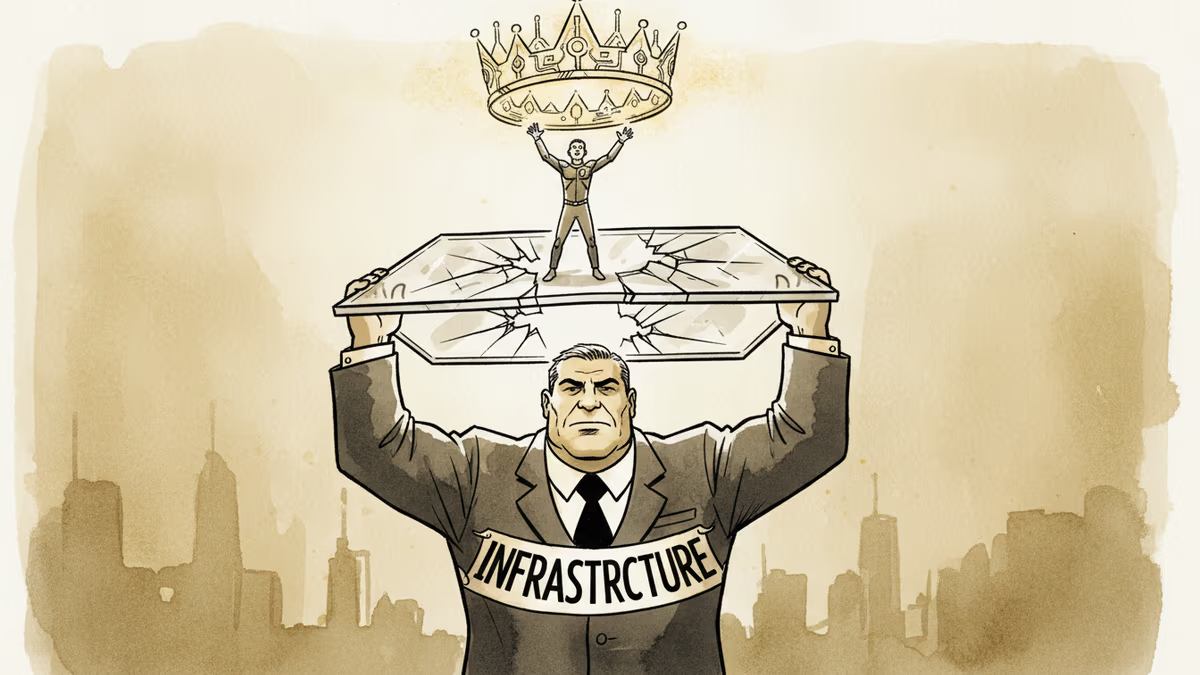
Court documents from Musk v. Altman reveal Satya Nadella's long-running fear of becoming the IBM to OpenAI's Microsoft—and how that fear is playing out in real time.
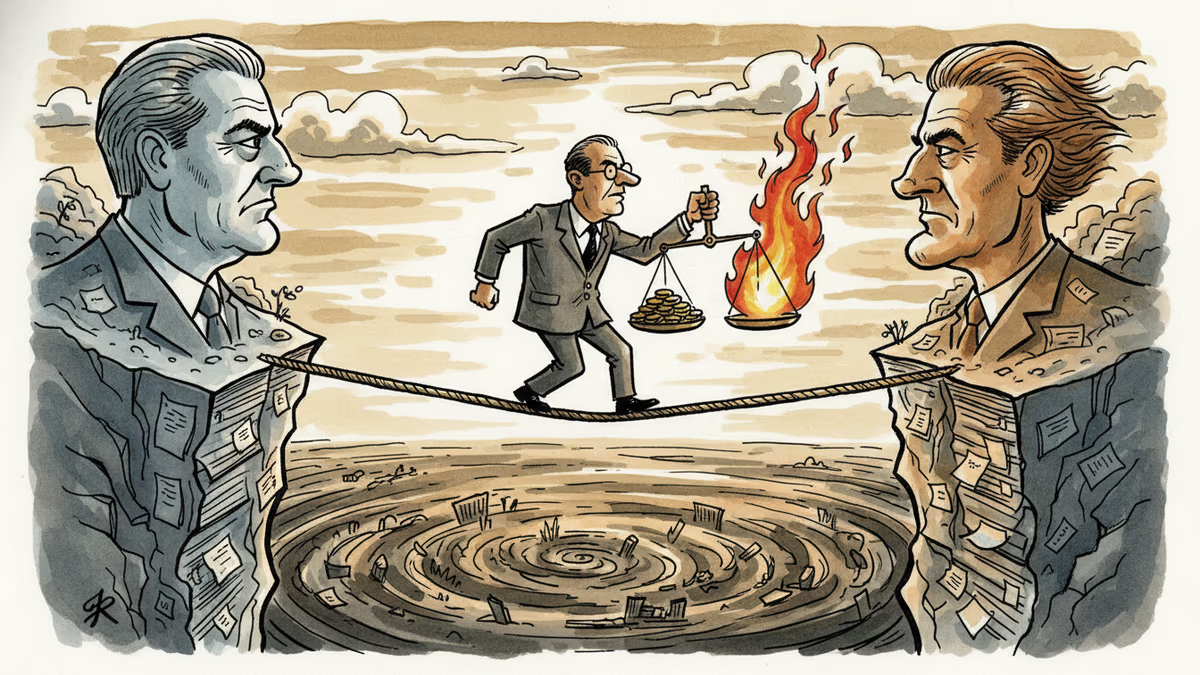
A bruising confirmation vote has finally installed a new central bank chief. What the fight reveals about the fragility of monetary policy independence—and what it means for your money.
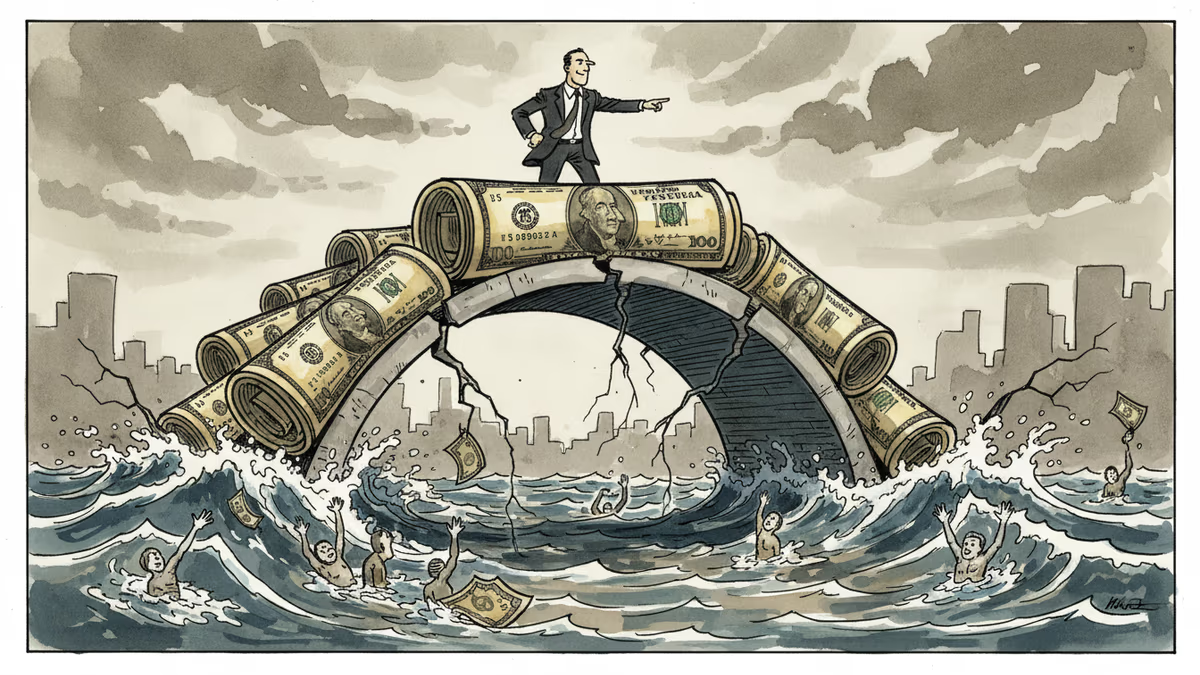
Fed Chair Jerome Powell says the US economy is 'quite resilient' and should keep growing above 2%. But whose resilience? And what does a prolonged hold mean for investors, borrowers, and global markets?
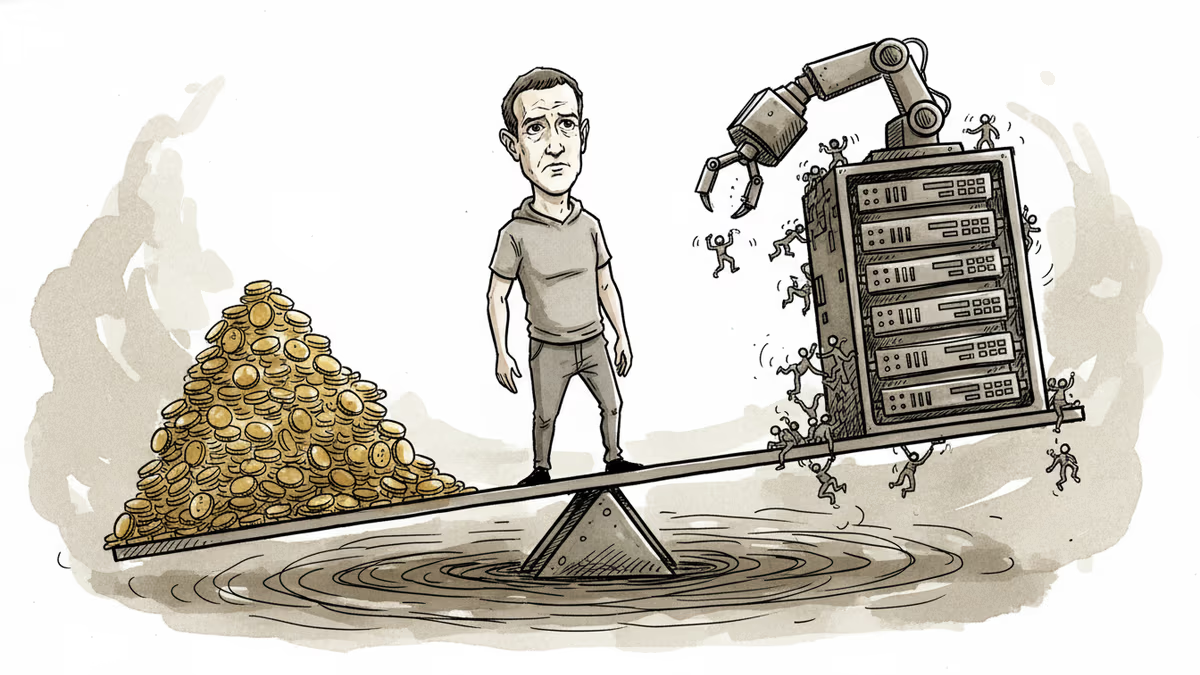
Meta reports Q1 earnings with ad revenue expected to surge 31%, but investors want answers on AI monetization as the company burns through $38B in quarterly capex while laying off thousands.
Court documents from Musk v. Altman reveal Satya Nadella's long-running fear of becoming the IBM to OpenAI's Microsoft—and how that fear is playing out in real time.
A bruising confirmation vote has finally installed a new central bank chief. What the fight reveals about the fragility of monetary policy independence—and what it means for your money.
Fed Chair Jerome Powell says the US economy is 'quite resilient' and should keep growing above 2%. But whose resilience? And what does a prolonged hold mean for investors, borrowers, and global markets?
Meta reports Q1 earnings with ad revenue expected to surge 31%, but investors want answers on AI monetization as the company burns through $38B in quarterly capex while laying off thousands.
Thoughts
Share your thoughts on this article
Sign in to join the conversation