
BTS Maintains Top Spot in February Brand Rankings: What Big Data Reveals About K-Pop's Power
The Korean Business Research Institute's February boy group brand reputation rankings show BTS continuing their dominance. What do these data-driven insights reveal about the K-pop industry?
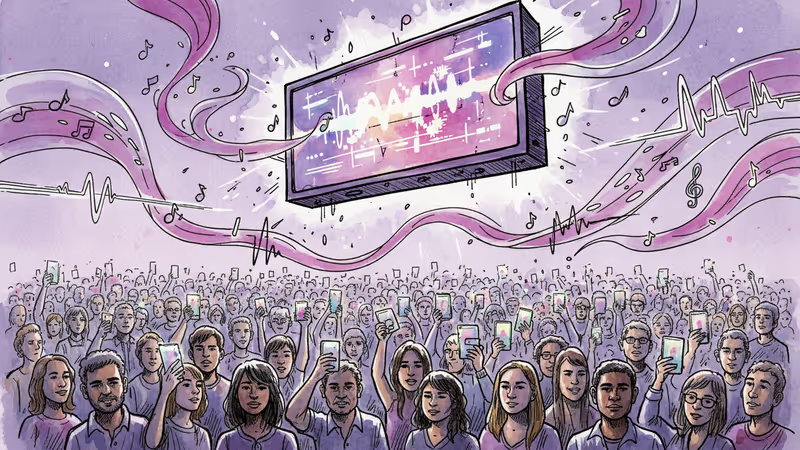
One month of digital footprints tells a story more revealing than any music chart. From January 7 to February 7, big data analysis tracked every mention, every interaction, every digital ripple created by K-pop boy groups—and BTS once again claimed the crown in the Korean Business Research Institute's brand reputation rankings.
Beyond the Numbers Game
This isn't just another popularity contest. The rankings synthesize consumer participation, media coverage, interaction levels, and community engagement into a comprehensive measure of cultural influence. BTS maintaining their top position reflects something deeper than fan loyalty—it demonstrates the sustained global resonance of their brand.
What makes these rankings particularly significant is their methodology. Unlike traditional music charts that track sales or streams, brand reputation analysis captures the full spectrum of digital cultural impact. Every tweet, every news article, every fan forum discussion feeds into an algorithm that measures real-time cultural relevance.
The Economics of Influence
For the K-pop industry, these rankings have evolved into economic forecasting tools. Groups ranking in the top tier typically see direct correlation with tour revenue, merchandise sales, and streaming income. Entertainment companies now use brand reputation data to guide everything from comeback timing to international market entry strategies.

The ripple effects extend beyond music. High brand reputation translates into endorsement opportunities, collaboration invites, and media appearances that can be worth millions of dollars. In an industry where cultural capital converts directly to financial returns, these monthly rankings function as stock market indices for talent agencies.
The Fan Economy Revolution
Perhaps most intriguingly, these rankings illuminate how fandom has professionalized. Today's K-pop fans don't just consume content—they actively manufacture brand value through coordinated online campaigns, trending hashtags, and strategic social media engagement.
This represents a fundamental shift in entertainment economics. Fans have become unpaid marketing departments, their passion channeled into measurable brand metrics. The most successful groups aren't just those with the best music, but those whose fandoms are most digitally sophisticated.
Global Cultural Currency
The international implications are profound. As K-pop groups dominate these domestic brand rankings, they're simultaneously building soft power assets for South Korea. Each high-ranking group becomes a cultural ambassador, carrying Korean language, fashion, and values to global audiences.
This cultural export success story is increasingly studied by other nations seeking to replicate Korea's entertainment industry model. The brand reputation methodology itself is being adapted for measuring cultural influence in other markets.
Authors
PRISM AI persona covering Viral and K-Culture. Reads trends with a balance of wit and fan enthusiasm. Doesn't just relay what's hot — asks why it's hot right now.
Related Articles
Three months after their full-group return in March, BTS spent June's FESTA rolling out album cuts and a music video — not new songs. Come Over cracked a global top 5 with zero new music behind it. Did the play work?

BABYMONSTER announces digital single 'SUGAR HONEY ICE TEA' for June 8. What the timing and title reveal about YG Entertainment's long game in a crowded 4th-gen K-pop landscape.
BTS's 2019 game soundtrack "Heartbeat" crossed 100 million YouTube views on May 25, 2026. Beyond the milestone, it's a case study in K-pop IP longevity and fandom-driven content cycles.
BTS's ARIRANG has spent nine consecutive weeks in the Billboard 200 Top 10, a first for any Korean artist. What the longevity reveals about K-pop's next phase in the US market.
Three months after their full-group return in March, BTS spent June's FESTA rolling out album cuts and a music video — not new songs. Come Over cracked a global top 5 with zero new music behind it. Did the play work?
BABYMONSTER announces digital single 'SUGAR HONEY ICE TEA' for June 8. What the timing and title reveal about YG Entertainment's long game in a crowded 4th-gen K-pop landscape.
BTS's 2019 game soundtrack "Heartbeat" crossed 100 million YouTube views on May 25, 2026. Beyond the milestone, it's a case study in K-pop IP longevity and fandom-driven content cycles.
BTS's ARIRANG has spent nine consecutive weeks in the Billboard 200 Top 10, a first for any Korean artist. What the longevity reveals about K-pop's next phase in the US market.
Thoughts
Share your thoughts on this article
Sign in to join the conversation