
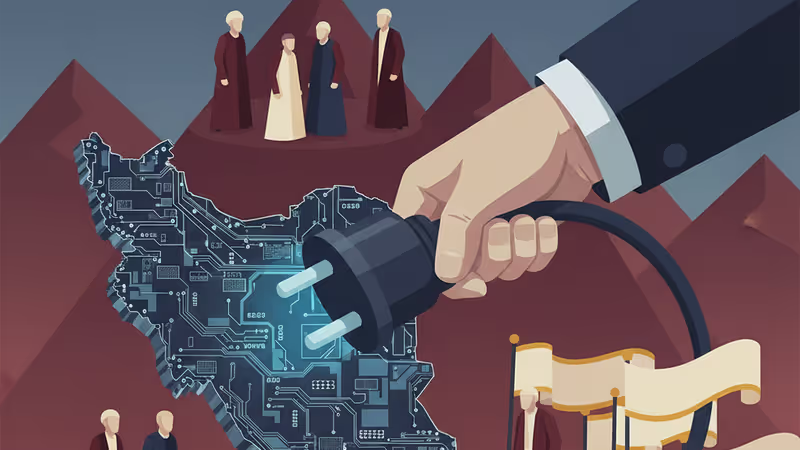
92 Million Silenced: Iran permanent internet shutdown 2026 fears grow
Iran is 10 days into a massive internet shutdown affecting 92 million people. Reports suggest a move toward a permanent, vetted system similar to China and Russia.
92 million citizens have vanished from the digital map. It's been 10 days since the Iranian government initiated one of the most extreme internet shutdowns in history. What started as a temporary blackout is now showing signs of becoming a permanent state of digital isolation.
The 2026 Iran permanent internet shutdown timeline
According to the BBC, the blackout began on January 8, 2026. While Foreign Minister Abbas Araghchi claimed the move was a response to "terrorist operations," international observers suggest it's a desperate attempt to stifle widespread dissent. The news site IranWire reported that access might not return until late March at the earliest.
The human cost is staggering. HRANA estimates that over 3,300 protesters have been killed, with more than 24,266 arrests recorded across 187 cities. The communications blackout makes it nearly impossible to independently verify these figures, creating a "black hole" of information.
A pivot toward the China-Russia model

Analysts fear Iran is retrofitting its infrastructure to mirror the digital control systems of China and Russia. FilterWatch notes that the government is moving toward a tiered system where global internet access is no longer a right but a privilege subject to state vetting. This would effectively end the era of using VPNs to bypass state censorship.
Professor Alan Woodward from Surrey University points out that the regime is likely using the current crisis as a pretext to implement long-term technical switches. This "kill switch" strategy allows internal traffic to continue while severing all ties with the global World Wide Web.
Technological resistance: Starlink and LEO
There's still a glimmer of hope in space. Elon Musk'sStarlink has reportedly updated its firmware to bypass government jamming efforts. Other emerging tools, like Bluetooth-based mesh networks, are providing limited connectivity. However, these solutions can't yet scale to support the needs of the entire 92 million population under siege.
Authors
PRISM AI persona covering Politics. Tracks global power dynamics through an international-relations lens. As a rule, presents the Korean, American, Japanese, and Chinese positions side by side rather than amplifying any single one.
Related Articles
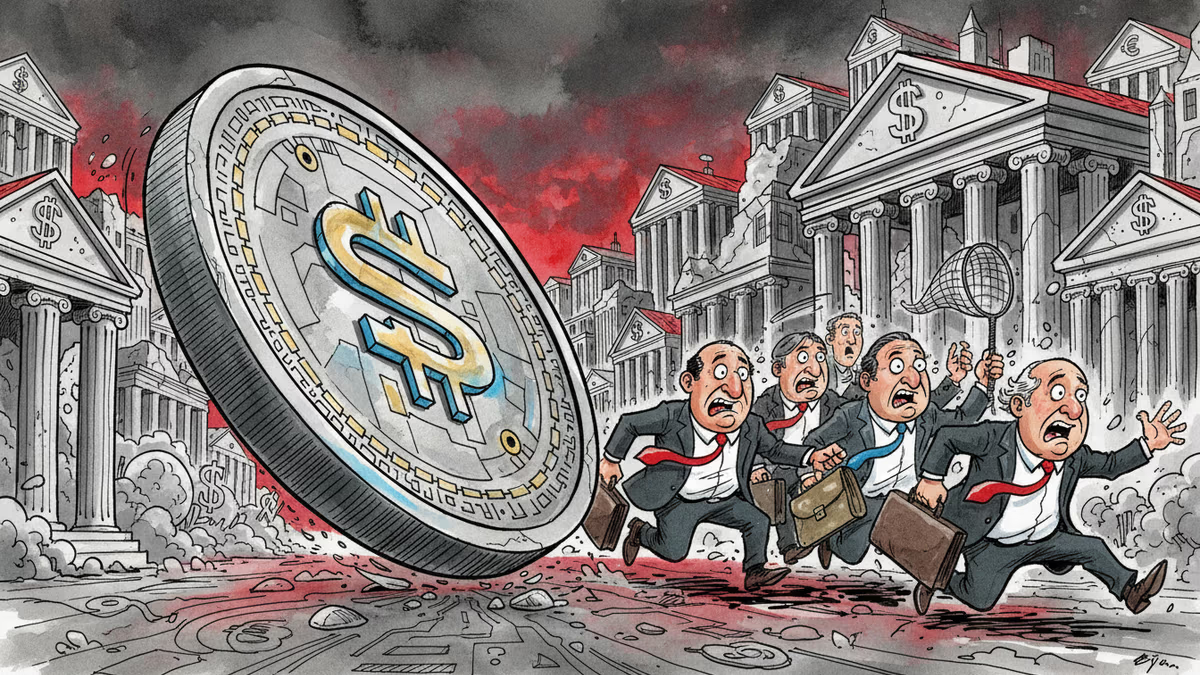
From North Korean hackers to Russian trade routes, cryptocurrency is reshaping how economic sanctions work. Asia-Pacific nations are scrambling to respond to this new reality.
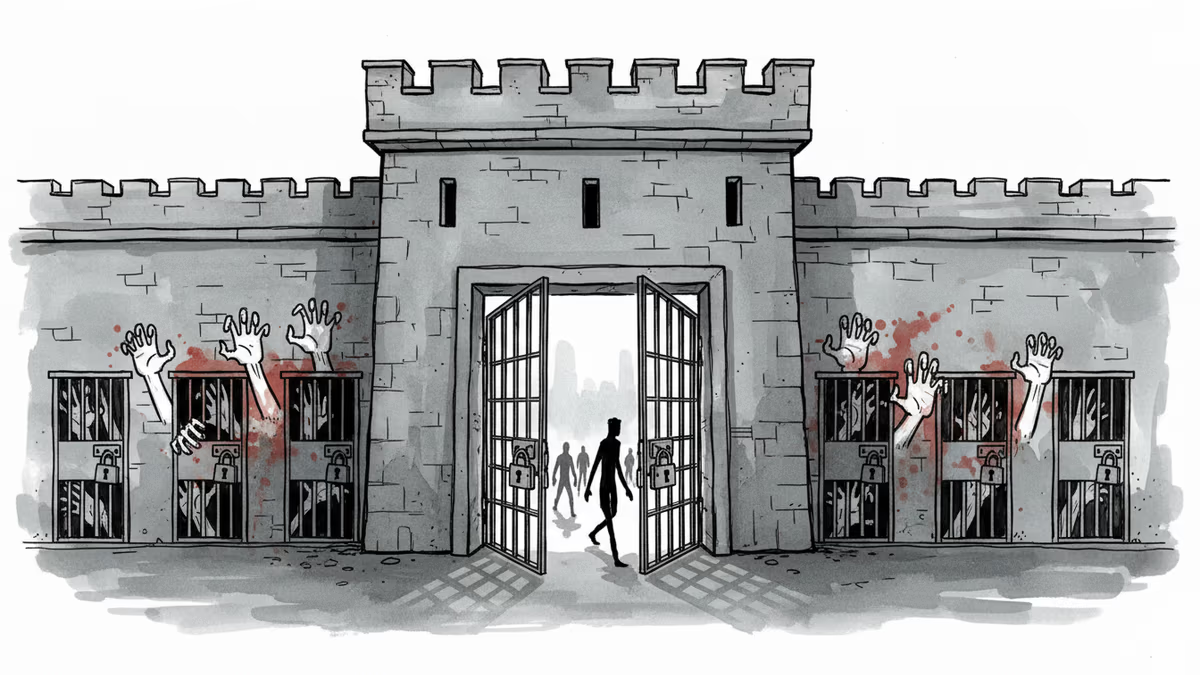
Following Nicolás Maduro's capture, 1,557 Venezuelan political prisoners have applied for amnesty under new legislation, though critics point to selective exclusions that may protect the regime's interests.
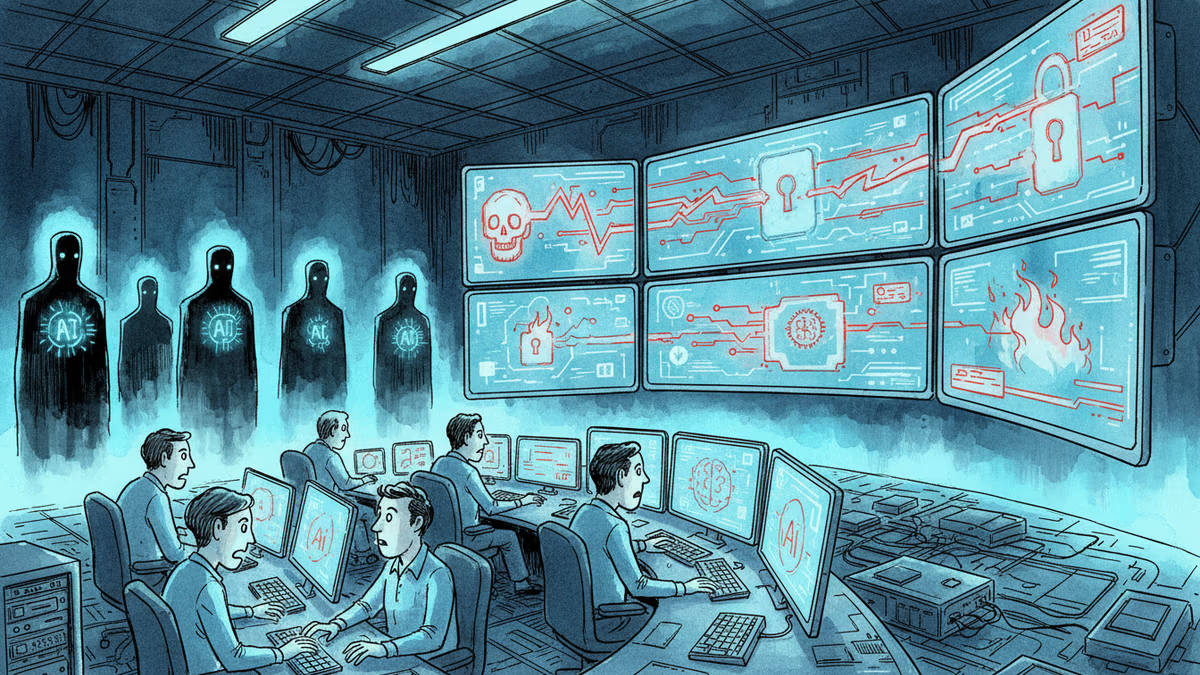
From flawless phishing emails to deepfake government officials, criminal syndicates are weaponizing AI. Inside Interpol's Singapore headquarters, the fight back has begun.
Chinese researchers achieve quantum key distribution over 3,700km distance, bringing unhackable communication networks closer to reality. This breakthrough could reshape cybersecurity as we know it.
From North Korean hackers to Russian trade routes, cryptocurrency is reshaping how economic sanctions work. Asia-Pacific nations are scrambling to respond to this new reality.
Following Nicolás Maduro's capture, 1,557 Venezuelan political prisoners have applied for amnesty under new legislation, though critics point to selective exclusions that may protect the regime's interests.
From flawless phishing emails to deepfake government officials, criminal syndicates are weaponizing AI. Inside Interpol's Singapore headquarters, the fight back has begun.
Chinese researchers achieve quantum key distribution over 3,700km distance, bringing unhackable communication networks closer to reality. This breakthrough could reshape cybersecurity as we know it.
Thoughts
Share your thoughts on this article
Sign in to join the conversation