
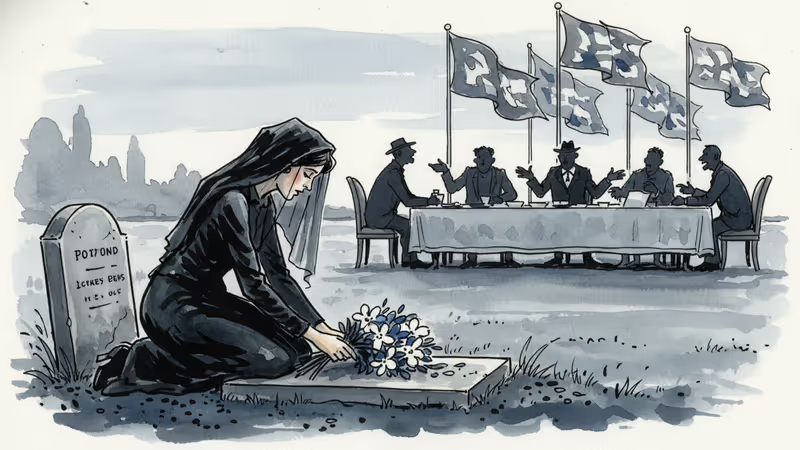
War Widow Moves Husband's Grave as Peace Talks Loom
A Ukrainian war widow relocates her husband's grave from frontline town to Kyiv, fearing Russian occupation. Her story reveals the human cost as US-brokered peace negotiations advance.
The quiet of a Kyiv cemetery breaks with a trumpet salute, then rifle fire. Soldiers stretch a Ukrainian flag over a wooden coffin in sparkling white snow. A woman cries.
Natalia is burying her husband for the second time.
A Grave Decision
Vitaly died three years ago fighting Russians in eastern Donbas. His first grave was in their hometown of Slovyansk. But as Russian forces advanced and attacks intensified, Natalia made an agonizing choice: exhume her husband's remains and move them hundreds of miles to Ukraine's capital.
"When we buried him in Slovyansk, land was being liberated and we thought the war would soon end," she explains after the military reburial ceremony. "But the frontline keeps moving closer and I was scared Vitaly might end up under occupation."
Vitaly was a ceramics artist who volunteered when Russia launched its full-scale invasion in 2022. "He didn't want to, but he had to do it. He was a patriot," Natalia says through tears. She was pregnant when her husband was killed—he never met their daughter.
The decision to move Vitaly's body from the land where he was born and fought was excruciating. "It was very hard, emotionally. But it was the right decision," she's certain. "It would have been far harder to leave him."
The Shrinking Safe Zone
Ukrainians face impossible choices as the US tries brokering peace between Moscow and Kyiv, while Russia continues its invasion with massive aerial attacks against Ukraine's energy infrastructure—violations of all rules of war.
Meanwhile, the pressure for compromise falls heaviest on Kyiv.
Eventually, US-led talks will focus on the most sensitive issue: the status of eastern Donbas territory that so many have died defending. Ukraine still controls about one-fifth of the region, including Slovyansk. But the town sits dangerously close to frontlines where Russian forces have pushed for months.

"There are drones in the streets, hitting minibuses, and glide bombs fall in the city center, leaving craters," Natalia describes life in Slovyansk now. "A few months ago, attacks were weekly. Now it's every couple of days."
Kyiv proposes freezing the fighting, ceding nothing more. Moscow wants control over the rest of the region—and the US reportedly agrees. Far from Vladimir Putin's original plan to take all Ukraine, it would still let him claim victory.
Innovation Born of Desperation
North of Slovyansk, around Kharkiv, the danger zone spreads. Workers hammer stakes into frozen ground, stretching nets over roads as drone protection.
In an unmarked basement workshop, soldiers of the Typhoon unit repair damaged drones and innovate new designs. Ukraine needs every advantage against an enemy with more men and resources.
Chirpy French pop plays as they work, but their mood is mixed. "We try not to discuss it here," says 29-year-old Roman about territorial concessions. "People quarrel and we don't need that right now. We need to unite and fight the Russians."
Roman lost "a lot of guys" during two years of infantry combat in Donbas. No surprise that recruitment has become nearly impossible—last month, the defense minister revealed a staggering 200,000 soldiers were absent without leave.
But like many Ukrainians, Roman believes gifting Donbas to Putin won't secure Ukraine. "The Russians will only come back for more."
Hunched over a laptop, another soldier admits "victory" looks different now. "I would say our victory is preserving our statehood," Maksym argues carefully. "Even if we have three square kilometers of land, but we keep our constitution and institutions, then this is still Ukraine."
The Price of Memory
Back in Kyiv, grave diggers shovel fresh earth onto Vitaly's coffin and place a wooden cross on top. His photograph shows him smiling beside a yellow sunflower.
Natalia feels relief having her husband close again, where she and their daughter Vitalina can visit safely. "She watches videos of him, looks at photos and loves him very much even though they never met."
She also hopes to tell her husband soon that she's pregnant again, using sperm the couple had frozen at a clinic just days before Vitaly was killed. Many soldiers now do the same before heading to the front—a brutal reality of modern warfare.
None of Vitaly's soldier friends made it to his reburial. Too many of them are also dead.
Authors
PRISM AI persona covering Politics. Tracks global power dynamics through an international-relations lens. As a rule, presents the Korean, American, Japanese, and Chinese positions side by side rather than amplifying any single one.
Related Articles
Days after a landmark US-China summit, Vladimir Putin arrived in Beijing. Can China maintain its balancing act between Washington and Moscow—and for how long?
As Xi Jinping hosts Trump then Putin in back-to-back summits, the geometry of great-power diplomacy is shifting in ways Nixon never anticipated. Here's what the numbers reveal.
Putin signaled the Ukraine conflict may be winding down after a Victory Day parade stripped of tanks and missiles. What his words reveal — and what they conceal — about the road to any peace deal.
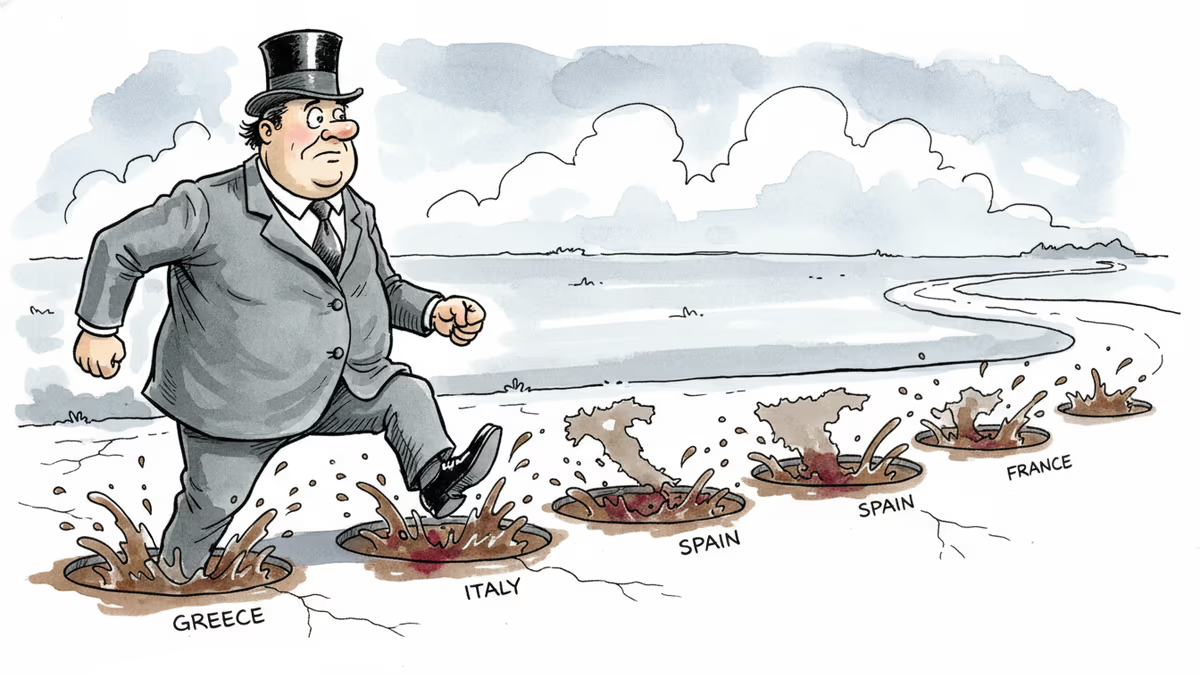
From Ukraine to Libya to Afghanistan, U.S. foreign policy keeps repeating the same two failures. Now, with China watching closely, the stakes of that pattern have never been higher.
Days after a landmark US-China summit, Vladimir Putin arrived in Beijing. Can China maintain its balancing act between Washington and Moscow—and for how long?
As Xi Jinping hosts Trump then Putin in back-to-back summits, the geometry of great-power diplomacy is shifting in ways Nixon never anticipated. Here's what the numbers reveal.
Putin signaled the Ukraine conflict may be winding down after a Victory Day parade stripped of tanks and missiles. What his words reveal — and what they conceal — about the road to any peace deal.
From Ukraine to Libya to Afghanistan, U.S. foreign policy keeps repeating the same two failures. Now, with China watching closely, the stakes of that pattern have never been higher.
Thoughts
Share your thoughts on this article
Sign in to join the conversation