
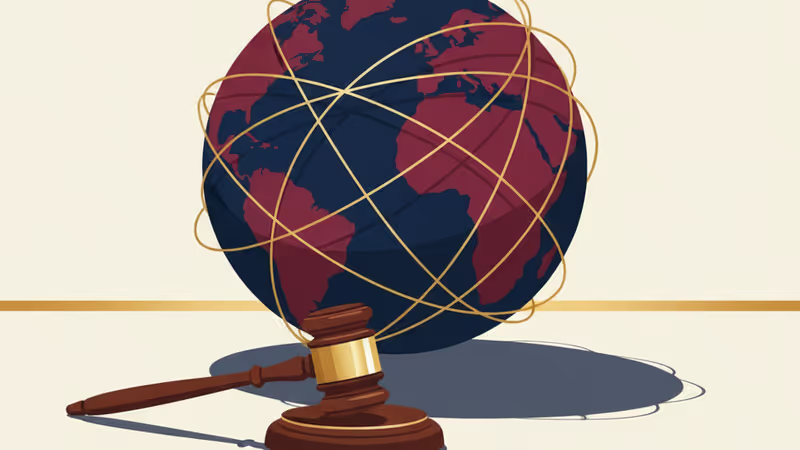
The Courthouse Dilemma: Why Some U.S. Immigrants Are Skipping Hearings They Fought For
Fearing detention by ICE, many immigrants in the U.S. are skipping their court dates, resulting in automatic deportation orders and raising serious questions about access to justice.
Immigrants in the United States seeking legal status are facing a daunting paradox: attend a long-awaited court hearing and risk immediate detention, or skip it and face automatic deportation. According to a report by Boing Boing, a growing number are choosing the latter, driven by a deep-seated fear that Immigration and Customs Enforcement (ICE) will arrest them at the very institutions meant to deliver justice.
The consequence of not appearing in immigration court is severe and immediate. When an individual fails to show up, judges typically issue an "in absentia" order of removal. This effectively forfeits their chance to argue their case for asylum or legal residency, making them subject to immediate deportation if encountered by law enforcement in the future.
The practice of ICE making civil arrests in or near courthouses has long been contentious, drawing criticism from legal advocates and even judges who argue it creates a chilling effect on access to justice. In response, the Biden administration issued a policy in 2021 to limit such enforcement actions at courthouses and other protected areas. However, reports suggest that despite this formal policy change, fear and distrust persist within immigrant communities.
Immigrant rights advocates and legal experts warn that this situation undermines the integrity of the U.S. justice system. When courthouses are perceived as traps rather than safe venues for due process, it discourages participation not only from respondents but also from witnesses. This erodes trust and can push a vulnerable population further into the shadows, making them less likely to report crimes or seek legal protection.
This phenomenon highlights a fundamental conflict between immigration enforcement mandates and the democratic principle of access to justice. While enforcement actions may serve short-term administrative goals, fostering an environment where people fear the legal system has profound long-term consequences. It can destabilize communities, complicate the resolution of immigration cases, and ultimately weaken the rule of law, which depends on the trust and participation of all individuals, regardless of their immigration status.
This content is AI-generated based on source articles. While we strive for accuracy, errors may occur. We recommend verifying with the original source.
Related Articles
Prolonged visa delays are compelling tech companies to restrict international travel for skilled workers, raising concerns about global talent mobility and US economic competitiveness.
A 20-year high in ICE detainee deaths signals a systemic crisis in US immigration policy, creating legal, geopolitical, and operational risks.

The Trump administration halts the Diversity Visa Lottery after a tragic shooting. PRISM analyzes the geopolitical fallout and the impact on global talent.

A 20-year high in ICE detainee deaths reveals a US immigration system in crisis, creating geopolitical risk, legal liability, and a new market for GovTech.