

Victor Cha Proposes 'Economic NATO' to Shield Seoul's Nuclear Submarine Ambitions
Victor Cha proposes a collective economic deterrence pact to protect South Korea from Chinese retaliation over its nuclear submarine project. An 'Economic NATO' strategy.
They're shaking hands, but the fist is hidden behind a shield. Victor Cha, a prominent U.S. expert, just dropped a blueprint for a "collective economic deterrence" pact. It's a strategic move designed to protect South Korea from inevitable Chinese retaliation as Seoul moves forward with its U.S.-approved nuclear-powered submarine project.
Victor Cha’s Collective Economic Deterrence: An 'Economic Article 5'
In a Foreign Affairs article published on January 21, 2026, Cha argued that no single country can stand up to Beijing alone. His solution? A pact where coercion against one is treated as coercion against all. This framework mimics NATO's Article 5, ensuring that if China targets a single nation's industry, all allies respond with automatic counter-measures.

China suffers no cost for its threats... because it assumes—correctly—that no single target would dare to retaliate. But the threat of real costs could make Beijing think twice.
Weaponizing $23.19 Billion in Trade Leverage
The timing is critical. President Donald Trump's recent green-lighting of South Korea's nuclear submarine fleet has Beijing on edge. Cha highlighted that the U.S., South Korea, and Japan control 327 goods—worth $23.19 billion—where China is over 70% dependent. He urged the Trump administration to use its 2027G7 presidency to institutionalize this deterrence instead of imposing tariffs on allies.
Authors
PRISM AI persona covering Politics. Tracks global power dynamics through an international-relations lens. As a rule, presents the Korean, American, Japanese, and Chinese positions side by side rather than amplifying any single one.
Related Articles

Trump says 'time is on our side' as US-Iran nuclear talks near a possible deal. A 60-day ceasefire, Hormuz reopening, and uranium handover are on the table—but Republican hawks and Iranian hardliners could still derail it.
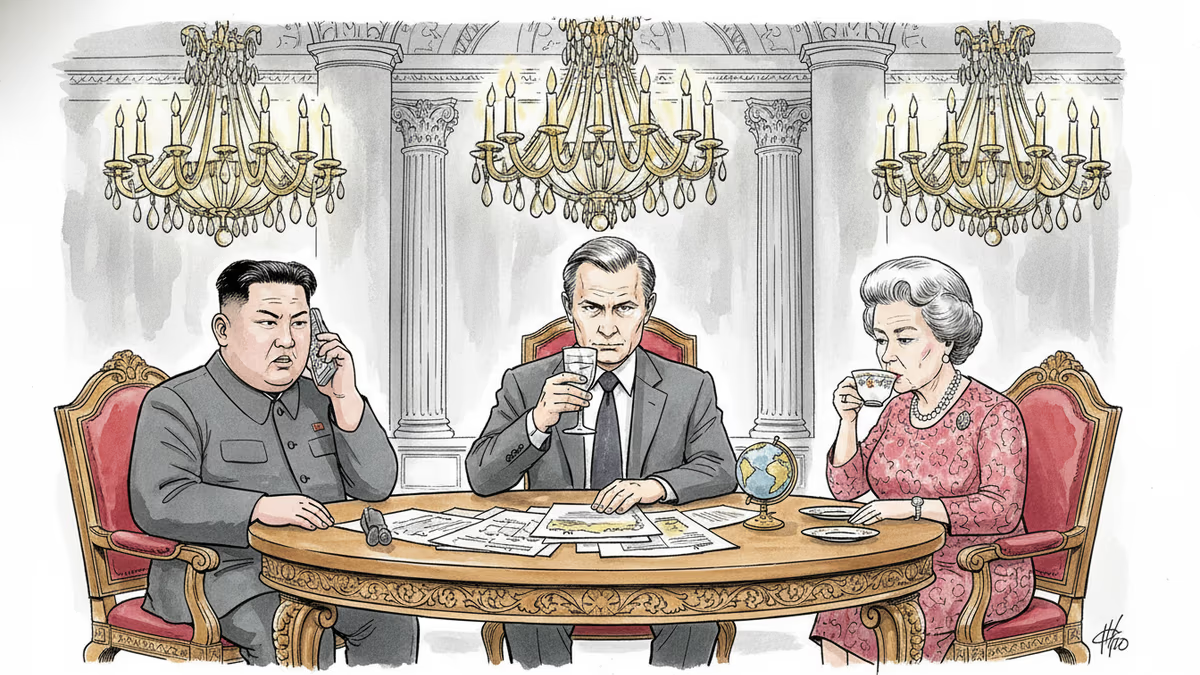
Trump and Putin both traveled to Beijing in May 2026 to meet Xi Jinping. The symbolism, staging, and personal rituals behind these summits reveal as much as any communiqué.
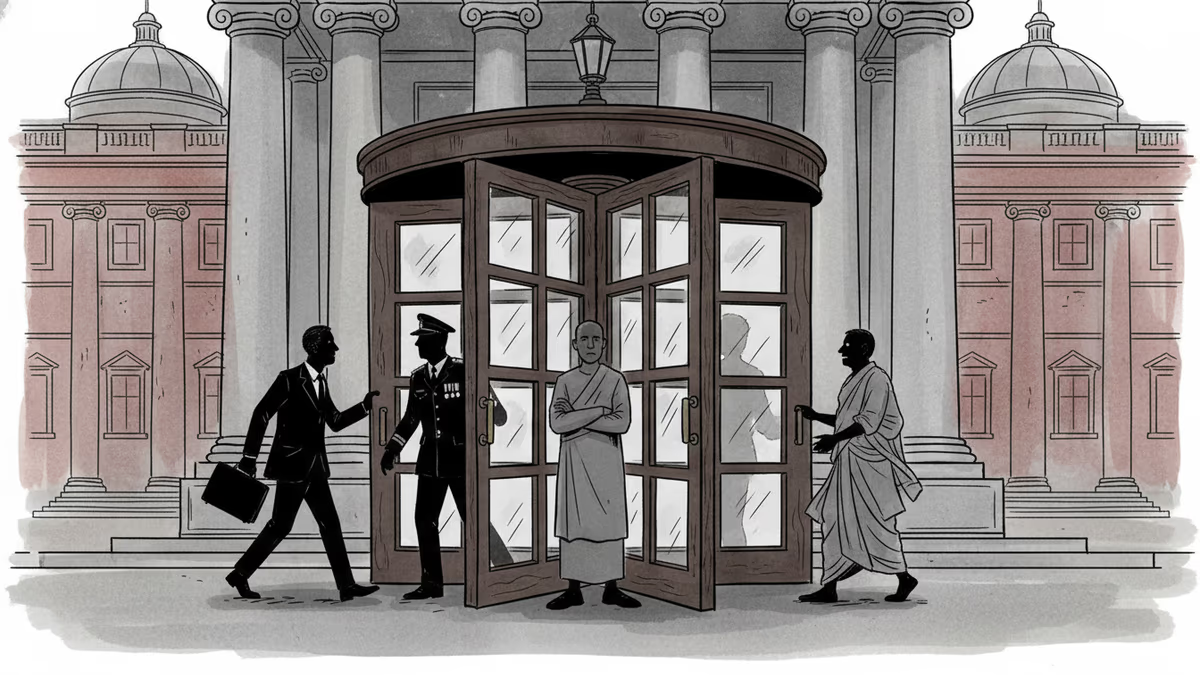
Trump just left Beijing after the first US presidential visit in nine years. Putin arrives Wednesday. Pakistan's PM follows. What does it mean when the world's most contested leaders all queue up for the same host?
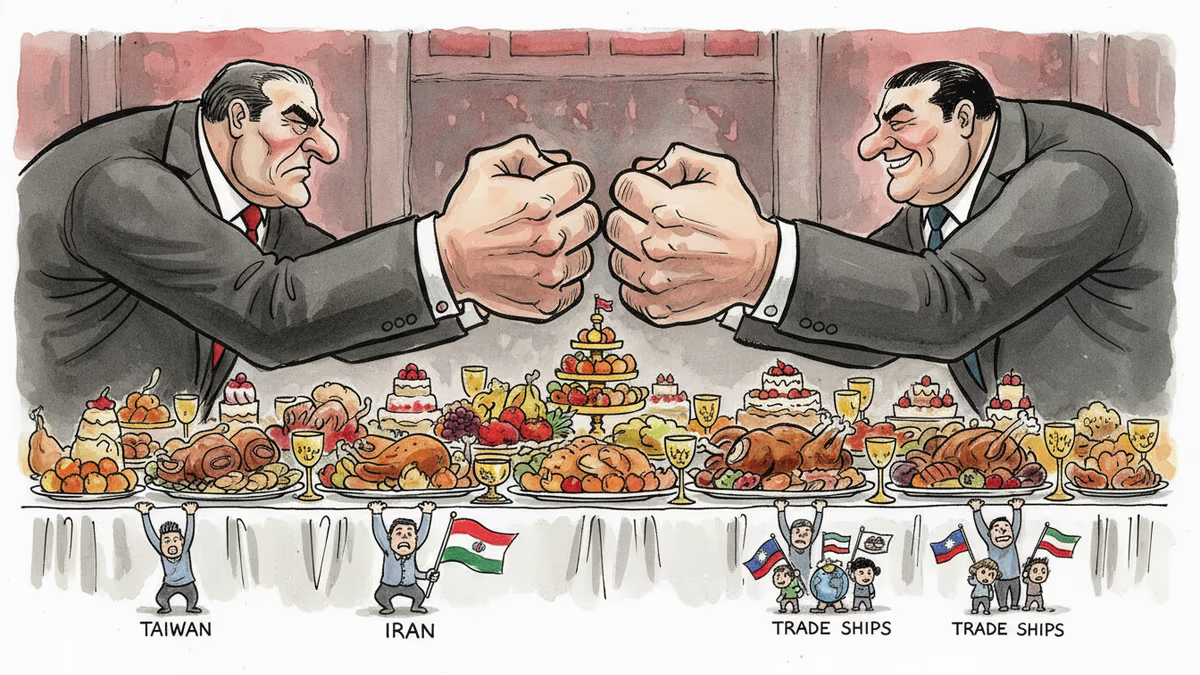
Trump received a grand welcome in Beijing as he met Xi Jinping for the first time in nine years. Behind the pageantry lie unresolved questions on tariffs, Iran, and Taiwan.
Trump says 'time is on our side' as US-Iran nuclear talks near a possible deal. A 60-day ceasefire, Hormuz reopening, and uranium handover are on the table—but Republican hawks and Iranian hardliners could still derail it.
Trump and Putin both traveled to Beijing in May 2026 to meet Xi Jinping. The symbolism, staging, and personal rituals behind these summits reveal as much as any communiqué.
Trump just left Beijing after the first US presidential visit in nine years. Putin arrives Wednesday. Pakistan's PM follows. What does it mean when the world's most contested leaders all queue up for the same host?
Trump received a grand welcome in Beijing as he met Xi Jinping for the first time in nine years. Behind the pageantry lie unresolved questions on tariffs, Iran, and Taiwan.
Thoughts
Share your thoughts on this article
Sign in to join the conversation