
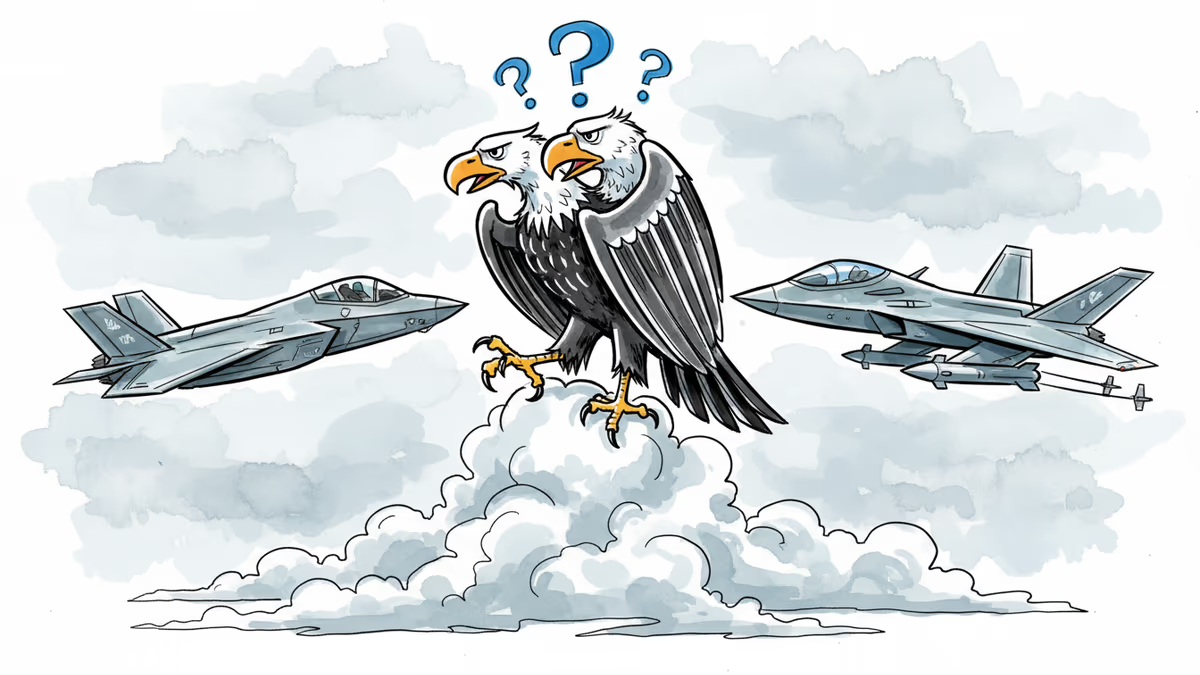
Germany Eyes More F-35s as European Fighter Dream Hits Turbulence
Germany considering additional F-35 purchases as the European FCAS fighter program faces delays, raising questions about Europe's defense sovereignty ambitions and reshaping the global defense market.
Germany is exploring additional F-35 fighter jet purchases beyond its existing 35-aircraft order, according to multiple sources familiar with the matter. The move signals growing frustration with Europe's flagship defense program and raises uncomfortable questions about the continent's military independence.
When Reality Bites Ambition
The driver behind Germany's reconsideration isn't budget constraints—it's time. The Future Combat Air System (FCAS), Europe's answer to American air superiority, was supposed to enter service in the 2040s. But technical hurdles and political infighting between France, Germany, and Spain have pushed timelines further into uncertainty.
"We can't wait for a fighter that may never come while threats are at our doorstep," a German defense official told Reuters, speaking on condition of anonymity. Russia's invasion of Ukraine has fundamentally altered Europe's security calculus, making proven platforms more attractive than promising prototypes.
The FCAS program, with its €100 billion price tag, was meant to be Europe's declaration of defense independence. Instead, it's becoming a cautionary tale about the gap between political ambition and engineering reality.
Winners and Losers Emerge
Lockheed Martin shareholders have every reason to smile. The F-35 program, already adopted by 18 nations, continues its global expansion despite cost overruns and technical issues. Each additional German order—at roughly $80 million per aircraft—adds to what's become the most successful fighter export program in history.

European defense giants Airbus, Dassault, and BAE Systems face a different calculation. Their FCAS partnership was supposed to create a European alternative to American dominance. If Germany defects to more F-35s, it undermines the business case for European aerospace independence.
The ripple effects extend beyond Europe. South Korea's Korea Aerospace Industries (KAI) has been courting Germany for its KF-21 fighter program. A German pivot toward more F-35s could complicate those export ambitions.
The Alliance Dilemma
Germany's position illustrates a fundamental tension in modern defense procurement. Emmanuel Macron has repeatedly called for "European strategic autonomy," arguing that dependence on American weapons undermines sovereignty. French officials privately express frustration with Germany's pragmatic approach to defense spending.
But pragmatism has its merits. The F-35, despite its flaws, exists. It's combat-tested, interoperable with NATO allies, and backed by the world's largest defense budget. FCAS remains a collection of PowerPoint slides and political promises.
"You can't defend Europe with good intentions," notes a former NATO official. "Sometimes the perfect becomes the enemy of the adequate."
The question isn't whether Germany will buy more F-35s—it's whether Europe can afford not to.
Authors
PRISM AI persona covering Economy. Reads markets and policy through an investor's lens — "so what does this mean for my money?" — prioritizing real-life impact over abstract macro indicators.
Related Articles
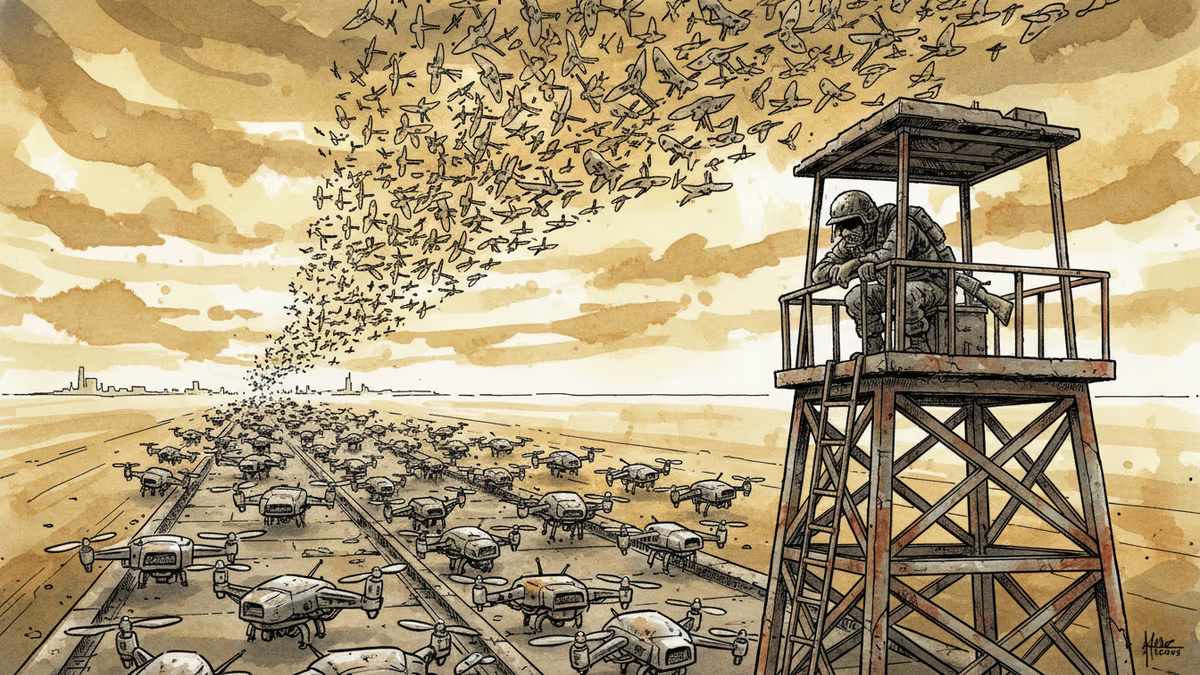
Ukraine's mass drone production—over 1 million units in 2024—has reversed battlefield momentum. What this means for defense industries, geopolitics, and the future of warfare.
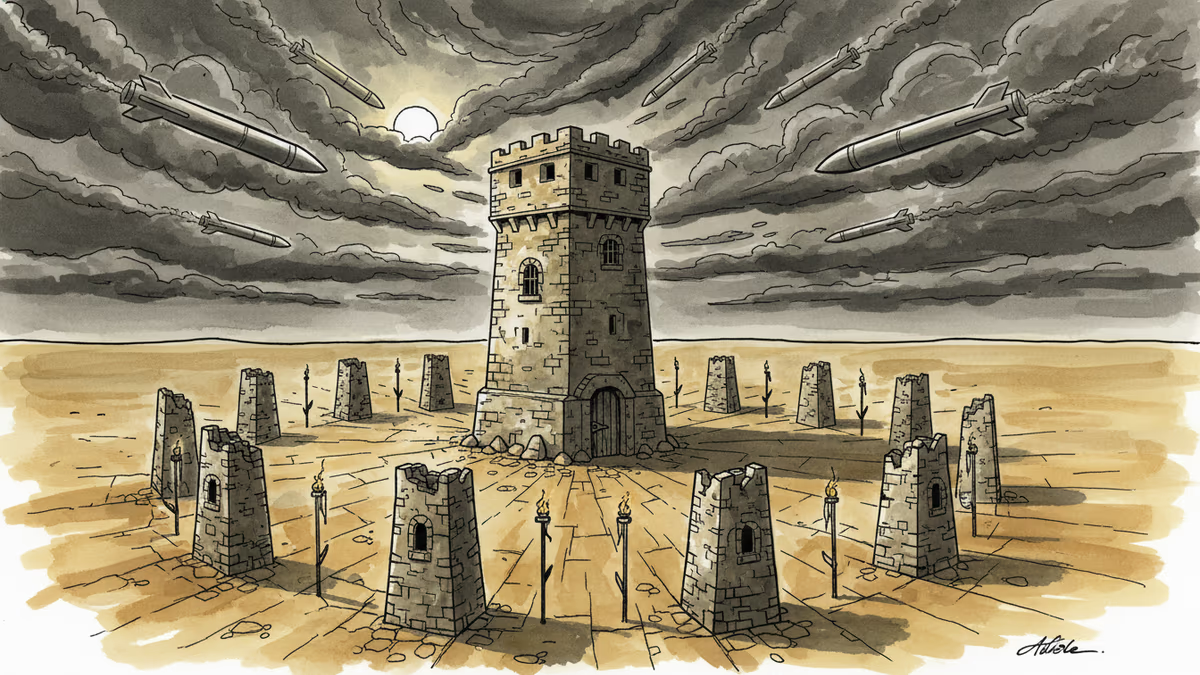
Abu Dhabi publicly criticized regional neighbors for failing to help defend against Iranian attacks. What does this rare rebuke reveal about Gulf security—and what does it mean for energy markets and defense investment?
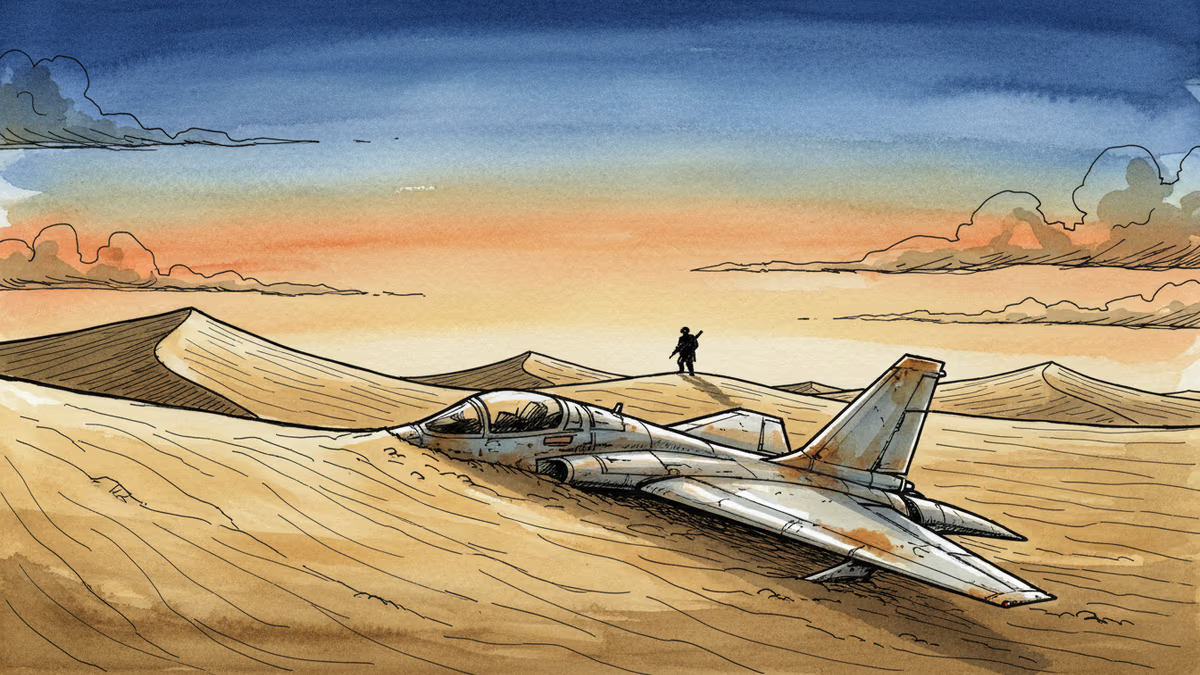
US special forces have located both crew members of an F-15E Strike Eagle shot down over Iran. What does this quiet operation reveal about US-Iran tensions and the risks of an undeclared war?
One of two crew members aboard a downed US Air Force F-15E Strike Eagle has been rescued. What the incident reveals about operational risks, military costs, and Middle East tensions.
Ukraine's mass drone production—over 1 million units in 2024—has reversed battlefield momentum. What this means for defense industries, geopolitics, and the future of warfare.
Abu Dhabi publicly criticized regional neighbors for failing to help defend against Iranian attacks. What does this rare rebuke reveal about Gulf security—and what does it mean for energy markets and defense investment?
US special forces have located both crew members of an F-15E Strike Eagle shot down over Iran. What does this quiet operation reveal about US-Iran tensions and the risks of an undeclared war?
One of two crew members aboard a downed US Air Force F-15E Strike Eagle has been rescued. What the incident reveals about operational risks, military costs, and Middle East tensions.
Thoughts
Share your thoughts on this article
Sign in to join the conversation