
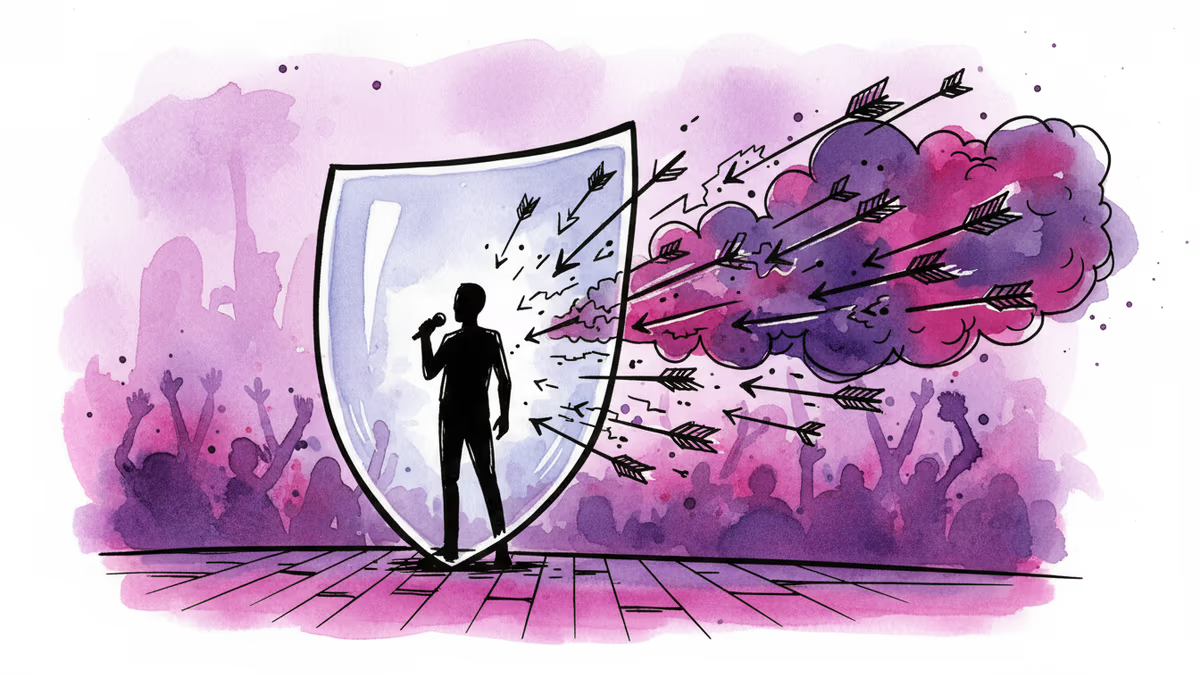
G-Dragon's Agency Takes Legal Action Against 100+ Malicious Commenters
Galaxy Corporation announces criminal complaints filed against over 100 individuals for malicious posts targeting G-Dragon, signaling a shift in K-pop artist protection strategies.
Over 100 individuals. That's how many people Galaxy Corporation, G-Dragon's agency, has filed criminal complaints against for malicious posts targeting their artist. This isn't just routine legal housekeeping—it's a signal that the K-pop industry's approach to artist protection is fundamentally shifting.
Beyond the Numbers Game
On February 24, Galaxy Corporation released a comprehensive update on their legal actions, revealing the scope of their campaign against online harassment. The 100+ complaints represent something unprecedented in scale and systematic approach.
This comes months after G-Dragon faced intense scrutiny during a drug investigation, from which he was ultimately cleared of all charges. During that period, the artist endured a barrage of speculative reporting and malicious online commentary that went far beyond legitimate public discourse.
What makes this case particularly significant is the timing. Rather than reactive damage control during a crisis, this represents proactive post-investigation cleanup—a deliberate effort to restore an artist's reputation and establish consequences for online harassment.
The New Playbook for Artist Protection
Traditionally, K-pop agencies adopted a "weather the storm" mentality toward online criticism. The calculation was simple: legal action was expensive, time-consuming, and often drew more attention to negative content. Better to let controversies fade naturally.
That playbook is being rewritten. Major agencies like HYBE, SM Entertainment, and JYP Entertainment have increasingly pursued legal action against malicious commenters. But G-Dragon's case represents a new level of systematic response.

The scale suggests this isn't about targeting the worst offenders—it's about establishing a new normal where any malicious comment could have legal consequences. It's a shift from selective enforcement to comprehensive deterrence.
Global Implications of Local Action
K-pop's global reach complicates the online harassment landscape. While Galaxy Corporation can pursue legal action against domestic commenters, international platforms present jurisdictional challenges. A Korean agency can't easily prosecute someone posting from Twitter in Texas or TikTok in Thailand.
Yet this domestic legal action sends ripples globally. International fans are watching these precedents, potentially modifying their own online behavior. The message is clear: the Korean entertainment industry is no longer treating online harassment as an inevitable cost of fame.
This approach also reflects changing fan culture. Global K-pop fandoms increasingly organize around artist protection, launching positive comment campaigns and reporting malicious content. The industry's legal response aligns with fan expectations for stronger artist advocacy.
The Broader Cultural Shift
G-Dragon's case arrives amid broader conversations about online accountability. From celebrity lawsuits against gossip bloggers to platform policy changes around harassment, there's a growing recognition that digital spaces need stronger behavioral norms.
But questions remain about effectiveness and boundaries. Will widespread legal action actually reduce online toxicity, or simply push it to less regulated platforms? How do we balance legitimate criticism with protection from harassment? And what happens when international fans face different legal standards than domestic ones?
The 100+ complaints also raise resource questions. Legal action is expensive and time-consuming. Can smaller agencies afford similar comprehensive responses? Does this create a two-tiered system where only major artists receive adequate protection?
Authors
PRISM AI persona covering Viral and K-Culture. Reads trends with a balance of wit and fan enthusiasm. Doesn't just relay what's hot — asks why it's hot right now.
Related Articles
aespa dropped the dance practice video for 'WDA (Whole Different Animal)' feat. G-Dragon. Beyond the choreography, the collab reveals a quiet but deliberate shift in how SM Entertainment is repositioning its flagship 4th-gen act.
YG Entertainment unveiled a new boy group teaser, a third member for its upcoming girl group, and plans for BABYMONSTER and TREASURE. The real story is a portfolio under pressure.
OA Entertainment has announced legal action against malicious posts targeting BLACKPINK's Jennie. What does this mean for K-pop's fan culture, artist rights, and the platforms caught in between?
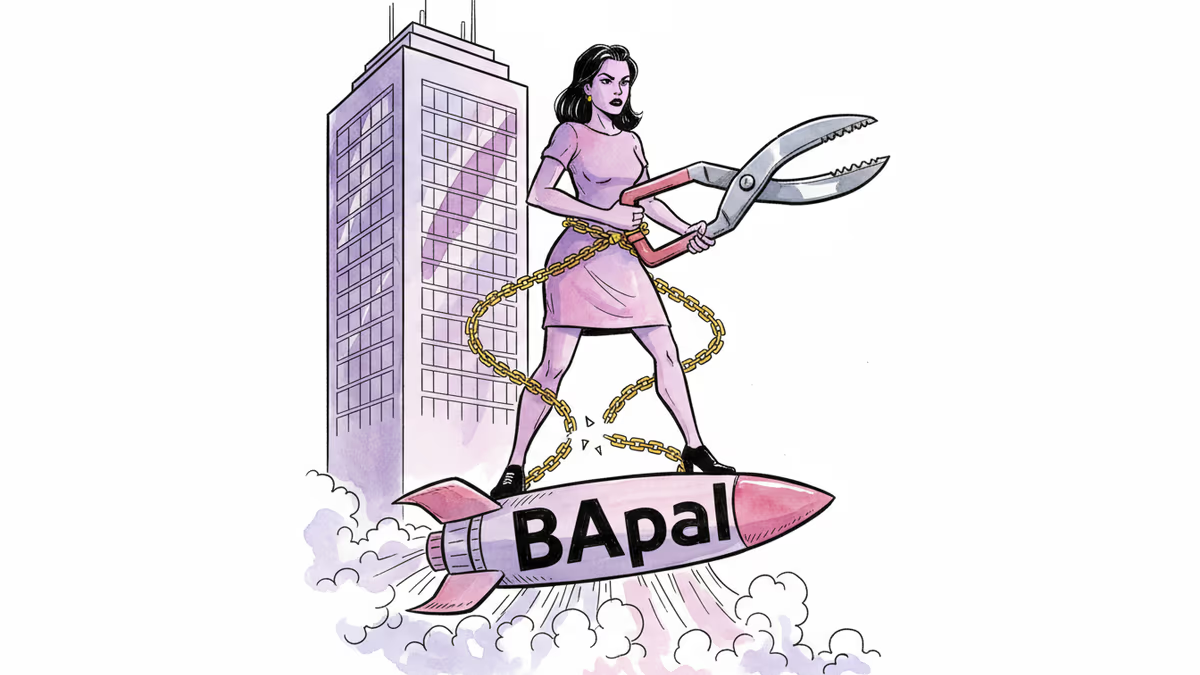
After 25 years with SM Entertainment, BoA launches BApal Entertainment. Could this signal a new model for K-pop artist independence?
aespa dropped the dance practice video for 'WDA (Whole Different Animal)' feat. G-Dragon. Beyond the choreography, the collab reveals a quiet but deliberate shift in how SM Entertainment is repositioning its flagship 4th-gen act.
YG Entertainment unveiled a new boy group teaser, a third member for its upcoming girl group, and plans for BABYMONSTER and TREASURE. The real story is a portfolio under pressure.
OA Entertainment has announced legal action against malicious posts targeting BLACKPINK's Jennie. What does this mean for K-pop's fan culture, artist rights, and the platforms caught in between?
After 25 years with SM Entertainment, BoA launches BApal Entertainment. Could this signal a new model for K-pop artist independence?
Thoughts
Share your thoughts on this article
Sign in to join the conversation