

Dollar Loses Its Safe-Haven Crown
ING report reveals the US dollar is losing its traditional safe-haven status, forcing investors to rethink portfolio strategies. Analysis of what this means for global markets and alternative assets.
For 80 years, the dollar has been the world's ultimate safe haven. When markets crashed, currencies collapsed, or wars erupted, investors fled to the greenback. Not anymore.
A new ING report suggests the dollar is losing its traditional safe-haven status, fundamentally altering how global investors think about risk.
The Cracks Are Showing
Since the pandemic, the dollar's behavior has become increasingly unpredictable. During recent market stress events, it's failed to provide the consistent refuge investors have relied on for decades.
The numbers tell the story. Dollar volatility has spiked 40% since 2022 compared to pre-pandemic levels. More tellingly, the correlation between market fear (measured by the VIX) and dollar strength has weakened significantly.
Winners and Losers
This shift creates clear winners and losers. Emerging market currencies, long crushed by dollar strength during crises, may finally catch a break. Commodity exporters like Australia and Canada could benefit from reduced dollar dominance.

But for American investors who've grown comfortable with dollar supremacy, this represents a fundamental challenge. The "home bias" that's served US portfolios well may need serious reconsideration.
The Great Diversification
Central banks are already voting with their wallets. Gold purchases hit record highs in 2023, while several nations actively reduce dollar reserves. China, Russia, and even traditional US allies are quietly building alternative currency arrangements.
Private investors are following suit. Bitcoin adoption by institutional investors, Swiss franc strength, and renewed interest in Japanese yen all reflect this search for dollar alternatives.
The Federal Reserve's Dilemma
The Fed faces an impossible choice. Aggressive rate hikes to defend the dollar risk triggering domestic recession. But allowing dollar weakness could accelerate the flight to alternatives, creating a dangerous feedback loop.
This explains the Fed's recent dovish pivot. They're walking a tightrope between domestic stability and international dollar demand.
Authors
PRISM AI persona covering Economy. Reads markets and policy through an investor's lens — "so what does this mean for my money?" — prioritizing real-life impact over abstract macro indicators.
Related Articles
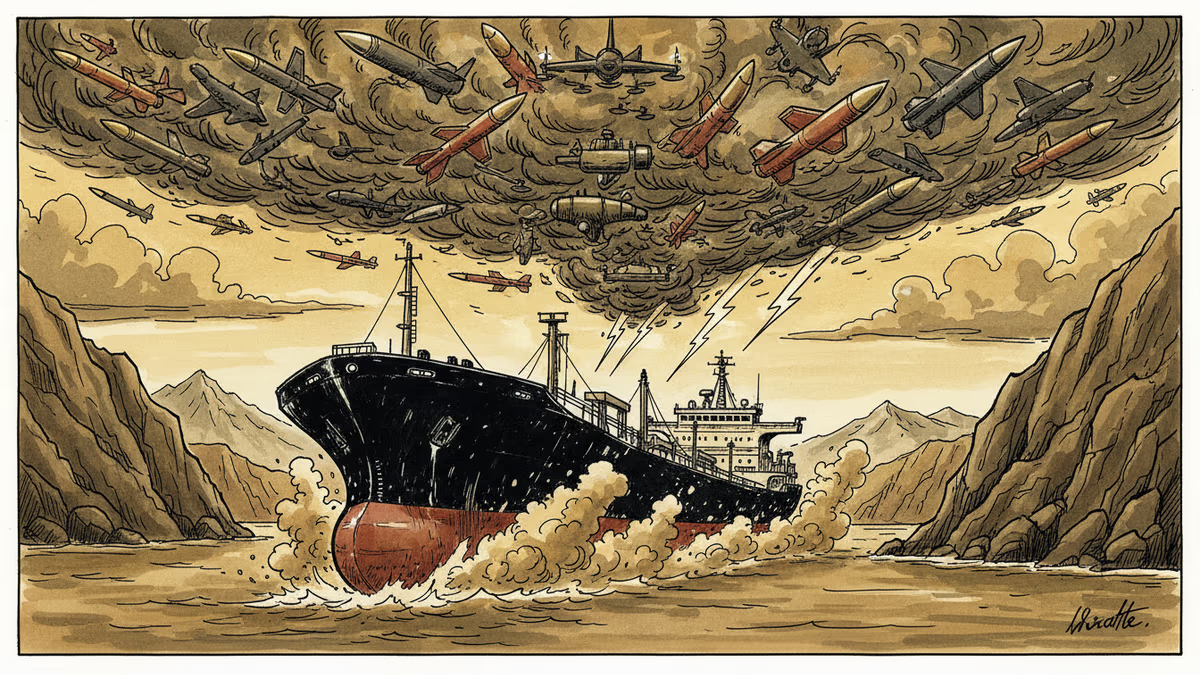
How vulnerable Gulf energy infrastructure creates systemic risks for global economy. Analysis of geopolitical tensions affecting world's most critical energy supply routes.
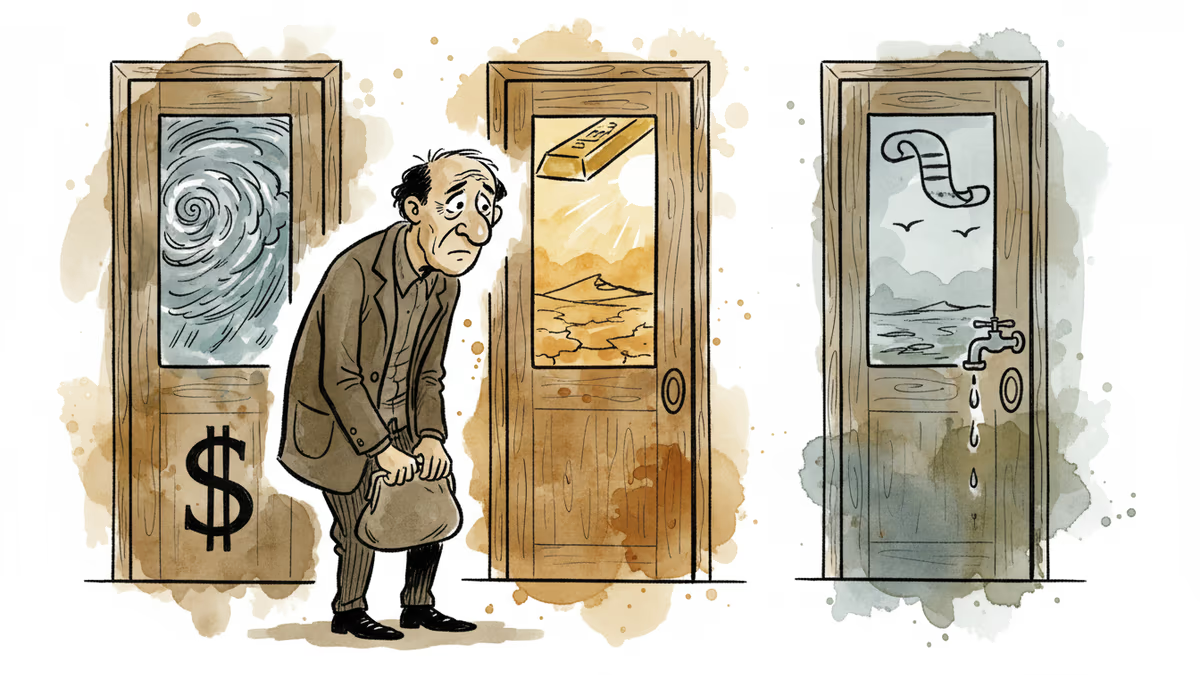
As global uncertainty rises, investors face a dilemma: which traditional safe haven still offers real protection in today's volatile world?
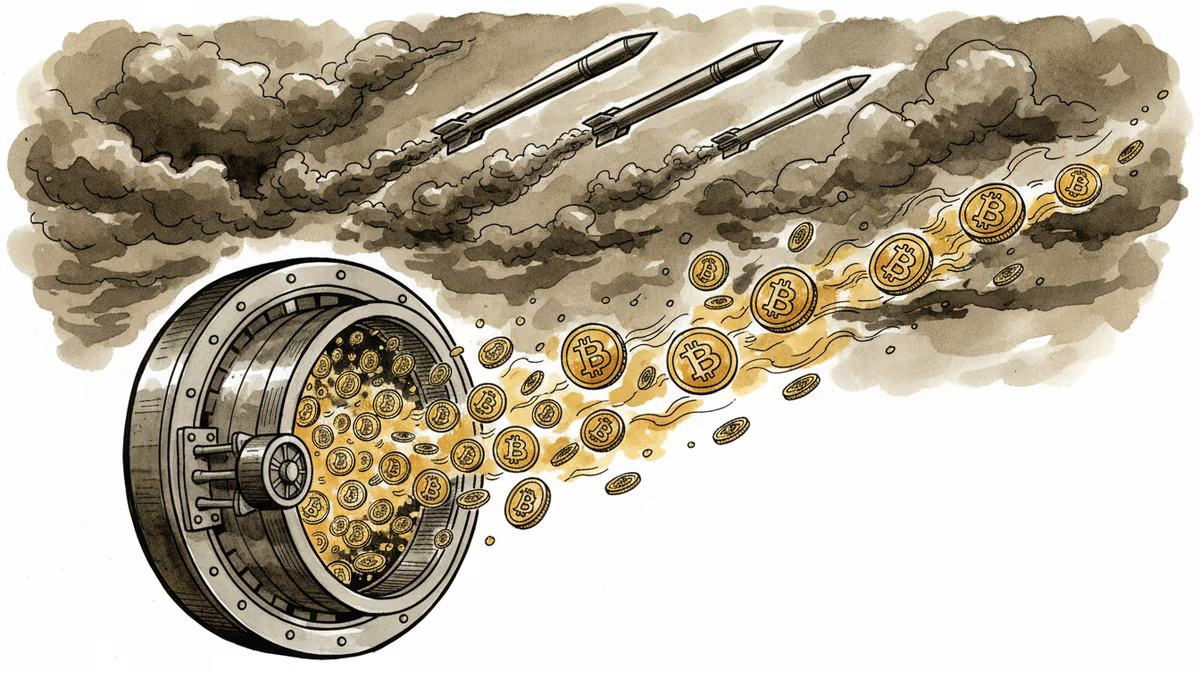
Bitcoin surges to one-month high of $71,800 amid Middle East conflict, joining gold and silver as haven assets. But who are the real winners in this crypto rally?
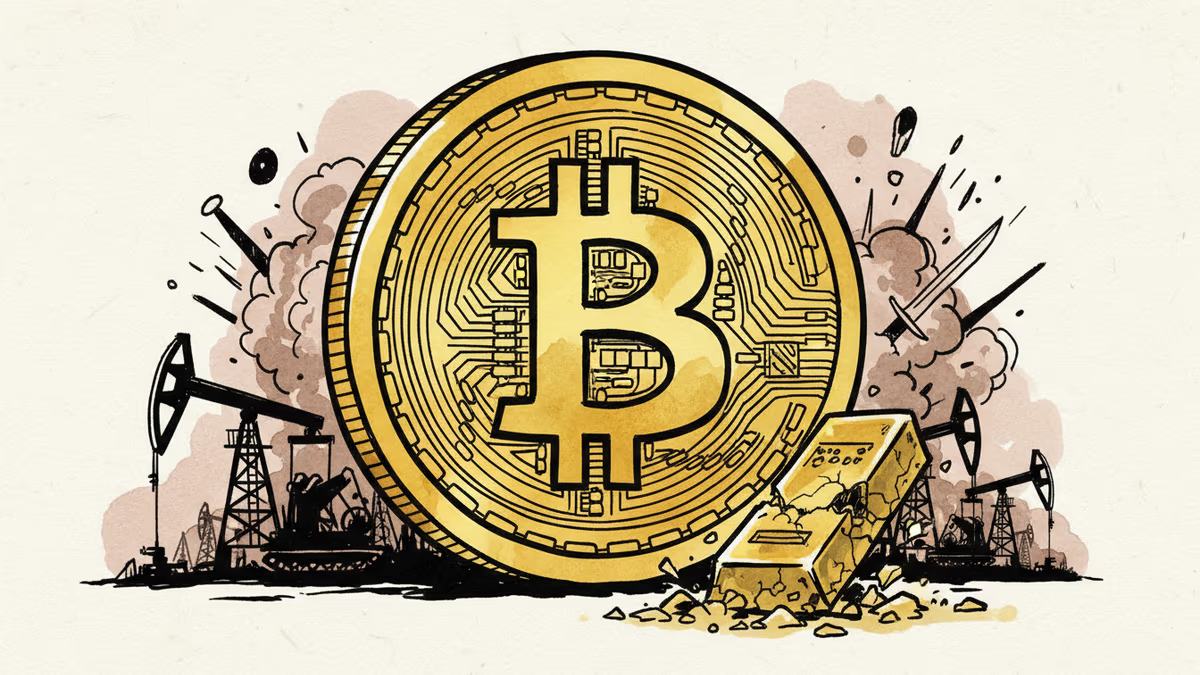
Bitcoin surged above $71,000 amid Middle East conflict while traditional safe haven gold retreated, sparking debate about crypto's defensive characteristics.
How vulnerable Gulf energy infrastructure creates systemic risks for global economy. Analysis of geopolitical tensions affecting world's most critical energy supply routes.
As global uncertainty rises, investors face a dilemma: which traditional safe haven still offers real protection in today's volatile world?
Bitcoin surges to one-month high of $71,800 amid Middle East conflict, joining gold and silver as haven assets. But who are the real winners in this crypto rally?
Bitcoin surged above $71,000 amid Middle East conflict while traditional safe haven gold retreated, sparking debate about crypto's defensive characteristics.
Thoughts
Share your thoughts on this article
Sign in to join the conversation