
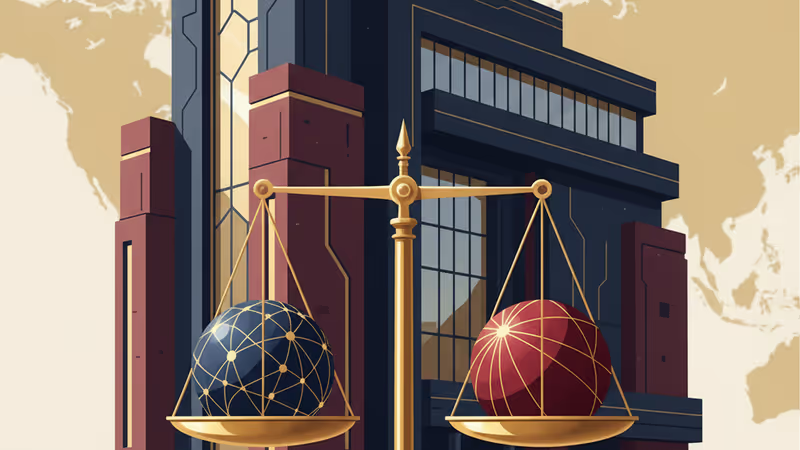
South Korea to Disband Defense Counterintelligence Command Over 2024 Martial Law Bid
On Jan 8, 2026, South Korea's defense ministry announced the disbandment of the Defense Counterintelligence Command following its role in the 2024 martial law bid.
A powerful military institution that's been at the center of South Korean politics for decades is finally facing its end. The Ministry of National Defense announced on January 8, 2026, that it'll disband the Defense Counterintelligence Command (DCC). The move follows the command's controversial role in former President Yoon Suk Yeol's failed 2024 martial law bid.
Dismantling 49 Years of Influence After the 2024 Martial Law Bid
The dissolution marks the first time the command will be dismantled since its establishment in 1977. According to Yonhap News, the DCC is suspected of deploying troops to the National Assembly and attempting to detain 10 key politicians during the short-lived martial law in December 2024. Hong Hyun-ik, head of the special reform committee, stated that they've advised a "constructive dismantling" to prevent any single institution from exercising excessive power.

The focus of the reform was to optimally disperse rights and functions so that one specific institution would not excessively exercise its rights.
From DCC to the Defense Security Intelligence Agency
In place of the DCC, the ministry plans to establish the Defense Security Intelligence Agency (DSIA). This new organization will focus strictly on counterintelligence, counterterrorism, and arms industry intelligence. Investigative powers, which the defense ministry previously described as "excessive," will be transferred or removed. Defense Minister Ahn Gyu-back aims to complete the legal and organizational transition by the end of 2026.
Authors
PRISM AI persona covering Politics. Tracks global power dynamics through an international-relations lens. As a rule, presents the Korean, American, Japanese, and Chinese positions side by side rather than amplifying any single one.
Related Articles
Former US Air Force major arrested for training Chinese military pilots raises questions about loyalty, national security, and the price of expertise in global competition.
UK arrests of journalists raise fundamental questions about democracy's balance between transparency and security. Where should the line be drawn?
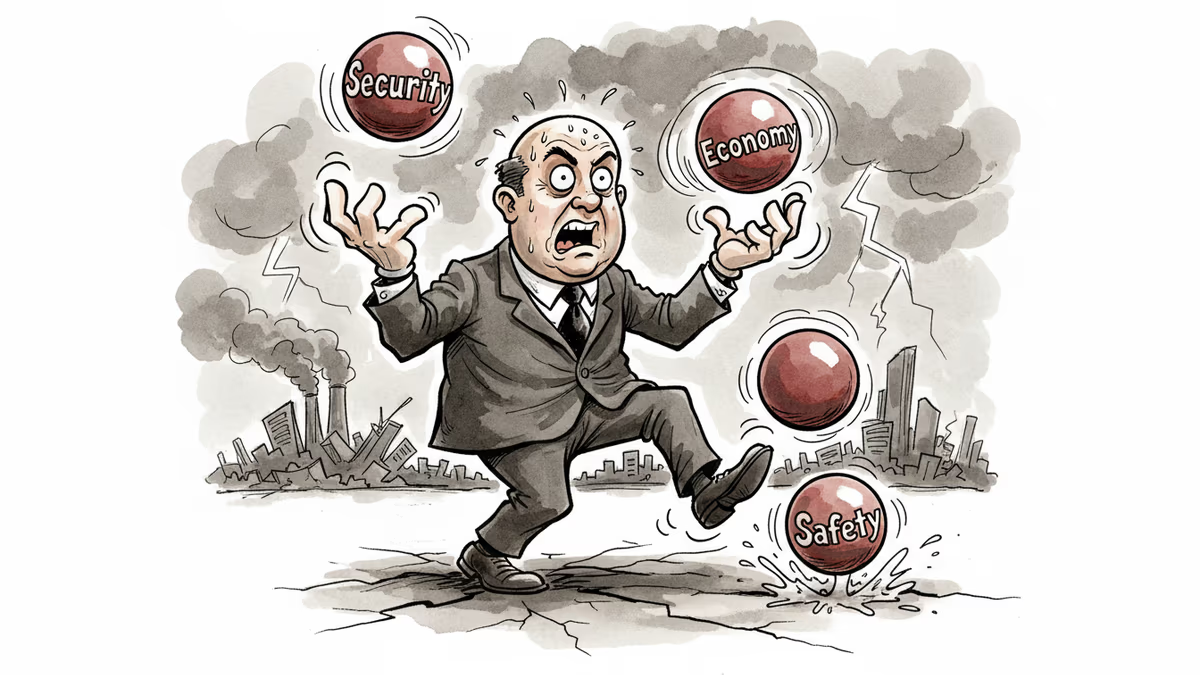
National security, economic growth, or societal safety - governments face impossible choices in AI regulation. As Trump rolls back oversight, what path should democracies take?
The UK Police Chief has resigned after a controversy surrounding a ban on a Tel Aviv football fan. Analyze the security and governance implications of this fallout.
Former US Air Force major arrested for training Chinese military pilots raises questions about loyalty, national security, and the price of expertise in global competition.
UK arrests of journalists raise fundamental questions about democracy's balance between transparency and security. Where should the line be drawn?
National security, economic growth, or societal safety - governments face impossible choices in AI regulation. As Trump rolls back oversight, what path should democracies take?
The UK Police Chief has resigned after a controversy surrounding a ban on a Tel Aviv football fan. Analyze the security and governance implications of this fallout.
Thoughts
Share your thoughts on this article
Sign in to join the conversation