

Crypto's Washington Power Vacuum: Why Senator Lummis's Exit Changes Everything
Senator Lummis's retirement isn't just a headline; it's a seismic shift for crypto policy, creating a power vacuum and escalating regulatory risk.
The Lede: A Strategic Shockwave Hits Crypto
Senator Cynthia Lummis’s announced retirement is far more than a personnel change on Capitol Hill. For executives and investors in the digital asset space, it represents the sudden removal of the industry's most critical political shield and its most authentic advocate. Her departure creates a strategic power vacuum, fundamentally alters the timeline for U.S. crypto regulation, and forces a critical question: has the industry's political capital been overly concentrated in one person? This is a 'key person risk' event for an entire sector.
Why It Matters: The Clock is Ticking
The departure of crypto's staunchest ally from the powerful Senate Banking Committee triggers several second-order effects that demand immediate attention:
- Legislative Urgency: Lummis's stated goal to pass a major market structure bill in 2026 now has a hard deadline. This transforms the next session from a negotiation into a final sprint. Expect a heavily compromised bill or a complete legislative stall after she leaves.
- The Leadership Void: Lummis wasn't just a vote; she was the ideological anchor for crypto within the Republican party, framing it through a lens of property rights and innovation. Finding a replacement with her conviction, seniority, and committee placement is a monumental, if not impossible, task.
- Bipartisan Bridge Collapse: Her collaboration with Democrats like Senator Kirsten Gillibrand was the bedrock of any hope for a bipartisan regulatory framework. Without Lummis as a credible Republican negotiator, that bridge becomes significantly harder to maintain, potentially pushing crypto deeper into a partisan divide.
The Analysis: The End of the 'True Believer' Era
Senator Lummis’s influence stemmed from her authenticity. Unlike allies who may be swayed by lobbying dollars or political expediency, Lummis's support was rooted in a deep, personal conviction aligned with her state's (Wyoming) pioneering work in digital asset law. She was a 'true believer' who could speak with authority and credibility that money can't buy.
Her retirement marks a critical inflection point for the crypto industry's political strategy. For years, the sector has relied on a handful of such champions to fight its battles. This approach, while effective in the short term, has proven to be fragile. The loss of a key figure exposes the weakness of a personality-driven lobbying effort versus a broad, institutionalized one.
This development doesn't happen in isolation. It compounds the loss of other influential, pro-crypto voices in the House. The industry is now facing a leadership deficit on both sides of the Capitol, forcing it to move beyond cultivating individual heroes and toward building a durable, policy-driven consensus—a much heavier lift.
PRISM Insight: Repricing Regulatory Risk
For investors and fintech operators, the Lummis exit directly impacts risk assessment and strategic planning. The probability of a comprehensive, business-friendly federal framework for digital assets being enacted before 2028 has just dropped significantly. This has clear investment implications:
- Extended Uncertainty: Expect the current environment of regulation by enforcement from agencies like the SEC to continue for the foreseeable future. Capital allocation must account for prolonged legal and compliance ambiguity.
- The Rise of State-Level Havens: With federal progress stalled, the 'patchwork' of state-by-state regulation becomes even more important. Companies will increasingly gravitate towards jurisdictions like Wyoming, Texas, and Florida, potentially accelerating the fragmentation of the U.S. market.
- Global Capital Flight?: For U.S.-based projects, the lack of a clear path to regulatory clarity at home makes international jurisdictions in Europe, Asia, and the Middle East look increasingly attractive. We may see a renewed wave of talent and capital looking for clearer skies abroad.
PRISM's Take: A Forced Maturation
Senator Lummis’s retirement is a wake-up call. The era of relying on a single, passionate champion to shepherd the digital asset industry through the labyrinth of Washington is over. Her departure is a short-term loss but could be a long-term catalyst for growth. The industry's survival and success in the U.S. no longer depend on finding a new political savior. Instead, it hinges on the sector's ability to mature its political operations rapidly—building broader coalitions, articulating a clearer value proposition beyond speculation, and proving its utility to the real economy. This is a forced 'grow up' moment; how the industry responds will define its future in the world's largest market.
Related Articles
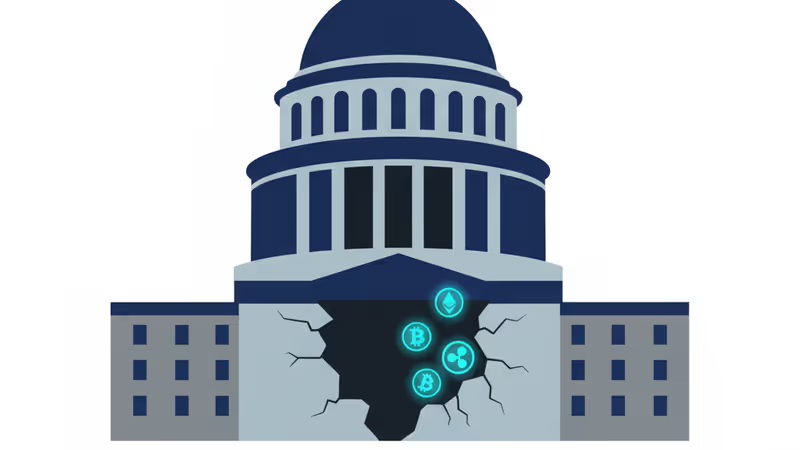
Sen. Cynthia Lummis, crypto's top ally in the U.S. Senate, is retiring. Our analysis explores the leadership vacuum and what it means for regulation.
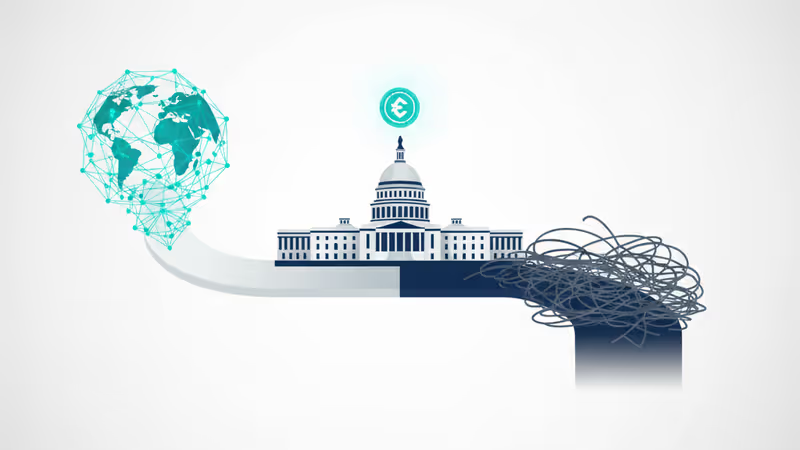
US crypto regulation is stalled in the Senate, creating a high-stakes limbo. This analysis breaks down the strategic cost of inaction and the threat to US tech leadership.

Custodia Bank's legal fight with the Fed is a battle for the soul of U.S. financial innovation. Our expert analysis unpacks the investment implications.

Bank of America's latest report signals a major regulatory shift, pulling crypto into the U.S. banking system. Here's our analysis for investors.