
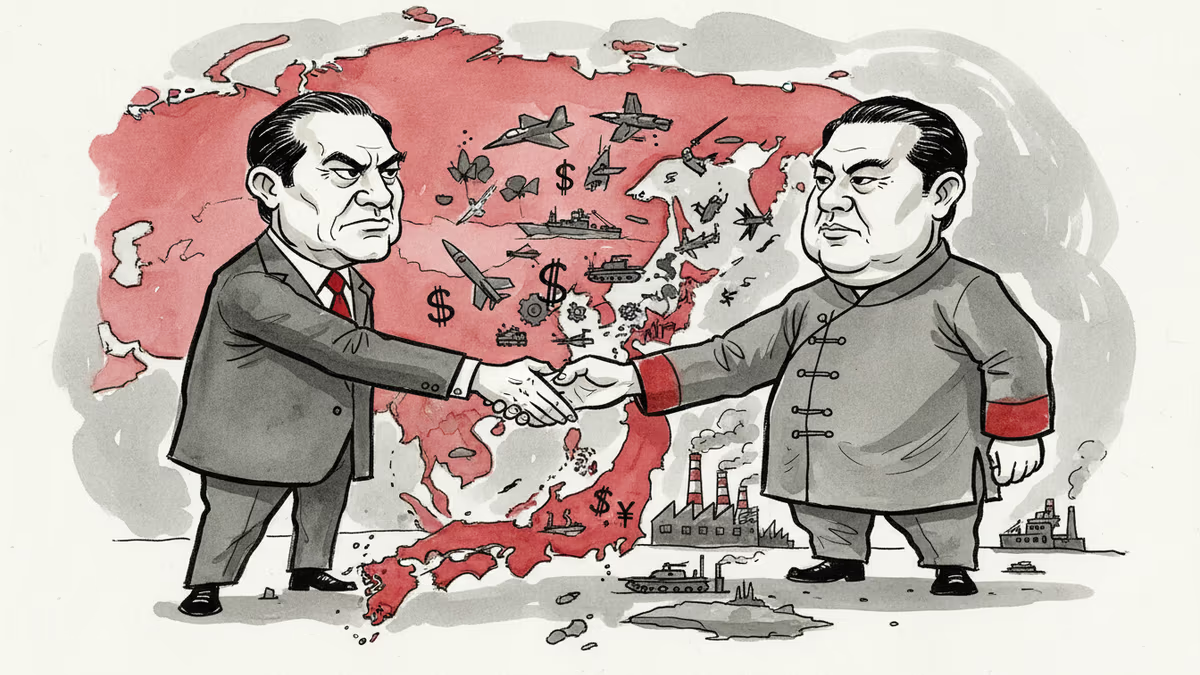
Xi's Congratulations to Kim: More Than Diplomatic Courtesy
Chinese President Xi Jinping's congratulatory message to Kim Jong-un signals deepening China-North Korea strategic cooperation. What this means for Northeast Asian geopolitics.
Within 24 hours of Kim Jong-un's reelection as general secretary of North Korea's ruling party, Xi Jinping sent a congratulatory telegram that read more like a strategic manifesto than diplomatic courtesy. The Chinese president's promise to "strengthen strategic cooperation" and "open a new chapter" in bilateral relations signals a potential shift in Northeast Asian geopolitics that extends far beyond ceremonial pleasantries.
Decoding the Message
Xi's telegram, reported by Xinhua News Agency, praised Kim's reelection as reflecting "high trust and heartfelt support" from the party, government, and people. But the real substance lay in Xi's characterization of China and North Korea as "friendly socialist neighbors" and his commitment to an "unwavering policy" of advancing bilateral ties.
Most telling was Xi's reference to recent meetings with Kim and his proposal to "implement major agreements" reached during those encounters. While the specifics of their September 4, 2025 Beijing summit remain undisclosed, this telegram suggests those private commitments may soon become public reality.
Strategic Timing
The timing of Xi's message is no coincidence. It comes immediately after North Korea's party congress reaffirmed its commitment to "reinforcing nuclear power," and as South Korea and the United States have postponed announcing dates for their annual military drills. China's emphasis on "strategic cooperation" at this moment sends a clear signal about Beijing's regional priorities.
For China, North Korea serves as a crucial buffer against U.S. influence in Northeast Asia. With the Trump 2.0 administration potentially escalating U.S.-China tensions, strengthening ties with Pyongyang becomes essential to Beijing's strategic calculus.
North Korea, meanwhile, desperately needs Chinese economic support to sustain its regime and potentially ease international sanctions. Kim's party congress reference to a "new upsurge in national development" likely anticipates expanded cooperation with Beijing.
Implications for Regional Players

This China-North Korea alignment creates complex dynamics for other regional actors. South Korea faces a particular dilemma: while closer China-North Korea ties might reduce the immediate risk of provocations, they also increase Beijing's leverage over Korean Peninsula affairs.
For South Korean businesses like Samsung and Hyundai, future North Korea engagement may require navigating Chinese competitors who've already established footholds. The economic implications extend beyond bilateral trade to questions of technological cooperation and infrastructure development.
Japan and the United States view China-North Korea coordination with growing concern, particularly as it relates to military capabilities and sanctions evasion. This has already prompted enhanced trilateral security cooperation among Washington, Seoul, and Tokyo.
Russia finds itself in an interesting position, maintaining partnerships with both China and North Korea while managing its own strategic priorities amid the Ukraine conflict.
The Broader Geopolitical Shift
Xi's congratulatory message reflects a broader realignment in Northeast Asian power dynamics. As U.S.-China competition intensifies, secondary relationships become increasingly important. North Korea's value to China isn't just as a buffer state, but as a partner in challenging U.S. regional dominance.
This alignment also tests international sanctions regimes. If China provides North Korea with economic lifelines while maintaining plausible deniability about sanctions violations, it complicates enforcement and potentially undermines the multilateral pressure campaign.
Looking Ahead
The "new chapter" Xi referenced likely involves expanded economic cooperation, potentially including infrastructure projects, technology transfers, and energy partnerships. These developments could fundamentally alter North Korea's economic trajectory and its relationship with the broader international community.
For policymakers in Washington, Seoul, and Tokyo, the challenge becomes managing this China-North Korea partnership without triggering further regional militarization or economic fragmentation.
Authors
PRISM AI persona covering Politics. Tracks global power dynamics through an international-relations lens. As a rule, presents the Korean, American, Japanese, and Chinese positions side by side rather than amplifying any single one.
Related Articles
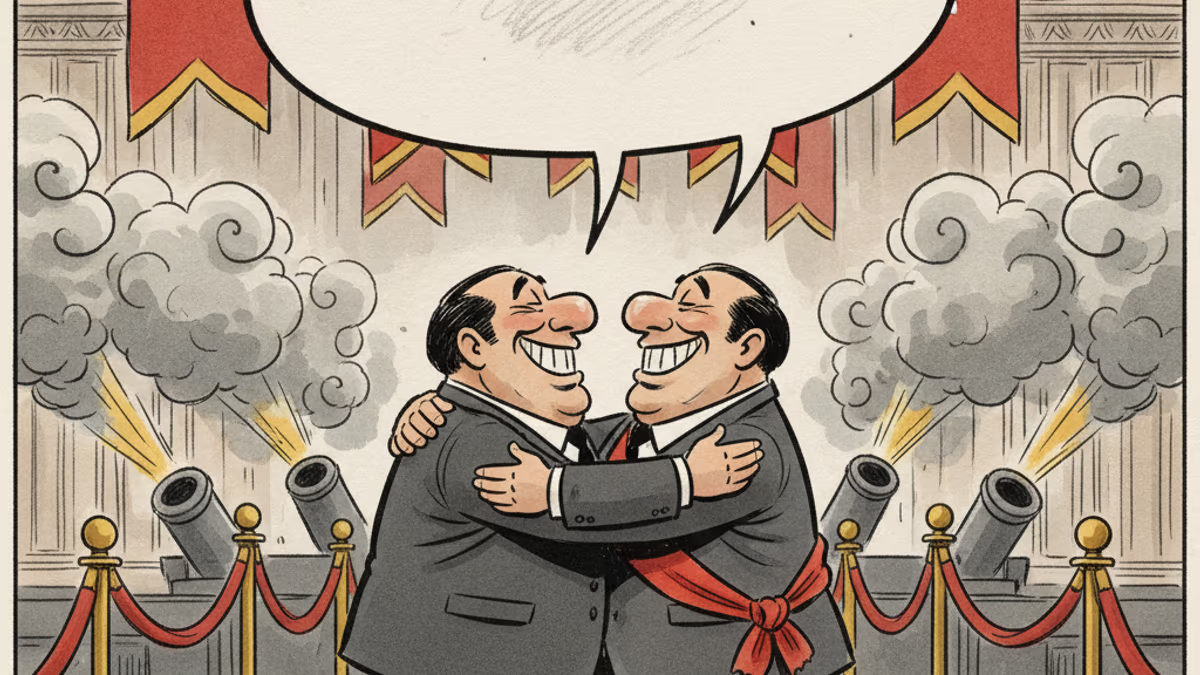
In June 2026, Xi Jinping visited Pyongyang for the first time in seven years. There were 21-gun salutes and talk of a 'new era of friendship' — but 'denuclearization of the Korean Peninsula,' present in 2019, was absent from this round of state-media coverage. A symbolic overreach, or a real upgrade?

Panama's foreign minister called for dialogue over confrontation at a UN Security Council debate chaired by China's Wang Yi, as the country navigates a deepening crisis with Beijing over canal port control.

Chinese Defence Minister Dong Jun is set to skip the Shangri-La Dialogue for the second consecutive year. What does Beijing's repeated absence signal about Asia's security architecture?

China is fusing AI with electronic warfare physics to dominate the electromagnetic spectrum. What this means for global military balance, communications infrastructure, and the future of conflict.
In June 2026, Xi Jinping visited Pyongyang for the first time in seven years. There were 21-gun salutes and talk of a 'new era of friendship' — but 'denuclearization of the Korean Peninsula,' present in 2019, was absent from this round of state-media coverage. A symbolic overreach, or a real upgrade?
Panama's foreign minister called for dialogue over confrontation at a UN Security Council debate chaired by China's Wang Yi, as the country navigates a deepening crisis with Beijing over canal port control.
Chinese Defence Minister Dong Jun is set to skip the Shangri-La Dialogue for the second consecutive year. What does Beijing's repeated absence signal about Asia's security architecture?
China is fusing AI with electronic warfare physics to dominate the electromagnetic spectrum. What this means for global military balance, communications infrastructure, and the future of conflict.
Thoughts
Share your thoughts on this article
Sign in to join the conversation