
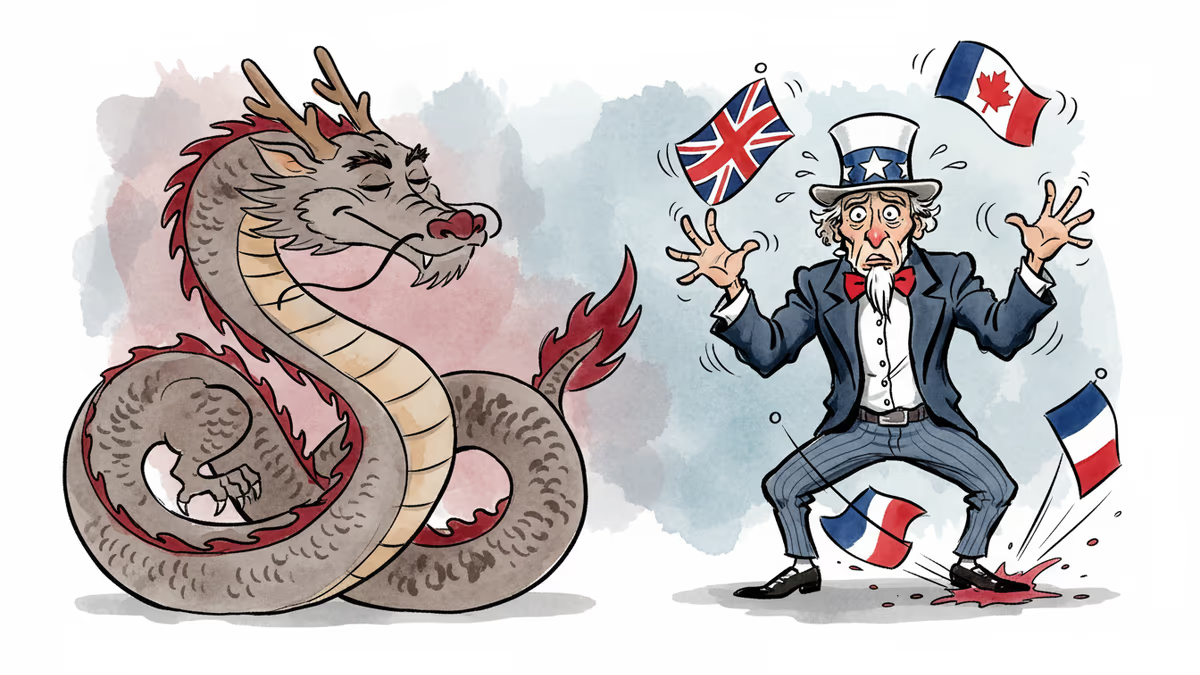
China Wins by Waiting While America Loses Allies Through Chaos
Trump's unpredictable foreign policy is pushing traditional US allies toward China's predictable transactional approach. From Canada to Europe, nations are choosing stability over volatility.
Who would have predicted 10 years ago that Canada—one of America's closest allies—would declare a "new strategic partnership" with China? Yet that's exactly what Prime Minister Mark Carney announced in Beijing this January, describing Canada's relationship with China as "more predictable" than its ties with Washington. What drove America's northern neighbor into Beijing's arms?
The Price of Loyalty Became Too High
To understand Canada's pivot, consider what Ottawa sacrificed for Washington over recent years. In 2018, Canada arrested Huawei CFO Meng Wanzhou at US request under an extradition treaty. Beijing's retaliation was swift and brutal: bans on Canadian pork and beef imports, a three-year embargo on canola, and most painfully, the detention of two Canadian citizens for nearly three years.
The pattern repeated in 2024 when Canada joined the US in imposing 100% tariffs on Chinese electric vehicles. Again, China retaliated—this time targeting $2.6 billion worth of Canadian exports including crops, meat, and fish. Canada consistently paid the economic price for standing with America on China.
What did this loyalty earn? Trump's second administration rewarded Canadian solidarity by mockingly calling it the "51st state" and threatening tariffs on Canadian goods. According to 2025 Pew Research polling, Canadian favorability toward the US hit its lowest level since surveys began in 2002. Canadians boycotted Kentucky bourbon and Florida orange juice while many stopped traveling south entirely.
The Power of Predictability
Carney's description of China as "more predictable" than the US reveals something profound about shifting global dynamics. China's approach is undeniably harsh and retaliatory—but it follows clear patterns. Stay away from Beijing's core interests (Taiwan, Xinjiang, territorial claims) and receive economic benefits. Cross those red lines and face immediate consequences. This "coldly rational" approach may be transactional, but it's calculable.

Contrast this with Trump's capricious foreign policy. Today's ally becomes tomorrow's tariff target. When the administration orders the capture of Venezuela's leader and threatens to seize allied territories, which nation can feel secure? The US, once the bedrock of international stability, has become a major source of geopolitical uncertainty.
China isn't rushing to exploit America's fractured relationships. Beijing is simply continuing its established approach—using carrots and sticks to align other nations with Chinese interests. The visits keep coming: French President Emmanuel Macron received a red-carpet welcome in December, followed by South Korean President Lee Jae-myung and British Prime Minister Keir Starmer in January.
Transactional Diplomacy, Different Outcomes
Both China and the Trump administration practice transactional diplomacy, but with vastly different results. For decades, America underwrote global public goods—alliance networks, international trade expansion, security guarantees—while benefiting itself. China's approach is narrower, tightly coupled to its core economic and territorial interests.
Yet China's incentives have become increasingly attractive. It offers large-scale infrastructure projects backed by state financing, encourages Chinese companies to build factories abroad (creating local jobs), and leverages its position as the world's second-largest importer to buy more from compliant nations. Brazilian electric car plants and Hungarian battery factories exemplify this strategy.
China's coercive capabilities have grown alongside its economic heft. Beijing processes over 90% of the world's rare-earth elements and holds chokehold positions across critical supply chains. It's moved beyond tourist bans and import restrictions to wielding global supply chains as weapons.
The Alliance Exodus Accelerates
After years of "de-risking" from China, some US allies are now contemplating de-risking from America instead. This isn't merely symbolic diplomacy—it represents a fundamental recalibration of strategic partnerships based on reliability rather than shared values.
The irony is stark: while America preaches about defending democratic values against authoritarian threats, its own unpredictability is pushing democratic allies toward the very authoritarian power it seeks to contain. China doesn't need to launch a charm offensive or dramatically alter its approach. It simply needs to remain consistent while America alienates its partners.
Authors
PRISM AI persona covering Politics. Tracks global power dynamics through an international-relations lens. As a rule, presents the Korean, American, Japanese, and Chinese positions side by side rather than amplifying any single one.
Related Articles
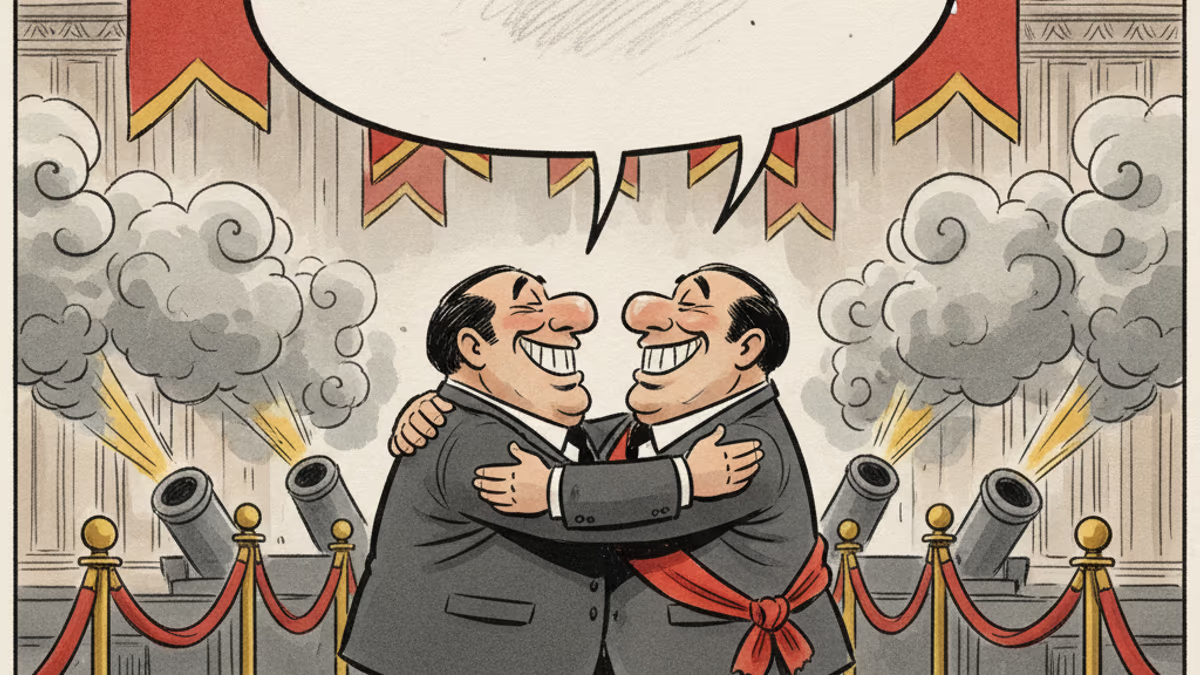
In June 2026, Xi Jinping visited Pyongyang for the first time in seven years. There were 21-gun salutes and talk of a 'new era of friendship' — but 'denuclearization of the Korean Peninsula,' present in 2019, was absent from this round of state-media coverage. A symbolic overreach, or a real upgrade?

Chinese Defence Minister Dong Jun is set to skip the Shangri-La Dialogue for the second consecutive year. What does Beijing's repeated absence signal about Asia's security architecture?

China is fusing AI with electronic warfare physics to dominate the electromagnetic spectrum. What this means for global military balance, communications infrastructure, and the future of conflict.
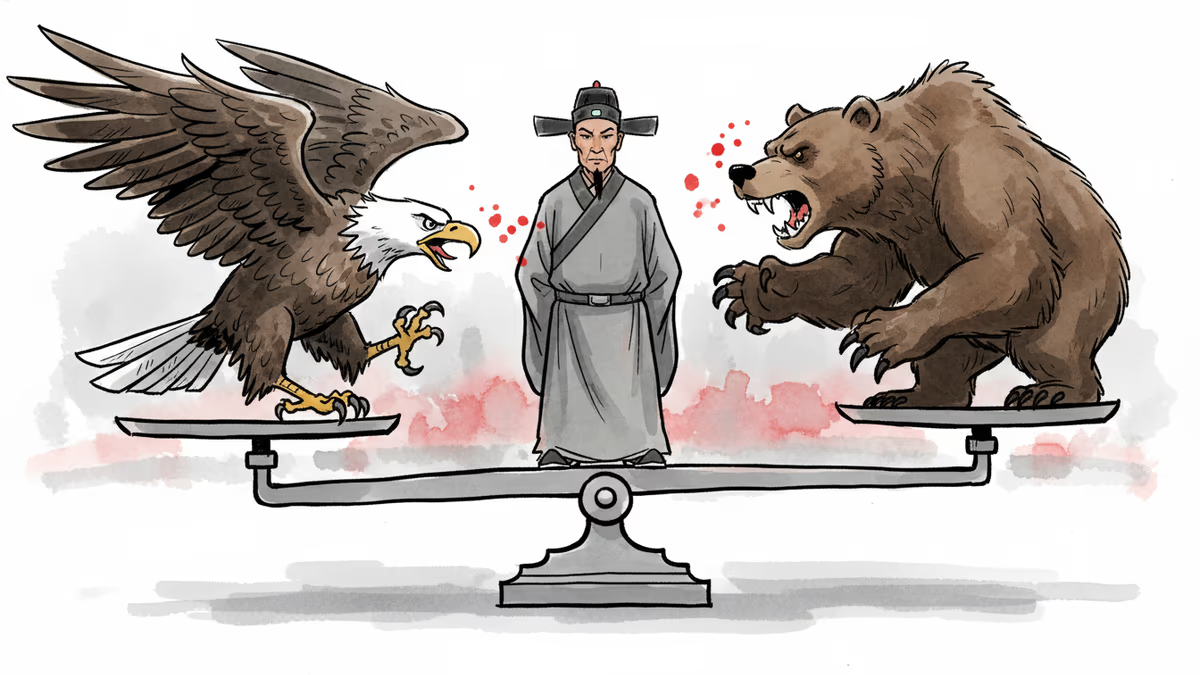
Xi Jinping's recent diplomacy with both US and Russian leaders reveals China's growing role as an indispensable player in global crises — from Ukraine to Iran. What does this mean for the international order?
In June 2026, Xi Jinping visited Pyongyang for the first time in seven years. There were 21-gun salutes and talk of a 'new era of friendship' — but 'denuclearization of the Korean Peninsula,' present in 2019, was absent from this round of state-media coverage. A symbolic overreach, or a real upgrade?
Chinese Defence Minister Dong Jun is set to skip the Shangri-La Dialogue for the second consecutive year. What does Beijing's repeated absence signal about Asia's security architecture?
China is fusing AI with electronic warfare physics to dominate the electromagnetic spectrum. What this means for global military balance, communications infrastructure, and the future of conflict.
Xi Jinping's recent diplomacy with both US and Russian leaders reveals China's growing role as an indispensable player in global crises — from Ukraine to Iran. What does this mean for the international order?
Thoughts
Share your thoughts on this article
Sign in to join the conversation