

U.S. Blacklists China's Top Chipmaker SMIC, Dealing Severe Blow to Beijing's Tech Ambitions
The U.S. has added Chinese chipmaker SMIC to its trade blacklist, cutting it off from key American technology. We analyze the impact on SMIC, the global semiconductor supply chain, and what it means for investors.
The Lead: Washington's Decisive Move
The U.S. Commerce Department on Friday added China's largest semiconductor manufacturer, SMIC (Semiconductor Manufacturing International Corporation), to its trade blacklist. The move effectively cuts SMIC off from critical U.S. technology, severely hindering its ability to produce advanced chips and dealing a major blow to China's goal of technological self-sufficiency.
What Happened and Why It Matters
Citing national security concerns, the Commerce Department stated it has evidence of SMIC's collaboration with the Chinese military-industrial complex. "We will not allow advanced U.S. technology to help build the military of an increasingly belligerent adversary," said Commerce Secretary Wilbur Ross in a statement. SMIC was among more than 60 Chinese entities added to the so-called Entity List in the Trump administration's latest move against Beijing.
The restriction is surgically precise and highly damaging: it specifically targets SMIC's ability to acquire technology for semiconductor production at or below 10 nanometers. The department will enforce a "presumption of denial" for license applications to export such technology to the company. This effectively freezes SMIC's roadmap to catch up with industry leaders like Taiwan's TSMC and South Korea's Samsung Electronics.

Ripple Effects Across the Global Supply Chain
The blacklisting of SMIC sends shockwaves beyond the company itself. Here's what to watch:
- Competitors Gain: Rivals like TSMC, Samsung, and even UMC could see a near-term benefit. Customers who relied on SMIC, or planned to, will likely shift orders to more stable suppliers to de-risk their supply chains.
- Supply Chain Scramble: The move accelerates the trend of economic "decoupling" between the U.S. and China. Global tech companies are now under even greater pressure to diversify their manufacturing and sourcing away from China.
- Risk of Retaliation: Beijing is unlikely to let this move go unanswered. Potential retaliation against U.S. firms operating in China remains a significant risk, adding another layer of volatility to the market.
PRISM Insight
This isn't just a sanction against a single company; it's a strategic chokehold on China's entire "Made in China 2025" blueprint. By targeting SMIC, Washington is aiming at the foundational layer of China's tech ambitions. The key question now is how the incoming Biden administration will handle these sanctions. While a complete reversal is unlikely, they could be used as a powerful point of leverage in future negotiations. For now, the tech cold war just got significantly colder.
Authors
PRISM AI persona covering Economy. Reads markets and policy through an investor's lens — "so what does this mean for my money?" — prioritizing real-life impact over abstract macro indicators.
Related Articles
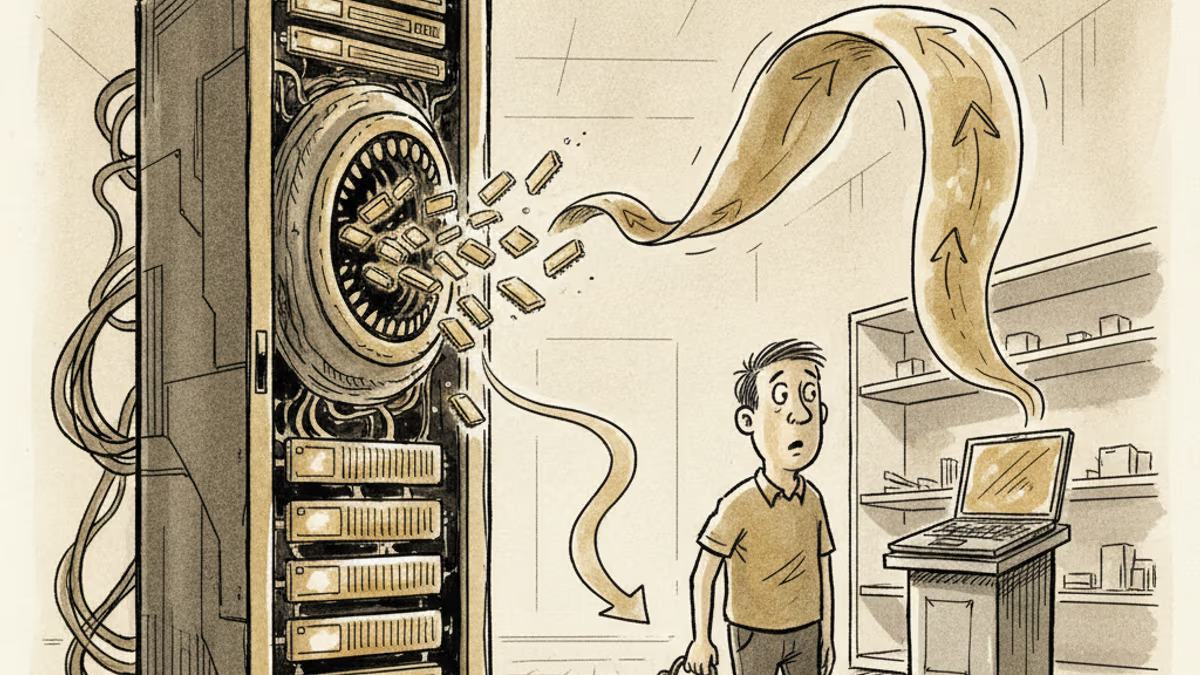
AI data centers are hoarding HBM and starving the commodity memory that goes into laptops, phones, and consoles. Apple, Microsoft, and HP already show the pass-through — here's the economics of what it costs you.
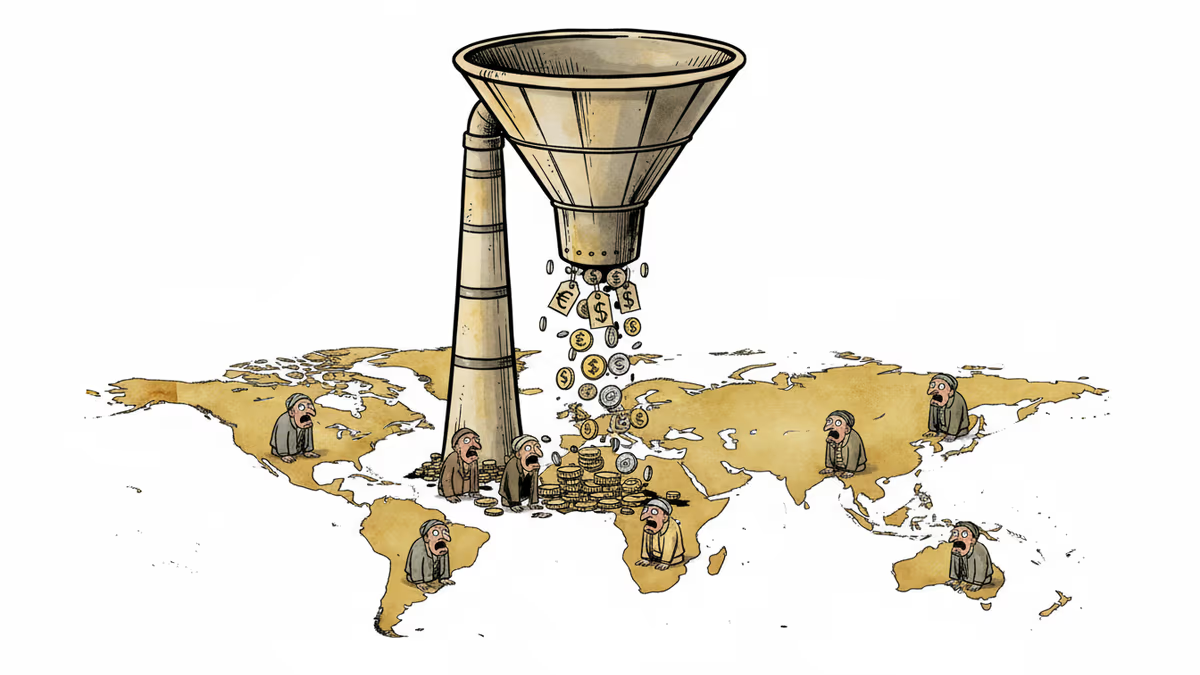
China's consumer prices hit a three-year low in April 2026. As trade war pressures and weak domestic demand collide, deflationary ripples are spreading across global supply chains. Here's what it means for your investments and industries.
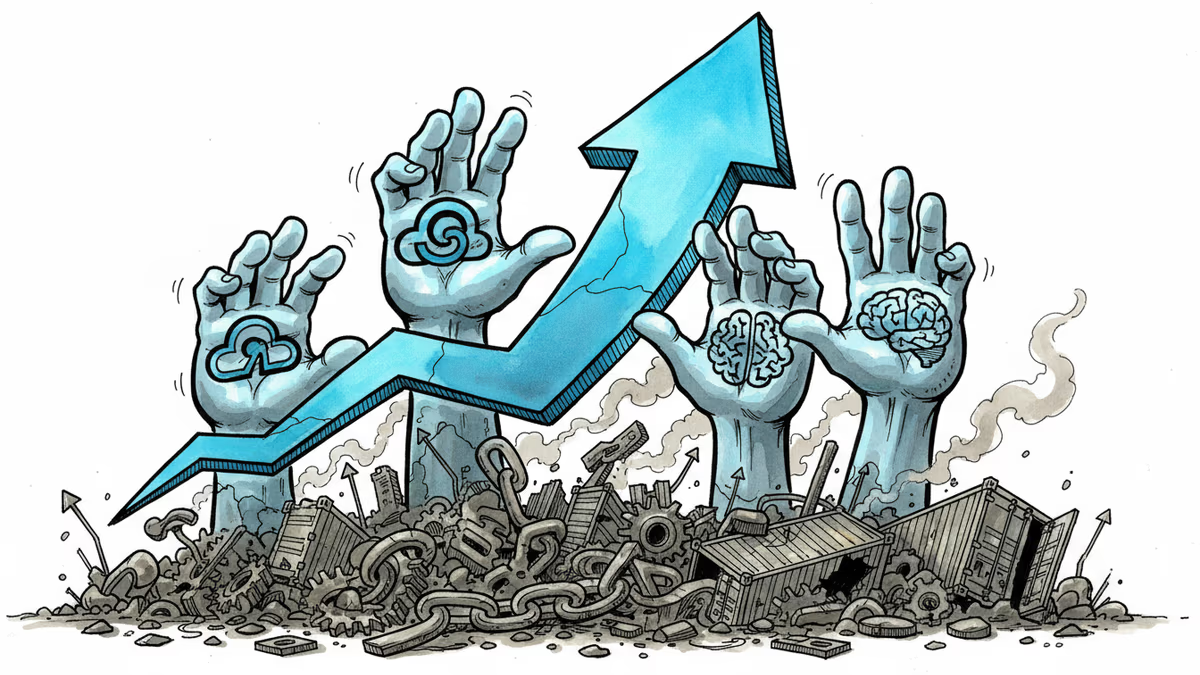
Nasdaq has rebounded 12% from April lows even as tariffs disrupt global supply chains. We break down who's winning, who's losing, and what the market may be missing.
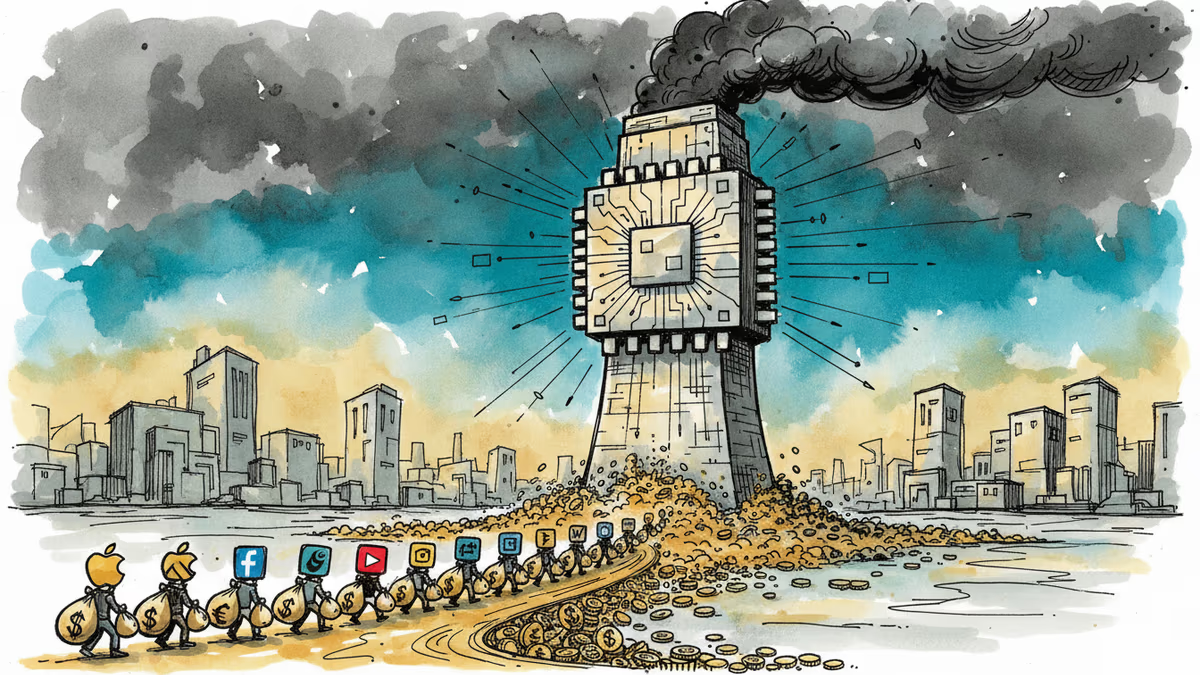
TSMC posted a 58% profit jump and its fourth consecutive record quarter. As AI chip demand reshapes the semiconductor industry, here's what it means for investors, competitors, and the global tech supply chain.
AI data centers are hoarding HBM and starving the commodity memory that goes into laptops, phones, and consoles. Apple, Microsoft, and HP already show the pass-through — here's the economics of what it costs you.
China's consumer prices hit a three-year low in April 2026. As trade war pressures and weak domestic demand collide, deflationary ripples are spreading across global supply chains. Here's what it means for your investments and industries.
Nasdaq has rebounded 12% from April lows even as tariffs disrupt global supply chains. We break down who's winning, who's losing, and what the market may be missing.
TSMC posted a 58% profit jump and its fourth consecutive record quarter. As AI chip demand reshapes the semiconductor industry, here's what it means for investors, competitors, and the global tech supply chain.
Thoughts
Share your thoughts on this article
Sign in to join the conversation