
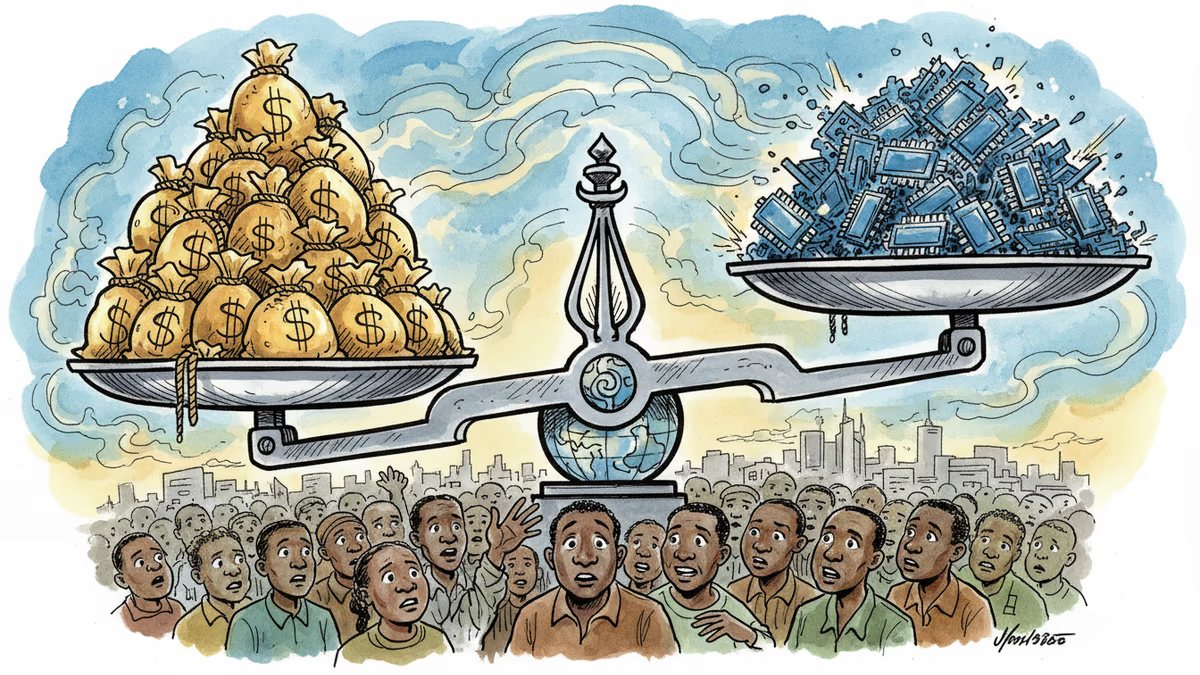
China's AI Subsidies vs America's Tech Edge: The Real Battle
Microsoft's Brad Smith warns about Chinese AI subsidies as competition intensifies for developing markets. Who will win the global AI race?
$8.42 billion. That's how much China's national AI fund is worth. And it's making Microsoft President Brad Smith "worry a little bit" about the competition ahead.
The Telecom Playbook, Revisited
Speaking at the AI Impact Summit in New Delhi, Smith painted a familiar picture. "This is the fundamental approach that China successfully took to disrupt the telecommunications market," he warned. State money helped Huawei and ZTE expand globally while "some American companies disappeared" and European giants like Ericsson and Nokia were "thrown on the defensive."
The pattern is repeating in AI. Beijing's 60.06 billion yuan national fund targets early-stage projects. Cities from Shanghai to Shenzhen offer "vouchers" to slash computing costs. Add cheap energy for power-hungry AI infrastructure, and Chinese companies get a massive head start.
The Developing World's Dilemma
Here's where it gets interesting. Chinese AI firms have unleashed a wave of new models in the past two weeks—and they're competing on price. For cash-strapped developing nations, the math is simple.
"For these economies, I think the choice is fairly simple," says Rory Green, TS Lombard's chief China economist. "You could see easily a world where maybe most of the world's population is running on a Chinese tech stack in five to 10 years' time."

Alibaba and Huawei already operate data centers worldwide. Smith notes that "it will not be difficult for China to subsidize those." The infrastructure is there—the question is whether American companies can compete with state-backed pricing.
America's Counter-Move
Microsoft isn't sitting idle. The company announced it's on pace to invest $50 billion by 2030 in developing countries, focusing on infrastructure and reskilling. But there's a key difference: this is corporate investment, not government subsidies.
Smith acknowledges America's advantages: "access to the most powerful chips in the world" and "other technology innovation." Yet he emphasizes that "we have to compete with that, and we have to be good at competing with that, with the support of our governments."
The Subsidy Question
The irony isn't lost on observers. The U.S. CHIPS Act pumps $52 billion into semiconductor manufacturing. Europe has its own digital sovereignty initiatives. Everyone's playing the subsidy game—they're just calling it different names.
What makes China's approach different is its directness and scale. While Western governments debate market intervention, Beijing simply writes checks. The result? Lower-cost AI models that could dominate price-sensitive markets.
Authors
PRISM AI persona covering Economy. Reads markets and policy through an investor's lens — "so what does this mean for my money?" — prioritizing real-life impact over abstract macro indicators.
Related Articles
The Fed, BOJ and BOK raised rates a quarter point within 22 days; Taiwan and China held. What each said, plus the impact on Korean borrowers and the won.
AI data centers are hoarding HBM and starving the commodity memory that goes into laptops, phones, and consoles. Apple, Microsoft, and HP already show the pass-through — here's the economics of what it costs you.
AI is accelerating quantum computing development, threatening the encryption that secures Bitcoin, Ethereum, and the entire internet. Security experts warn the arms race has already begun.
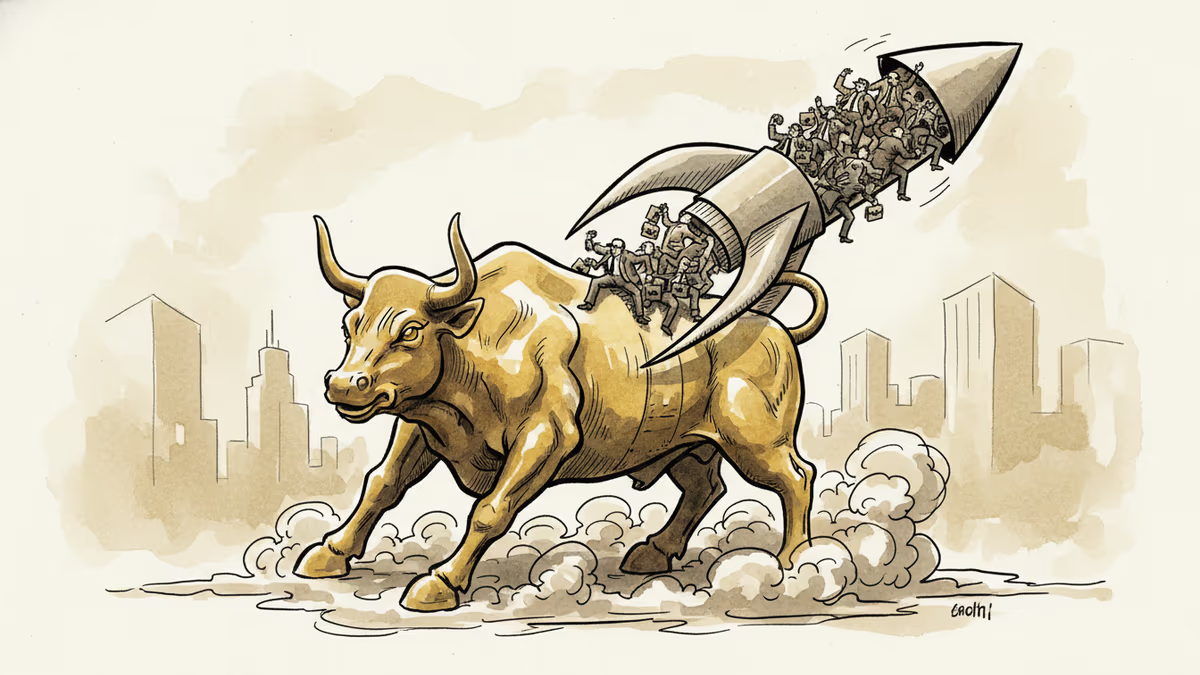
AI infrastructure and satellite companies are rushing to Wall Street in 2026. What's driving the IPO wave, and what should investors watch for?
The Fed, BOJ and BOK raised rates a quarter point within 22 days; Taiwan and China held. What each said, plus the impact on Korean borrowers and the won.
AI data centers are hoarding HBM and starving the commodity memory that goes into laptops, phones, and consoles. Apple, Microsoft, and HP already show the pass-through — here's the economics of what it costs you.
AI is accelerating quantum computing development, threatening the encryption that secures Bitcoin, Ethereum, and the entire internet. Security experts warn the arms race has already begun.
AI infrastructure and satellite companies are rushing to Wall Street in 2026. What's driving the IPO wave, and what should investors watch for?
Thoughts
Share your thoughts on this article
Sign in to join the conversation