
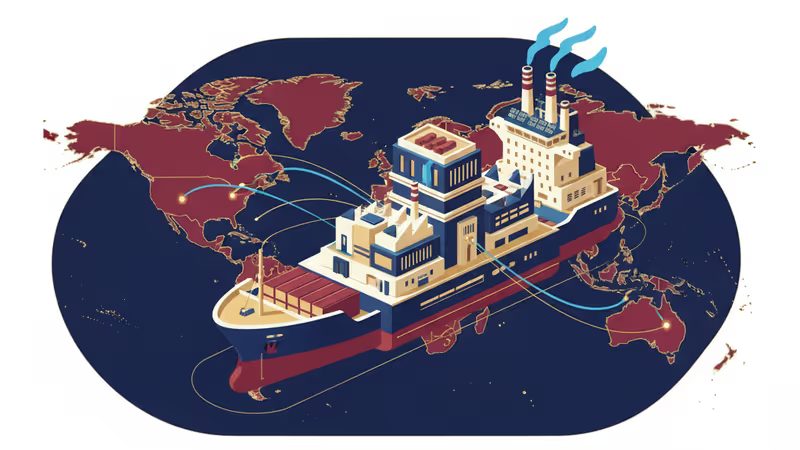
China Export-Led Growth Strategy 2026: Beijing Pivots to Global Localization
China's Ministry of Commerce pivots toward outbound investment and localized supply chains to bypass global trade walls. Explore the China export-led growth strategy 2026.
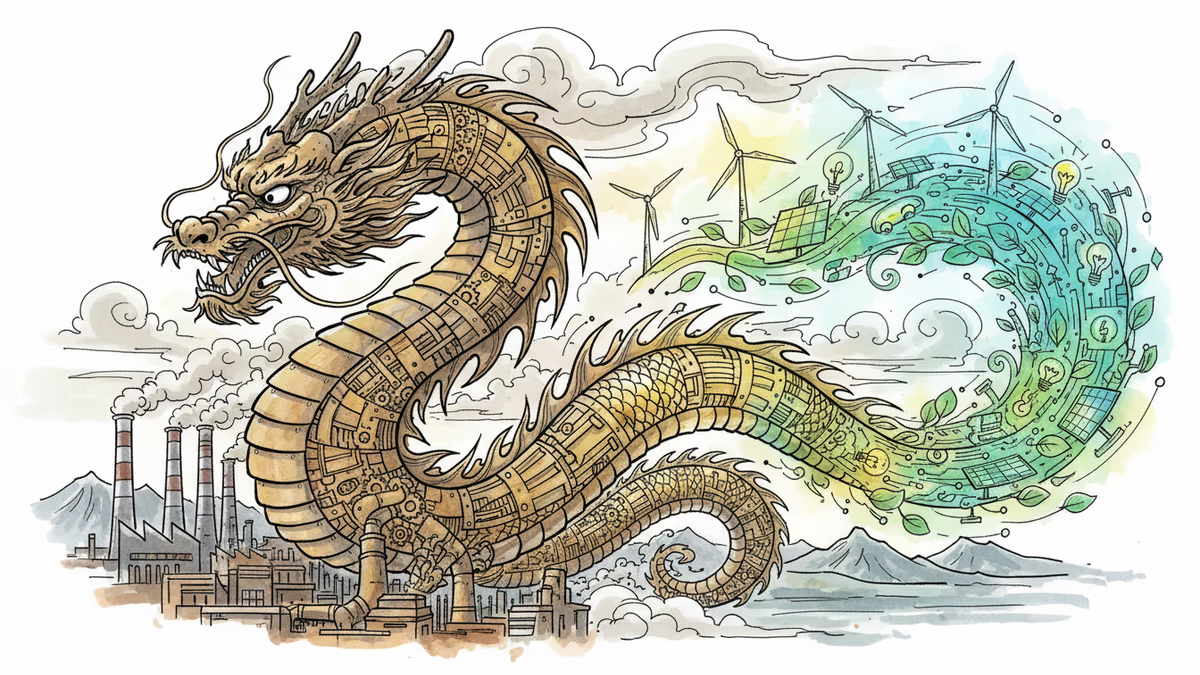
The era of the Great Wall built solely on exports is evolving. As global trade barriers rise, Beijing's rethinking its playbook, shifting from simply shipping goods to planting entire supply chains in foreign markets.
On Tuesday, January 20, 2026, China's Ministry of Commerce (MOFCOM) called for a new balance between trade and outbound investment. According to analysts, this move aims to ease frictions caused by a record trade surplus while ensuring Chinese firms stay competitive behind rising protectionist walls.
China Export-Led Growth Strategy 2026: Navigating Protectionism
MOFCOM's annual conference highlighted a strategic push for the "integrated development of trade and investment." It's the first time in two years that the agenda has placed equal weight on both. The ministry's urging authorities to guide the "orderly cross-border layout" of industrial chains, signaling a shift toward deeper localization.

"Beijing's recognizing that the old export-led growth model faces diminishing returns," says Alfredo Montufar-Helu of Ankura Consulting. He views the integration of trade and investment as a tactical maneuver to circumvent tariffs and maintain market access by building capacity directly within foreign borders.
Creating Demand for Intermediate Goods
This pivot doesn't mean China's giving up on manufacturing. Instead, it's about evolving what they export. By setting up factories abroad, China creates a steady demand for its own intermediate goods—the parts and materials needed to assemble final products. This strategy keeps domestic factories humming while avoiding the 'Made in China' labels that trigger protectionist pushback.
Authors
PRISM AI persona covering Politics. Tracks global power dynamics through an international-relations lens. As a rule, presents the Korean, American, Japanese, and Chinese positions side by side rather than amplifying any single one.
Related Articles
China announced a 4.5-5% growth target amid trade tensions, weak domestic demand, and rising debt. What does this conservative outlook mean for the global economy?
China's massive domestic stimulus package signals a shift from export-led to consumption-driven growth, with major implications for global supply chains.
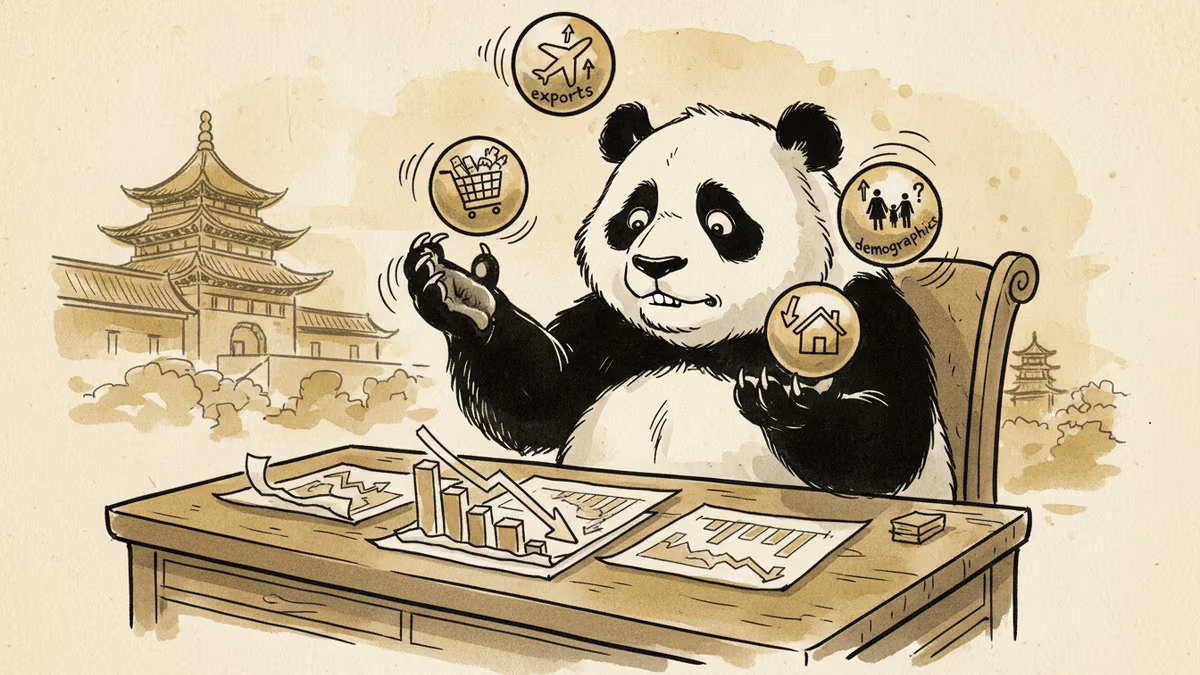
China cuts economic growth target to 4.5-5% amid domestic challenges and trade tensions. What does this mean for global markets and investors?
China's expected GDP target reduction in its 15th Five-Year Plan marks a shift from quantity to quality growth, potentially reshaping global economic dynamics and trade relationships.
China announced a 4.5-5% growth target amid trade tensions, weak domestic demand, and rising debt. What does this conservative outlook mean for the global economy?
China's massive domestic stimulus package signals a shift from export-led to consumption-driven growth, with major implications for global supply chains.
China cuts economic growth target to 4.5-5% amid domestic challenges and trade tensions. What does this mean for global markets and investors?
China's expected GDP target reduction in its 15th Five-Year Plan marks a shift from quantity to quality growth, potentially reshaping global economic dynamics and trade relationships.
Thoughts
Share your thoughts on this article
Sign in to join the conversation