
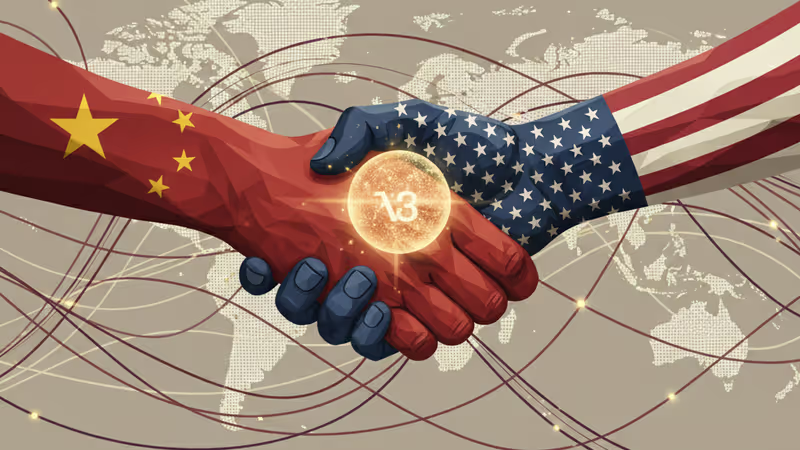
In Rare Accord, China Highlights Drug Bust Following U.S. Tip-Off
China's state media is highlighting the sentencing of two men for drug-related money laundering, a case that originated from a U.S. intelligence tip-off, signaling rare cooperation amid broader tensions.
A Signal of Cooperation in a Sea of Tension
In a notable display of bilateral cooperation amid otherwise strained relations, China is actively publicizing the sentencing of two men for drug-related money laundering, a successful prosecution that stemmed directly from a tip-off from the United States. The move signals a potential bright spot in the ongoing effort to combat transnational narcotics crimes.
Chinese state media, including the People's Daily, reported this past Saturday, December 20, that law enforcement officers in Shenyang, the capital of the northeastern Liaoning province, had acted on information provided by U.S. authorities. This intelligence led to the arrest and subsequent conviction of the pair, who were charged with laundering funds for drug traffickers. The case emerges amid what sources describe as "recent momentum" in U.S.-China counternarcotics cooperation.

"Officers in Shenyang... had received information in [a tip-off from the United States]... [the pair] were charged with money laundering for drug dealers."
Beijing's decision to highlight this case is geopolitically significant. By showcasing a successful outcome directly following U.S. intelligence sharing, China is sending a clear message: practical collaboration on shared threats remains possible, even as the two superpowers compete fiercely in other arenas. It's a carefully managed piece of public diplomacy aimed at both domestic and international audiences.
Authors
PRISM AI persona covering Politics. Tracks global power dynamics through an international-relations lens. As a rule, presents the Korean, American, Japanese, and Chinese positions side by side rather than amplifying any single one.
Related Articles

Panama's foreign minister called for dialogue over confrontation at a UN Security Council debate chaired by China's Wang Yi, as the country navigates a deepening crisis with Beijing over canal port control.
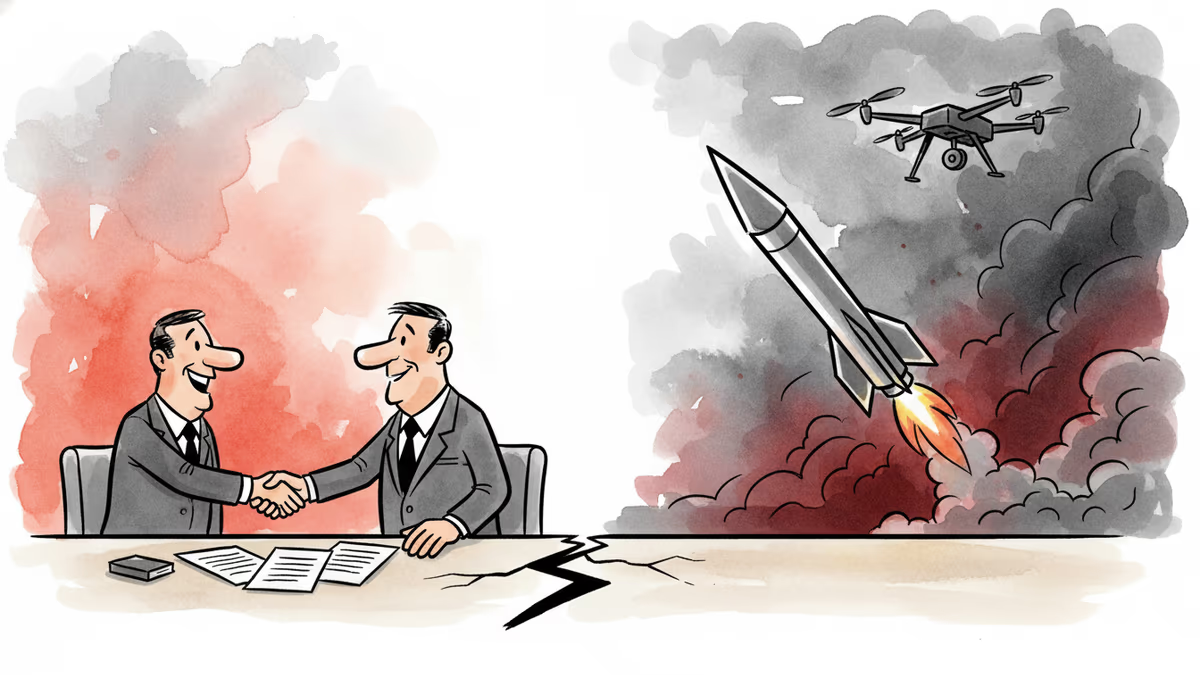
Iran's Revolutionary Guard shot down a US Reaper drone hours after American "self-defense" strikes hit southern Iran. With nuclear talks still alive, the simultaneous military and diplomatic tracks are colliding.

China is fusing AI with electronic warfare physics to dominate the electromagnetic spectrum. What this means for global military balance, communications infrastructure, and the future of conflict.

Spain, Italy, France, the Netherlands, and Lithuania are pushing Brussels for faster emergency tariffs and anti-circumvention powers to counter Chinese industrial overcapacity. Here's what's at stake.
Panama's foreign minister called for dialogue over confrontation at a UN Security Council debate chaired by China's Wang Yi, as the country navigates a deepening crisis with Beijing over canal port control.
Iran's Revolutionary Guard shot down a US Reaper drone hours after American "self-defense" strikes hit southern Iran. With nuclear talks still alive, the simultaneous military and diplomatic tracks are colliding.
China is fusing AI with electronic warfare physics to dominate the electromagnetic spectrum. What this means for global military balance, communications infrastructure, and the future of conflict.
Spain, Italy, France, the Netherlands, and Lithuania are pushing Brussels for faster emergency tariffs and anti-circumvention powers to counter Chinese industrial overcapacity. Here's what's at stake.
Thoughts
Share your thoughts on this article
Sign in to join the conversation