
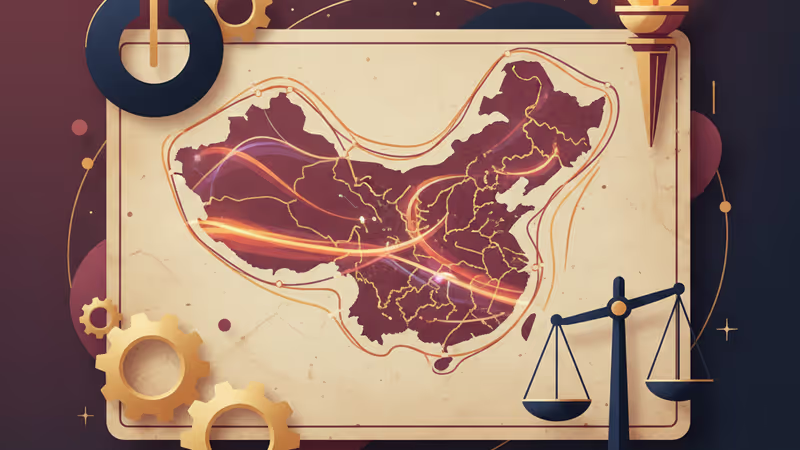
China Urged to Build 'Original' Border History System to Counter Western 'Threat'
A scholar from a Chinese state-run think tank says China must build an 'original' knowledge system for its border history to counter 'hostile forces in the West,' signaling a new front in geopolitical competition.
A new battleground is emerging in geopolitics: the writing of history. A senior scholar at a prominent Chinese state-run think tank has called for the establishment of an “original” knowledge system for its border regions, designed specifically to mitigate security risks from what he terms “hostile forces in the West”.
According to reports, Fan Enshi of the Chinese Academy of Social Sciences (CASS) warned of a “de-Sinicisation” threat in US-led historical perspectives. He is advocating for a shift from “fragmented research” to systematic domestic theories that can better project Chinese influence.
From 'Fragmented Research' to Systematic Theory
Fan's proposal stems from a critique of current historical research methods within China. He argues that existing studies are too “fragmented” to effectively counter historical narratives from abroad. In his view, a unified and systematic theory regarding China's border regions isn't just an academic exercise—it's a matter of national security.
Geopolitical Influence and the War of Narratives
This call appears to be part of China's broader strategy to wield historical narratives as a tool for geopolitical influence. By building its own knowledge system, Beijing could create a theoretical foundation to counter Western perspectives and legitimize its own positions on the world stage. This suggests an impending escalation in the “war of narratives” over historical interpretation.
This content is AI-generated based on source articles. While we strive for accuracy, errors may occur. We recommend verifying with the original source.
Related Articles

The British Empire is gone, but its legacy continues to shape 21st-century geopolitics and culture. An analysis of what 'Rule the Waves' means today.
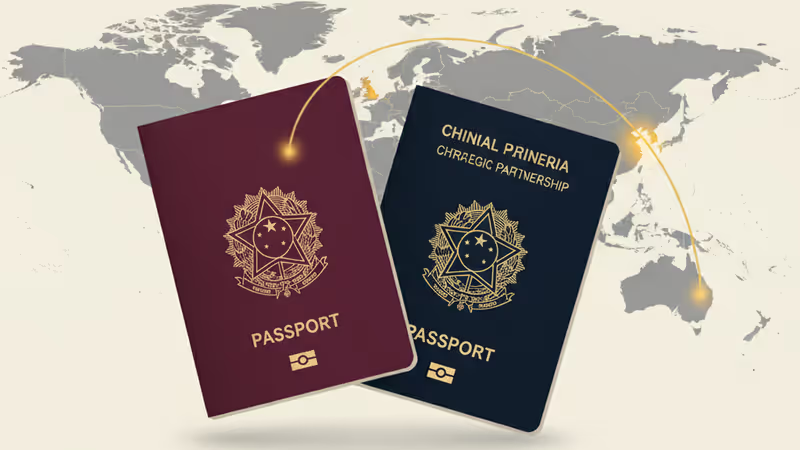
Brazil is preparing to waive visa requirements for Chinese tourists and business travelers, with an announcement expected in early 2026. The move aims to deepen ties with its largest trading partner, China.
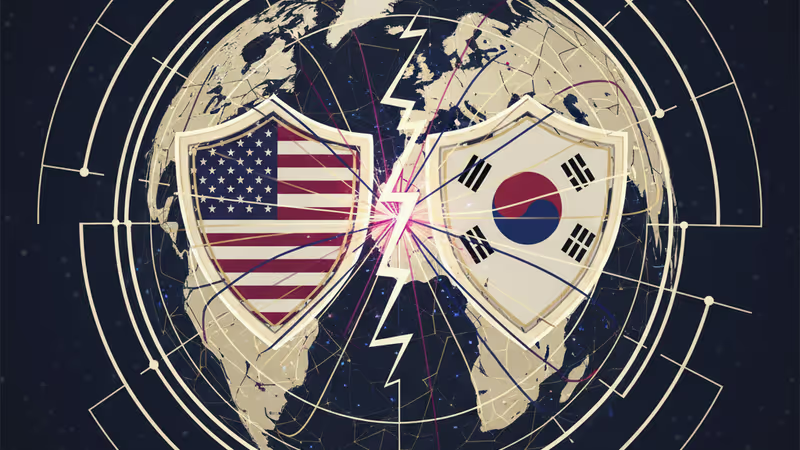
Former Trump adviser Robert O'Brien calls South Korea's probe into Coupang's 33.7M user data leak an "aggressive targeting," sparking fears of a US-Korea trade dispute.

A new forecast indicates the Russia-Ukraine war could continue for another 12 to 18 months. The conflict has evolved into a war of attrition, with a military stalemate fueling projections of a long-term conflict.
The British Empire is gone, but its legacy continues to shape 21st-century geopolitics and culture. An analysis of what 'Rule the Waves' means today.
Brazil is preparing to waive visa requirements for Chinese tourists and business travelers, with an announcement expected in early 2026. The move aims to deepen ties with its largest trading partner, China.
Former Trump adviser Robert O'Brien calls South Korea's probe into Coupang's 33.7M user data leak an "aggressive targeting," sparking fears of a US-Korea trade dispute.
A new forecast indicates the Russia-Ukraine war could continue for another 12 to 18 months. The conflict has evolved into a war of attrition, with a military stalemate fueling projections of a long-term conflict.