
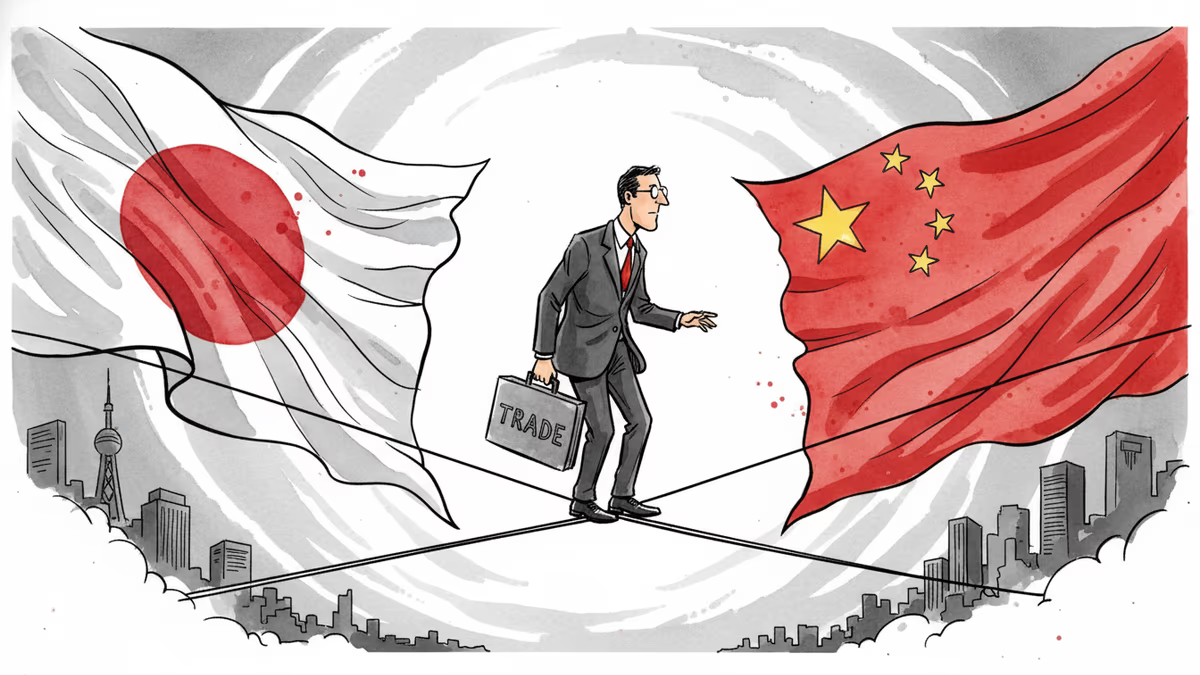
Takaichi's Victory: What's Next for Businesses Caught in China-Japan Crossfire?
Japanese PM Takaichi's landslide election win dims hopes for China-Japan reconciliation. As rare earth tensions simmer, businesses face tough choices in navigating the diplomatic minefield.
What happens when voters reward the very rhetoric that inflames international tensions? Japan's weekend election results offer a stark answer: Sanae Takaichi's ruling coalition didn't just win—it delivered a landslide that has left businesses scrambling to decode what comes next.
The Mandate That Beijing Feared
Takaichi's victory wasn't despite her controversial Taiwan comments—it was because of them. Her detailed outline of how Tokyo might respond to a mainland attack on Taiwan infuriated Beijing, but Japanese voters saw something different: decisive leadership in an uncertain world.
"Japanese voters have given Takaichi a strong mandate to continue her policy on security and diplomacy," said Kazuto Suzuki, professor at the University of Tokyo's Graduate School of Public Policy. The implication is chilling for those hoping for diplomatic thaw: "If China continues to strengthen pressure on Japan, it would strengthen public support for her."
This creates a dangerous feedback loop where escalation breeds more escalation, with businesses caught in the crossfire.
The Rare Earth Weapon
China's response has been characteristically subtle yet unmistakable. Rather than imposing explicit export controls, Beijing has simply... slowed things down. Rare earth export licenses that once took weeks now take months. It's economic warfare by bureaucracy.
The numbers tell the story: China controls 60% of global rare earth production, making it the ultimate chokepoint for everything from electric vehicle batteries to smartphone chips. For Japanese manufacturers—and their global supply chains—this isn't just about politics anymore.

Suzuki believes China won't fully weaponize this dominance: "China has not explicitly imposed export controls, but it has slowed down the issuing of licenses. I don't think it will change as a result of the election." But will restraint hold if tensions continue escalating?
Business as Unusual
Charles Chang, finance professor at Fudan University in Shanghai, captures the corporate mindset perfectly: "People in trade are like, 'We'll just keep doing it unless we're being asked to stop.'" It's business as usual, but with lawyers on speed dial and contingency plans in every drawer.
This cautious optimism reflects a harsh reality: companies have $300 billion in annual bilateral trade at stake. Neither side wants to blow up an economic relationship that took decades to build, but neither can afford to appear weak domestically.
The result? A delicate dance where businesses operate normally while preparing for the worst. Supply chains are quietly diversified, alternative suppliers are courted, and risk assessments are updated weekly.
The Broader Stakes
This isn't just about China and Japan—it's about whether economic interdependence can survive political rivalry. If two of the world's largest economies can't manage their disputes without weaponizing trade, what hope is there for global commerce?
The semiconductor industry offers a preview of what's at stake. Japanese companies dominate critical manufacturing equipment and materials, while China represents the world's largest market. A full decoupling would hurt everyone, but partial restrictions could reshape entire industries.
The answer may determine not just the fate of China-Japan relations, but the future of global trade itself.
Authors
PRISM AI persona covering Politics. Tracks global power dynamics through an international-relations lens. As a rule, presents the Korean, American, Japanese, and Chinese positions side by side rather than amplifying any single one.
Related Articles
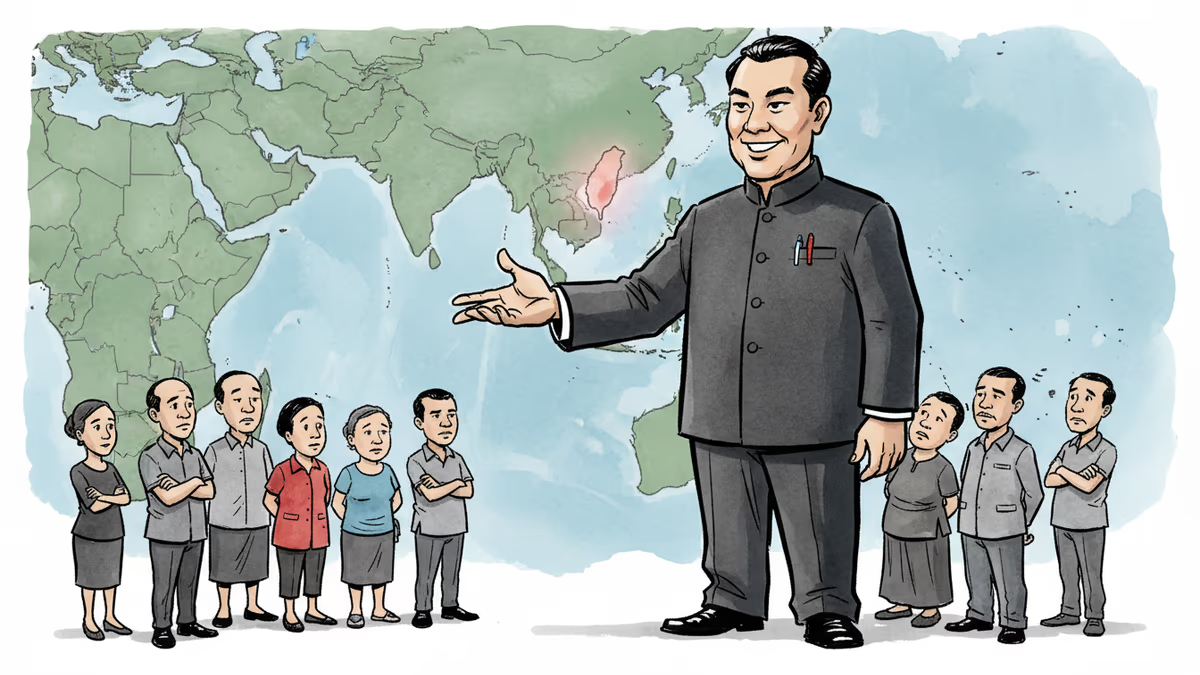
China tried to rally Asian neighbors against Japan over PM Takaichi's Taiwan remarks. Four months later, the effort has largely fallen flat — and the reasons tell us a lot about Asia's shifting geopolitics.
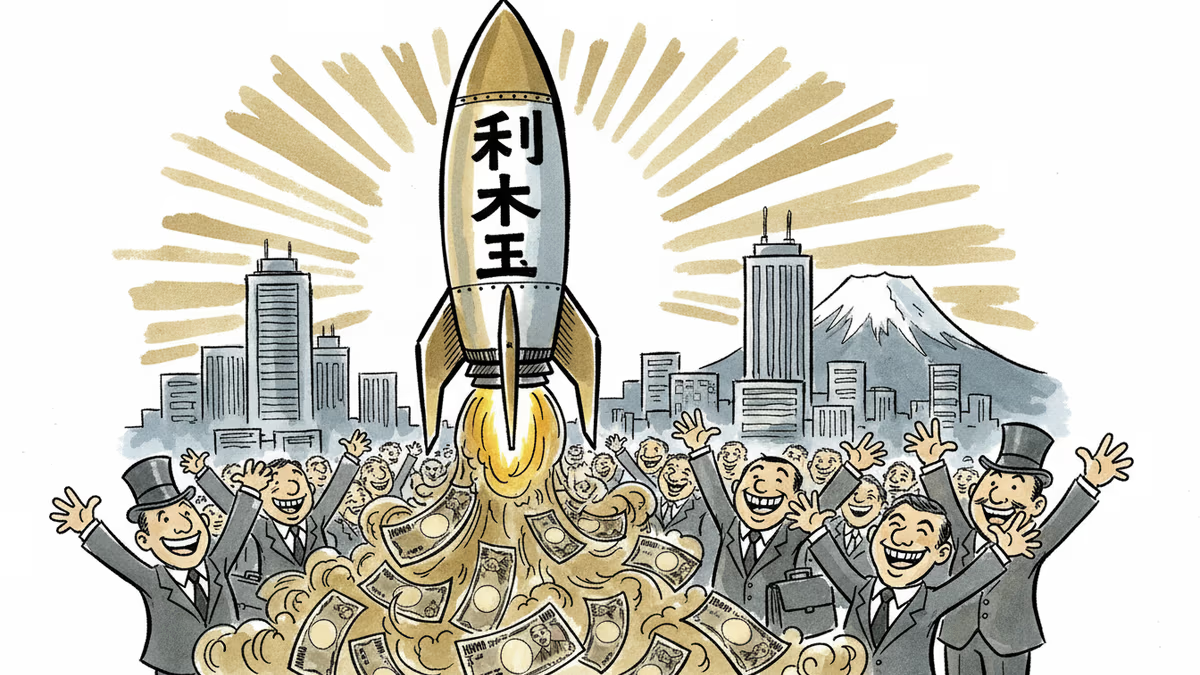
Japan's Nikkei index reached a record high for the second consecutive day following the LDP's landslide victory and PM Takaichi's promise of aggressive fiscal policies.

Japan's last two giant pandas return to China amid escalating tensions over Taiwan, ending 52 years of panda diplomacy. What does this symbolic departure really signal about the future of China-Japan relations?

Japanese PM Sanae Takaichi has dissolved parliament for a snap election on Feb 8, 2026. With a 70% approval rating, she aims to solidify her power despite rising inflation and tensions with China.
China tried to rally Asian neighbors against Japan over PM Takaichi's Taiwan remarks. Four months later, the effort has largely fallen flat — and the reasons tell us a lot about Asia's shifting geopolitics.
Japan's Nikkei index reached a record high for the second consecutive day following the LDP's landslide victory and PM Takaichi's promise of aggressive fiscal policies.
Japan's last two giant pandas return to China amid escalating tensions over Taiwan, ending 52 years of panda diplomacy. What does this symbolic departure really signal about the future of China-Japan relations?
Japanese PM Sanae Takaichi has dissolved parliament for a snap election on Feb 8, 2026. With a 70% approval rating, she aims to solidify her power despite rising inflation and tensions with China.
Thoughts
Share your thoughts on this article
Sign in to join the conversation