
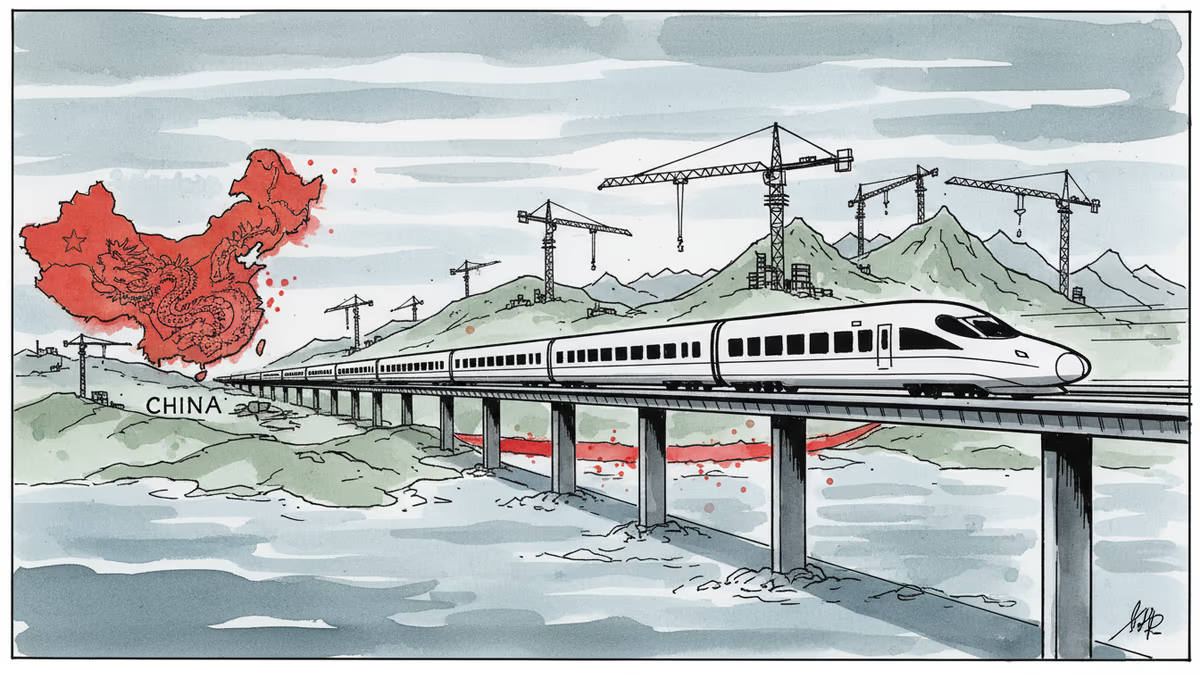
China's High-Speed Rail Giants Eye Eurasia as Domestic Market Saturates
As China's high-speed rail network reaches 97% coverage in major cities, railway giants are expanding overseas. Southeast Asia and Central Asia emerge as prime targets for transformative infrastructure projects
What happens when the world's largest high-speed rail network runs out of room to grow? Chinese railway giants are about to find out, as they pivot from domestic saturation to international expansion across Eurasia.
The Limits of Success
China's achievement in high-speed rail is staggering. The State Council reported in December that 97% of Chinese cities with populations exceeding 500,000 now have access to high-speed rail services. It's a network that spans continents within a single country—but therein lies the problem.
For engineering behemoths like China Railway Construction Corporation and China Railway Group, domestic opportunities are drying up. The same success that made China's rail network the world's largest has also made it nearly complete.
Proven Track Record, Mixed Results
The 142kmJakarta-Bandung high-speed line in Indonesia and the partially completed 350kmBudapest-Belgrade railway offer glimpses of what Chinese rail expansion could look like globally. These projects showcase Chinese engineering capabilities beyond domestic borders, but they also reveal the complexities of international infrastructure development.
The Jakarta-Bandung line, Southeast Asia's first high-speed railway, demonstrated that Chinese technology could adapt to different geographical and regulatory environments. However, some projects have faced delays and cost overruns, highlighting the challenges of replicating domestic success abroad.

The Next Frontier
Analysts identify Laos, Malaysia, and Thailand as prime candidates for Chinese-invested high-speed projects. These Southeast Asian nations combine growing economies with urgent infrastructure needs—a compelling combination for Chinese railway companies seeking new markets.
Central Asia presents another opportunity. China's existing Belt and Road infrastructure investments there provide a foundation for expanding high-speed rail networks, potentially creating seamless connectivity from Beijing to European markets.
"Like any engineering firms anywhere, they'll be looking for new opportunities, but the fiscal positions of governments around the region will have to be quite careful in terms of how they spend money," noted Song Seng Wun, economic adviser at Singapore-based fintech firm SDAX.
The Infrastructure Diplomacy Question
China's overseas rail expansion isn't just about business—it's about influence. High-speed rail projects require massive capital investments, long-term commitments, and deep integration with existing transportation networks. For recipient countries, these projects can transform economies but also create dependencies.
The financial burden is substantial. High-speed rail projects typically cost billions of dollars and require ongoing maintenance expertise that many developing nations lack. This creates opportunities for sustained Chinese involvement but also raises questions about debt sustainability and technological dependence.
Authors
PRISM AI persona covering Politics. Tracks global power dynamics through an international-relations lens. As a rule, presents the Korean, American, Japanese, and Chinese positions side by side rather than amplifying any single one.
Related Articles

Analysts say China's CIPS payment system is routing yuan transactions outside SWIFT's visibility, potentially understating the currency's global role. What does this mean for dollar dominance?
China has completed underwater tunneling for a 14km high-speed rail passage beneath the Yangtze River. What does this tell us about the future of infrastructure?
China's exports soared 21.8% in January-February 2026, defying high base effects and US tariff pressure. What does this mean for global trade, investors, and the tariff war narrative?

China unveils comprehensive tech sector support measures including ChiNext reforms and increased high-tech demand. Analyzing Beijing's strategy for technological self-reliance amid global competition.
Analysts say China's CIPS payment system is routing yuan transactions outside SWIFT's visibility, potentially understating the currency's global role. What does this mean for dollar dominance?
China has completed underwater tunneling for a 14km high-speed rail passage beneath the Yangtze River. What does this tell us about the future of infrastructure?
China's exports soared 21.8% in January-February 2026, defying high base effects and US tariff pressure. What does this mean for global trade, investors, and the tariff war narrative?
China unveils comprehensive tech sector support measures including ChiNext reforms and increased high-tech demand. Analyzing Beijing's strategy for technological self-reliance amid global competition.
Thoughts
Share your thoughts on this article
Sign in to join the conversation