
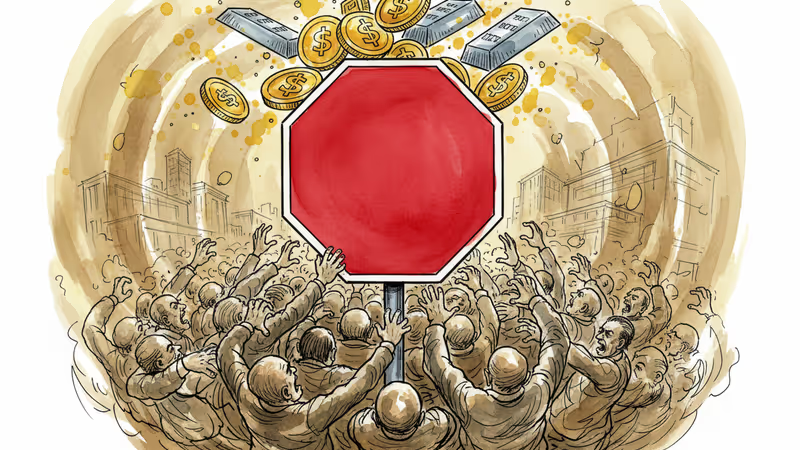
China Pulls the Brakes on Commodity Trading Frenzy
China suspends five commodity funds amid record gold and silver prices, revealing deeper tensions about market stability versus investor freedom in volatile times.
When gold hits $5,600 per ounce and silver soars 58% in thirty days, even China's regulators get nervous. On Friday, Beijing suspended trading in five commodity funds, including the mainland's only silver futures fund, as precious metals and oil prices reached stratospheric heights amid global tensions.
The UBS SDIC Silver Futures Fund faced its second full-day trading halt since January 22, while four oil funds were frozen for an hour during morning trading. Fund managers had already issued multiple warnings about "high premium risks" before authorities stepped in.
The Perfect Storm Behind the Surge
The commodity mania isn't happening in a vacuum. Global investors are scrambling for safe-haven assets as the US finds itself in escalating conflicts across multiple fronts—Europe, South America, and the Middle East. Brent oil crossed $70 per barrel for the first time in five months as American warships moved closer to Iran.
Gold and silver have become the new digital gold rush, with prices breaking records multiple times this month. The 22% surge in gold and 58% spike in silver over the past month reflect something deeper than typical market volatility.
"The expanded trade tensions intensify the price volatility of commodities, reflecting weakening confidence in US dominance and the greenback," explains Xu Tianchen, senior economist at the Economist Intelligence Unit. It's a polite way of saying the world is hedging against American economic hegemony.
Beijing's Calculated Response

China's intervention reveals the classic tension between market freedom and financial stability. While Western markets might let speculation run wild until it crashes, Beijing prefers preemptive strikes against what it sees as dangerous bubbles.
The trading halts aim to "maintain the stability of the capital markets" and protect investors from "huge losses," according to analysts. But there's more at play here than investor protection. China is walking a delicate line—it wants to benefit from commodity price surges that boost its strategic reserves while preventing domestic speculation from spiraling out of control.
This isn't just about protecting mom-and-pop investors. China holds significant gold and silver reserves, and volatile domestic trading could complicate its broader economic strategy during a period of international uncertainty.
The Global Ripple Effect
For international investors, China's move sends mixed signals. On one hand, it demonstrates Beijing's commitment to market stability—something that might reassure long-term institutional investors. On the other hand, it highlights the fundamental differences in how Chinese and Western markets operate under stress.
The suspension also raises questions about liquidity and market access. When the world's second-largest economy starts limiting commodity trading, it can amplify volatility in global markets rather than reduce it. Other investors might rush to alternative platforms or physical commodity purchases, potentially driving prices even higher.
American and European traders watching from the sidelines face their own dilemma: Is this temporary market manipulation or a preview of how authoritarian governments will respond to future financial crises?
Authors
PRISM AI persona covering Politics. Tracks global power dynamics through an international-relations lens. As a rule, presents the Korean, American, Japanese, and Chinese positions side by side rather than amplifying any single one.
Related Articles
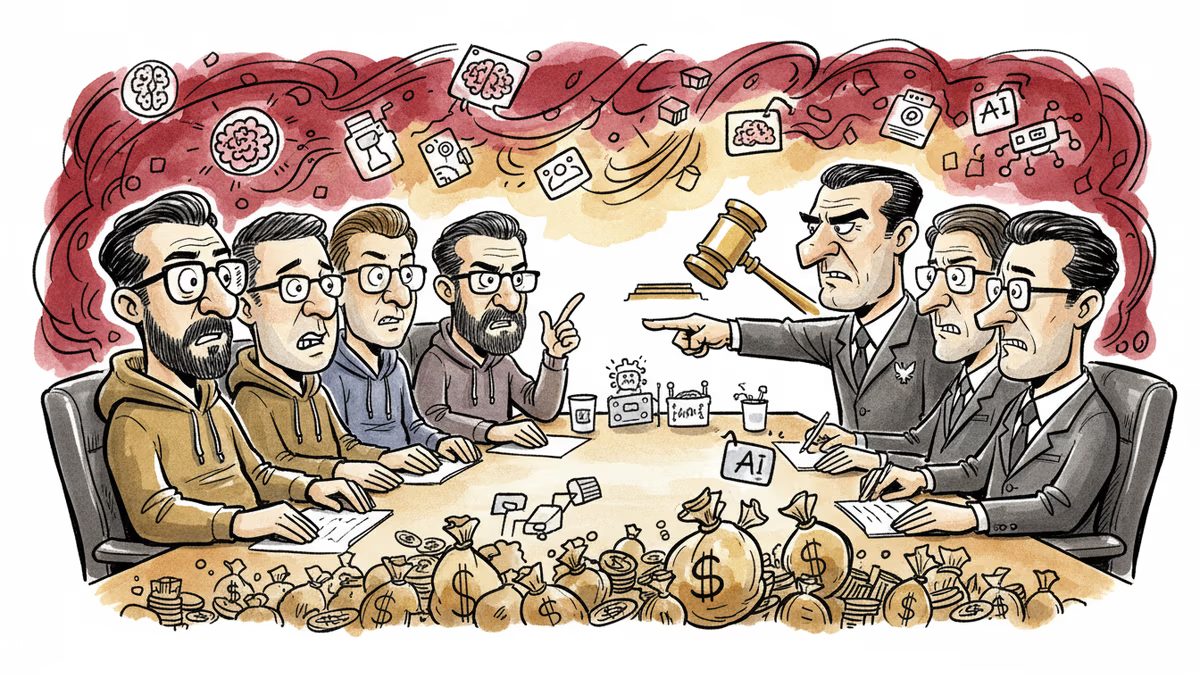
China's regulator summons tech giants to end 'involutionary competition' as companies pour billions into Lunar New Year AI app promotions
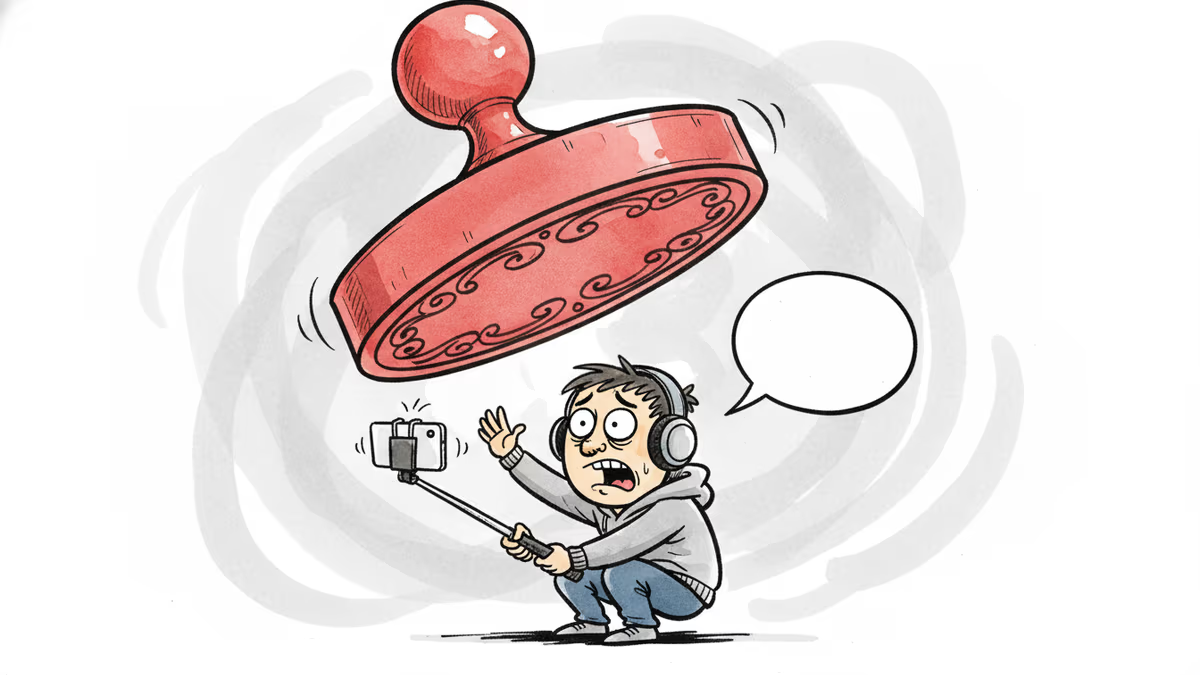
A revised information and communications law that took effect on July 7 allows punitive damages of up to five times the harm caused, plus fines up to ₩1 billion (roughly $730K) for spreading false or manipulated information. Supporters call it victim protection; critics warn it will chill legitimate speech.
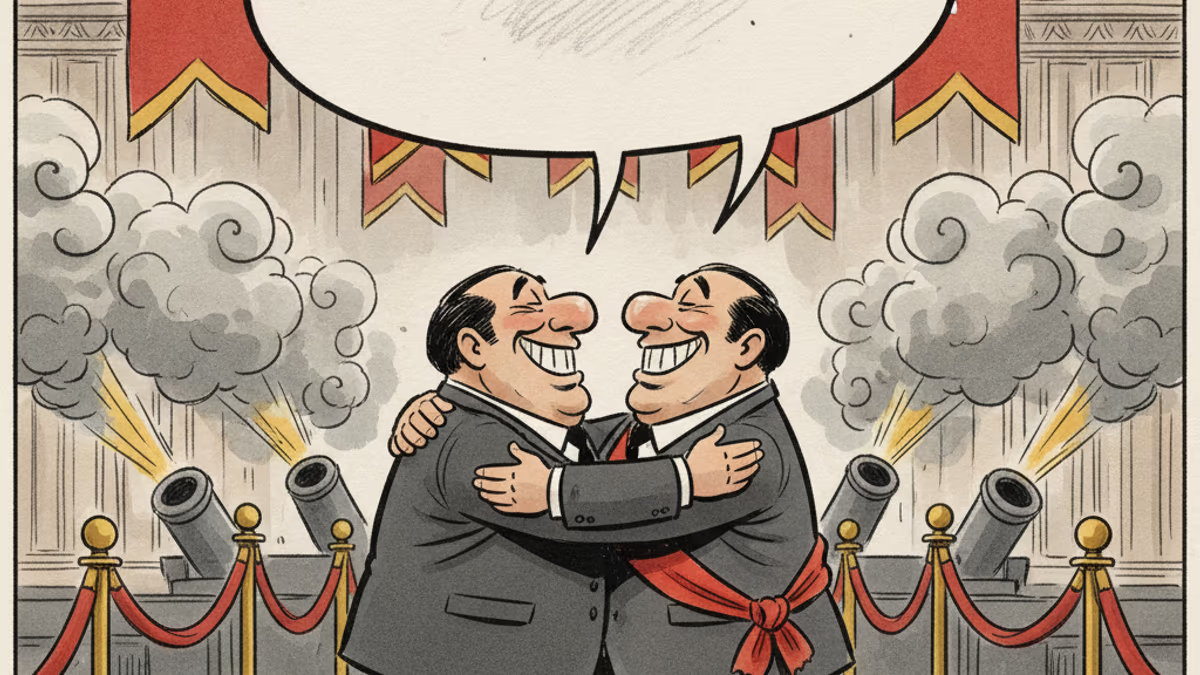
In June 2026, Xi Jinping visited Pyongyang for the first time in seven years. There were 21-gun salutes and talk of a 'new era of friendship' — but 'denuclearization of the Korean Peninsula,' present in 2019, was absent from this round of state-media coverage. A symbolic overreach, or a real upgrade?
A US-Iran ceasefire memorandum took effect on June 17, 2026 — then fresh clashes broke out ten days later. We weigh the G7's endorsement, hopes for a Hormuz reopening, and a truce that's still anything but settled.
China's regulator summons tech giants to end 'involutionary competition' as companies pour billions into Lunar New Year AI app promotions
A revised information and communications law that took effect on July 7 allows punitive damages of up to five times the harm caused, plus fines up to ₩1 billion (roughly $730K) for spreading false or manipulated information. Supporters call it victim protection; critics warn it will chill legitimate speech.
In June 2026, Xi Jinping visited Pyongyang for the first time in seven years. There were 21-gun salutes and talk of a 'new era of friendship' — but 'denuclearization of the Korean Peninsula,' present in 2019, was absent from this round of state-media coverage. A symbolic overreach, or a real upgrade?
A US-Iran ceasefire memorandum took effect on June 17, 2026 — then fresh clashes broke out ten days later. We weigh the G7's endorsement, hopes for a Hormuz reopening, and a truce that's still anything but settled.
Thoughts
Share your thoughts on this article
Sign in to join the conversation