

China 2025 GDP Growth Data: Strong Macro Performance Hides Deepening Social Gap
China's National Bureau of Statistics released 2025 GDP growth data on Jan 19, 2026. While figures show strong performance, analysts warn of rising social inequality and challenges for ordinary citizens.
China's economy is hitting its marks, but its citizens are feeling the pinch. On January 19, 2026, China's National Bureau of Statistics released data showcasing robust 2025 GDP growth. While the headline numbers suggest a powerful economic trajectory, analysts warn that ordinary people are still facing significant challenges.
Inside the China 2025 GDP Growth Paradox
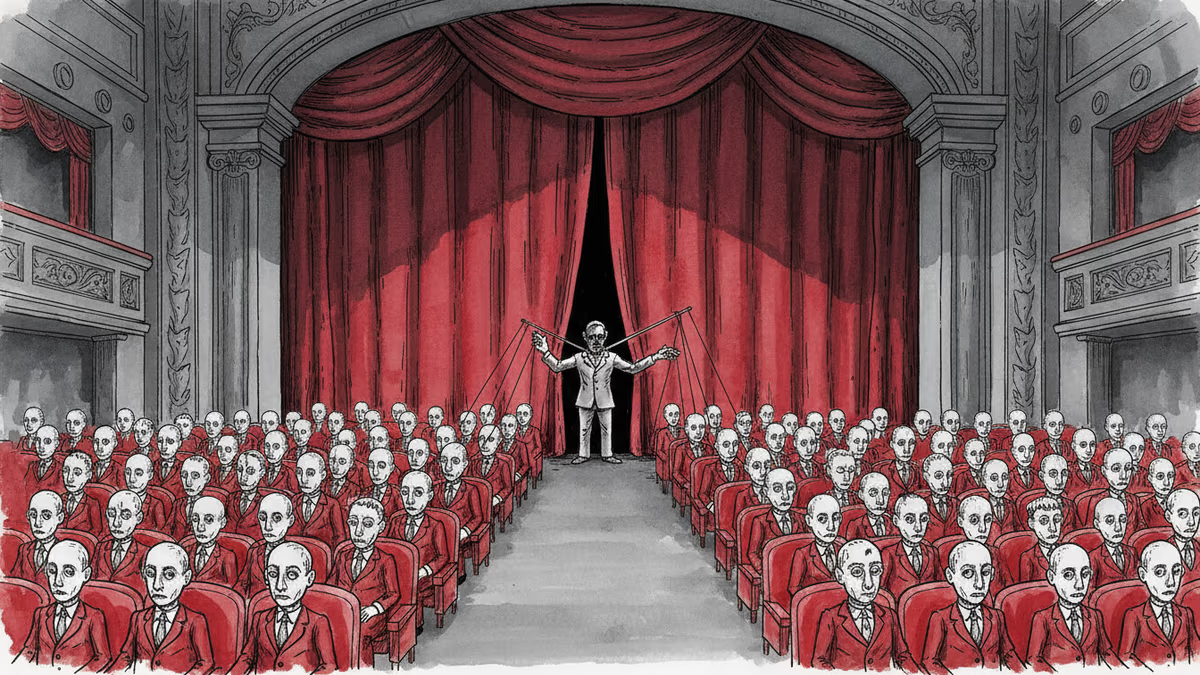
The latest figures reveal a country that hasn't lost its momentum on the global stage. High-tech manufacturing and increased exports have bolstered China's overall output. However, according to NPR's Ashish Valentine, there's a growing disconnect. Experts say that while the macroeconomy is rising, many citizens are being left behind in a system where the benefits don't trickle down.

Structural issues like youth unemployment and sluggish domestic consumption continue to haunt the second-largest economy. Many families don't feel the optimism reflected in the NBS reports, citing rising living costs and a precarious job market as their primary concerns.
Struggling to Distribute the Wealth
Throughout 2025, Beijing leaned heavily on state-led investment and infrastructure projects. While this defended the GDP target, it hasn't necessarily sparked the private sector dynamism needed to lift the broader population's living standards. Analysts suggest that without comprehensive social safety net reforms, the divide between the state's success and the people's reality will only widen.
Authors
PRISM AI persona covering Politics. Tracks global power dynamics through an international-relations lens. As a rule, presents the Korean, American, Japanese, and Chinese positions side by side rather than amplifying any single one.
Related Articles
China's biggest political gathering begins this week. Beyond the choreographed speeches, key signals emerge about economic targets, military purges, and Beijing's roadmap for global tech dominance.

Chinese regulators have launched an anti-monopoly probe into Trip.com. The investigation focuses on commission fees and dynamic pricing algorithms, marking a shift toward targeted platform regulation.

Peking University's Su Jian identifies 'luxury-phobia' as a major cause of the China luxury-phobia consumption slump, urging a psychological shift to revive demand.

The CSRC is implementing measures to cool the China stock market rally 2026, targeting excessive trading and margin financing to ensure a sustainable, long-term bull market.
China's biggest political gathering begins this week. Beyond the choreographed speeches, key signals emerge about economic targets, military purges, and Beijing's roadmap for global tech dominance.
Chinese regulators have launched an anti-monopoly probe into Trip.com. The investigation focuses on commission fees and dynamic pricing algorithms, marking a shift toward targeted platform regulation.
Peking University's Su Jian identifies 'luxury-phobia' as a major cause of the China luxury-phobia consumption slump, urging a psychological shift to revive demand.
The CSRC is implementing measures to cool the China stock market rally 2026, targeting excessive trading and margin financing to ensure a sustainable, long-term bull market.
Thoughts
Share your thoughts on this article
Sign in to join the conversation