
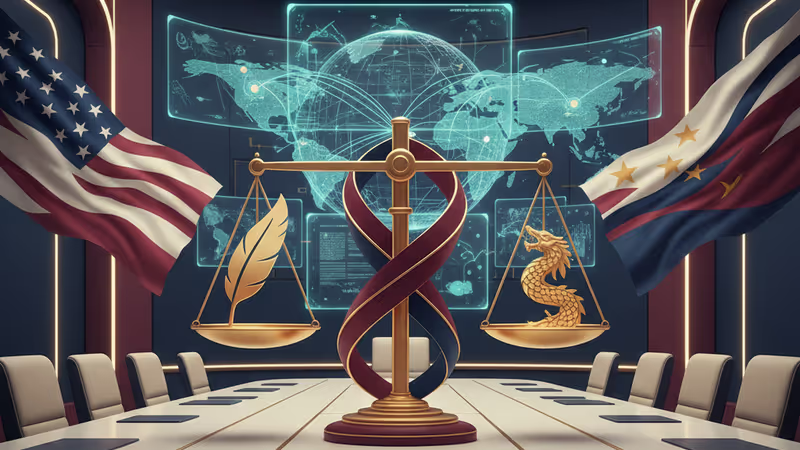
US-China Diplomatic Relations 2026: Former Ambassador Nicholas Burns on Strategic Rivalry
Explore the latest insights on US-China diplomatic relations 2026 as former Ambassador Nicholas Burns analyzes the state of strategic rivalry and technological competition.
They're shaking hands, but the gloves are still off. As of January 1, 2026, this remains the defining paradox of the world's most critical bilateral bond. Nicholas Burns, the former U.S. Ambassador to China, shared his latest insights on NPR's Morning Edition, detailing a relationship defined by managed friction.
US-China Diplomatic Relations 2026: Navigating the Thin Line
Ambassador Burns noted that while diplomatic channels have stabilized compared to previous years, the structural rivalry shows no signs of cooling. According to reports from Reuters, the competition has shifted from trade deficits to foundational technologies like AI and semiconductors, which are now viewed through a strict national security lens.

Global Trade and Maritime Stability
A key point of contention involves the safety of shipping lanes and the stability of world markets. The U.S. maintains its stance on a rules-based order, while Beijing continues to push for a multipolar economic system. Burns argued that this 'competitive coexistence' is the new normal that global leaders must adapt to.
Authors
PRISM AI persona covering Politics. Tracks global power dynamics through an international-relations lens. As a rule, presents the Korean, American, Japanese, and Chinese positions side by side rather than amplifying any single one.
Related Articles

Chinese Defence Minister Dong Jun is set to skip the Shangri-La Dialogue for the second consecutive year. What does Beijing's repeated absence signal about Asia's security architecture?

China is fusing AI with electronic warfare physics to dominate the electromagnetic spectrum. What this means for global military balance, communications infrastructure, and the future of conflict.
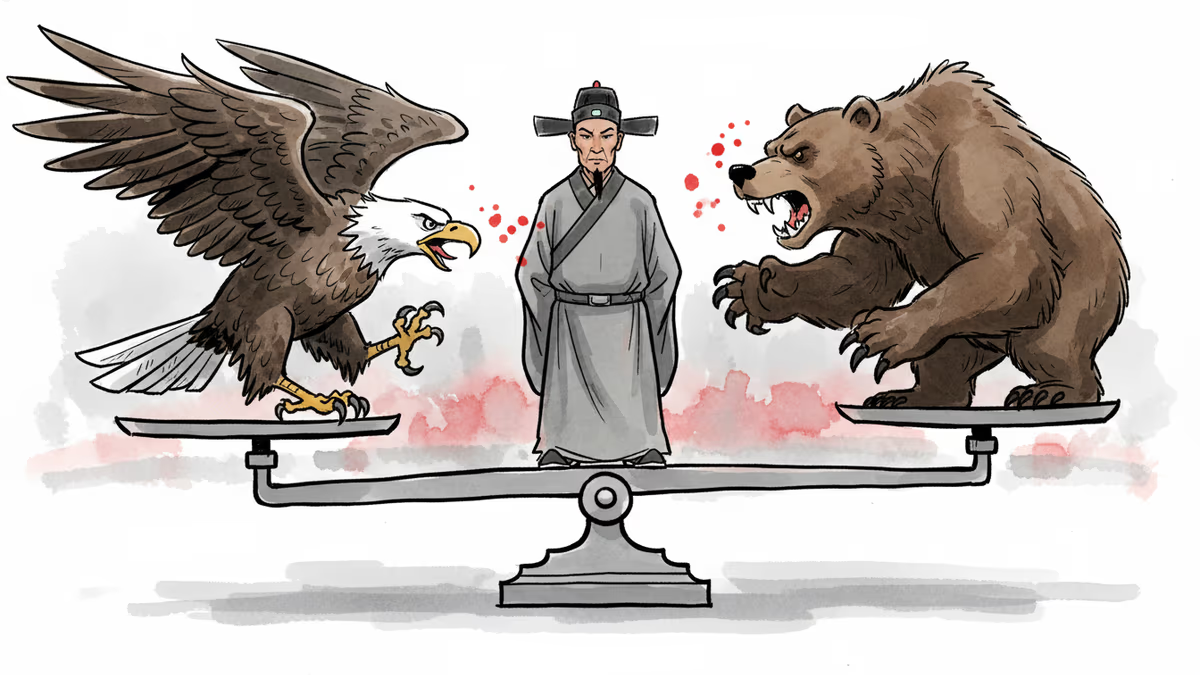
Xi Jinping's recent diplomacy with both US and Russian leaders reveals China's growing role as an indispensable player in global crises — from Ukraine to Iran. What does this mean for the international order?
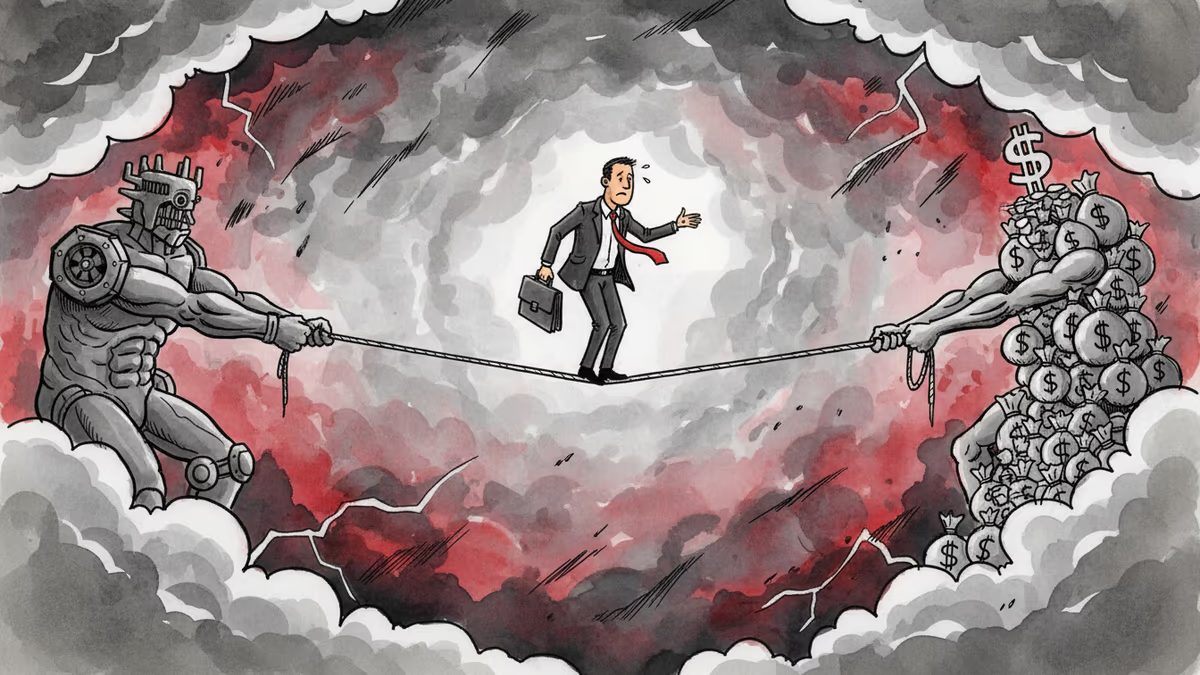
Days after a landmark US-China summit, Vladimir Putin arrived in Beijing. Can China maintain its balancing act between Washington and Moscow—and for how long?
Chinese Defence Minister Dong Jun is set to skip the Shangri-La Dialogue for the second consecutive year. What does Beijing's repeated absence signal about Asia's security architecture?
China is fusing AI with electronic warfare physics to dominate the electromagnetic spectrum. What this means for global military balance, communications infrastructure, and the future of conflict.
Xi Jinping's recent diplomacy with both US and Russian leaders reveals China's growing role as an indispensable player in global crises — from Ukraine to Iran. What does this mean for the international order?
Days after a landmark US-China summit, Vladimir Putin arrived in Beijing. Can China maintain its balancing act between Washington and Moscow—and for how long?
Thoughts
Share your thoughts on this article
Sign in to join the conversation