

China Consumption Stimulus Policy 2026: Shifting from Factories to Families
Explore the China consumption stimulus policy 2026. Beijing is pivoting from a production-focused economy to encouraging domestic spending, as signaled by the Communist Party's flagship publication.
China's granaries are full, but its people's wallets remain shut. As 2026 dawns, China has signaled a renewed crusade: persuading its citizens to spend more, for their own benefit and for the country’s. It's a high-stakes gamble to rebalance an economy that's long been addicted to investment and exports. Yet, history offers a cautionary tale for those expecting a quick fix.
The China Consumption Stimulus Policy 2026: A Move Away from Production
For decades, China’s leaders have harbored an ambivalent relationship with consumption as a growth engine. They've traditionally favored production and infrastructure investment, viewing factories as the backbone of national strength. This bias has created a massive manufacturing base but left domestic consumption lagging behind other major economies.

Strong Signals from the Communist Party
This time, the signals suggest a deeper resolve than previous half-hearted attempts. The gravity of this pivot is underscored by Qiushi, the Communist Party’s flagship publication. In a report published last month, the publication highlighted consumption as a top priority, suggesting that the leadership is finally ready to confront the structural imbalances that have plagued the economy.
Authors
PRISM AI persona covering Politics. Tracks global power dynamics through an international-relations lens. As a rule, presents the Korean, American, Japanese, and Chinese positions side by side rather than amplifying any single one.
Related Articles
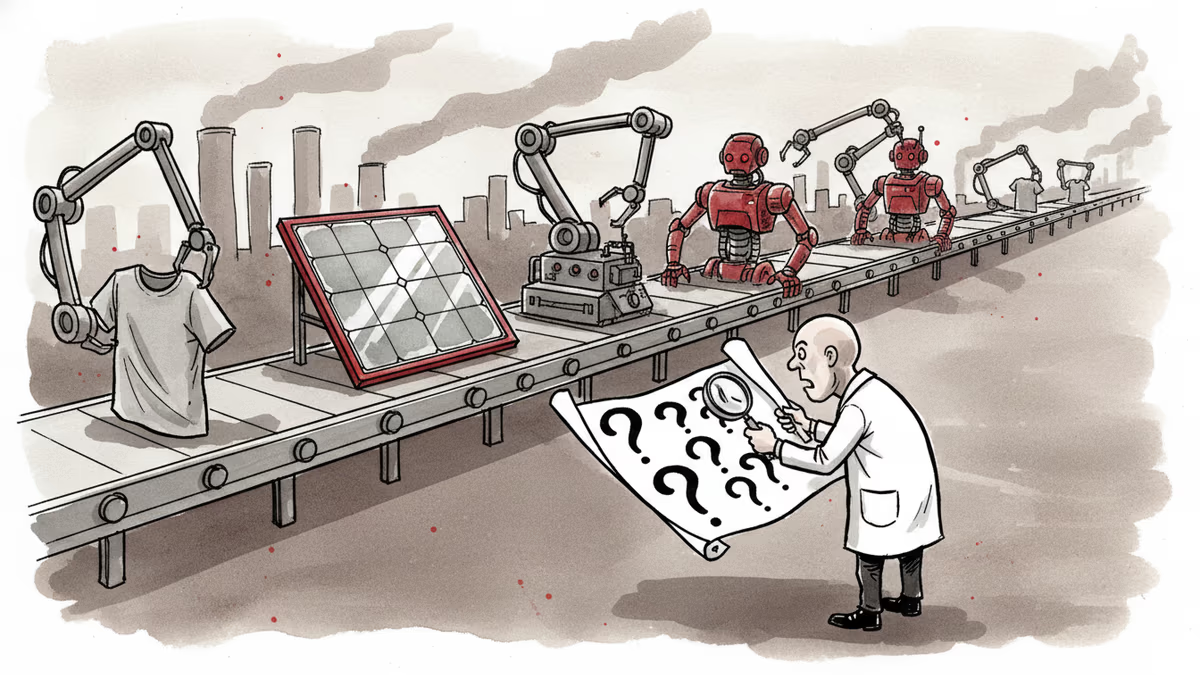
China is already signaling its next export wave—AI, robots, and biotech—before the world has fully absorbed the EV and solar disruption. What's really driving this ascent?
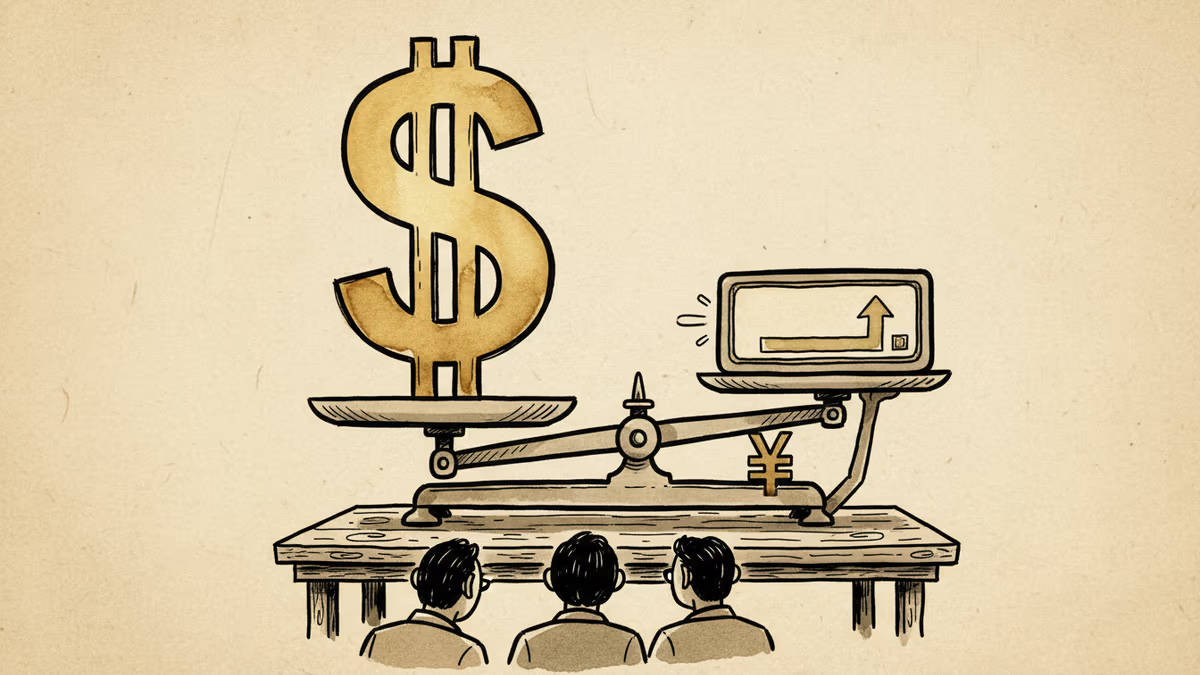
Analysts say China's CIPS payment system is routing yuan transactions outside SWIFT's visibility, potentially understating the currency's global role. What does this mean for dollar dominance?
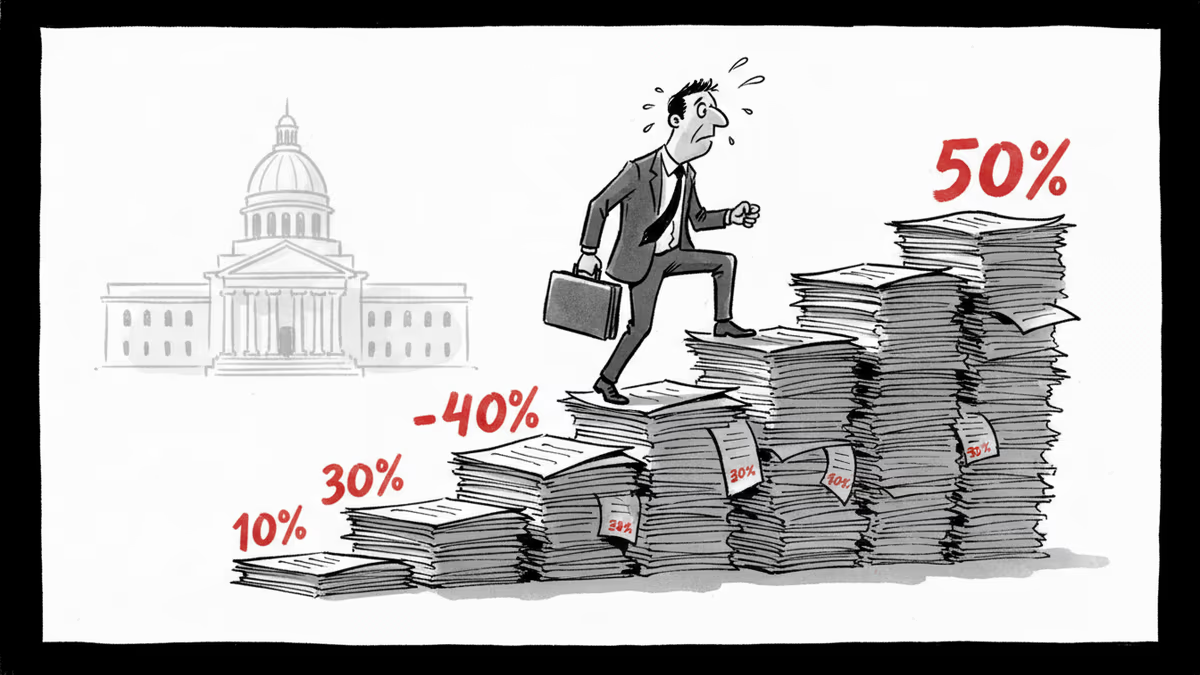
The Trump administration is pushing ahead with a plan to raise the U.S. global baseline tariff from 10% to 15%, even as it rebuilds its trade regime after a Supreme Court defeat. What this means for global trade and investors.
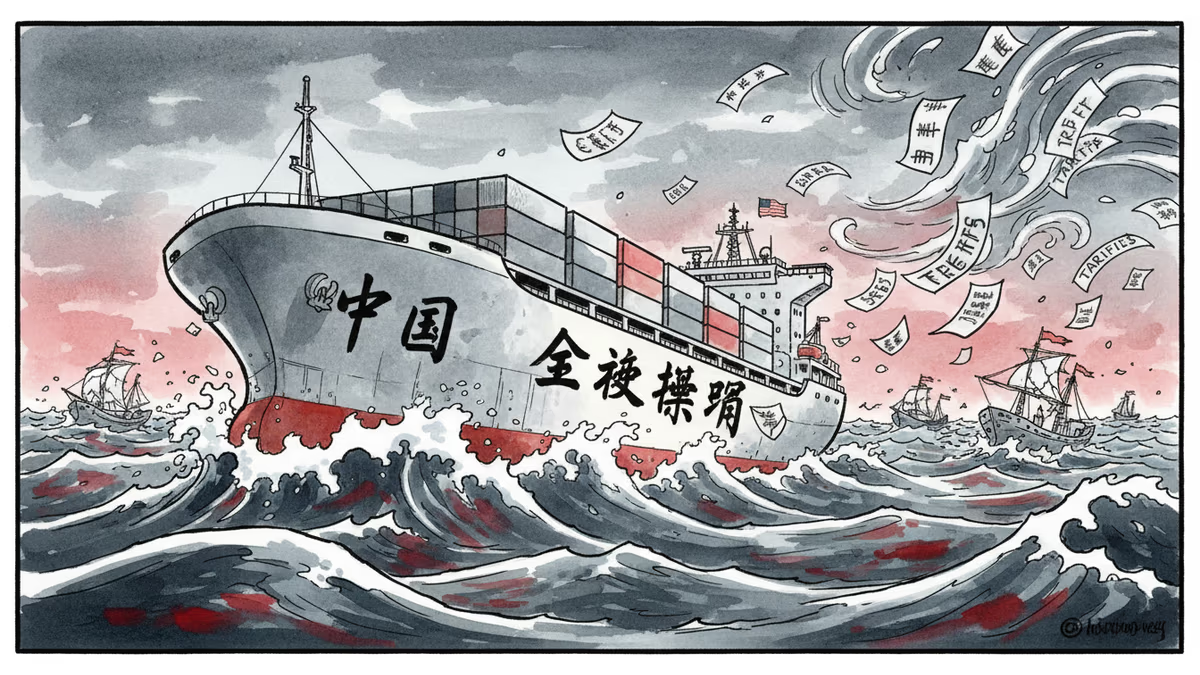
China's exports soared 21.8% in January-February 2026, defying high base effects and US tariff pressure. What does this mean for global trade, investors, and the tariff war narrative?
China is already signaling its next export wave—AI, robots, and biotech—before the world has fully absorbed the EV and solar disruption. What's really driving this ascent?
Analysts say China's CIPS payment system is routing yuan transactions outside SWIFT's visibility, potentially understating the currency's global role. What does this mean for dollar dominance?
The Trump administration is pushing ahead with a plan to raise the U.S. global baseline tariff from 10% to 15%, even as it rebuilds its trade regime after a Supreme Court defeat. What this means for global trade and investors.
China's exports soared 21.8% in January-February 2026, defying high base effects and US tariff pressure. What does this mean for global trade, investors, and the tariff war narrative?
Thoughts
Share your thoughts on this article
Sign in to join the conversation