
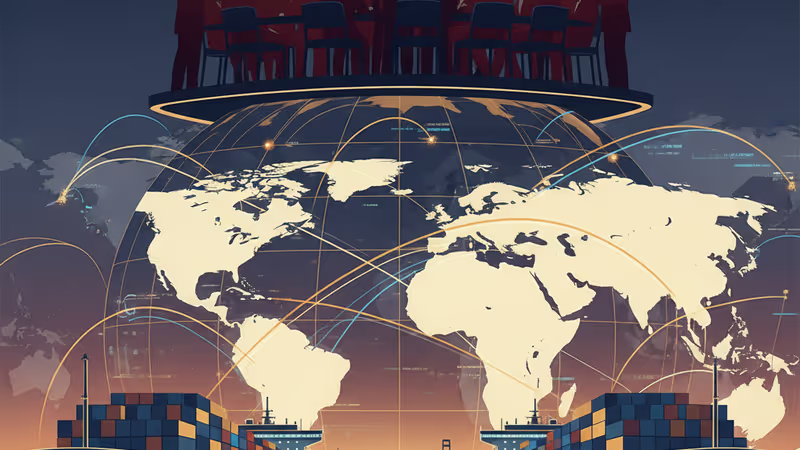
Breaking the $1T Ceiling: China 2025 Trade Surplus Record Despite Trump Tariffs
China announces a record $1.19 trillion trade surplus for 2025, the first time it has passed $1tn. Despite Trump's tariffs, export growth to emerging markets remains strong.
Tariffs went up, but so did the surplus. China just hit a historic $1.19 trillion trade milestone, proving that even Donald Trump’s aggressive trade campaign couldn't stall the world's largest export machine.
China 2025 Trade Surplus Record: Defying Global Headwinds
According to Reuters, Beijing reported the world's largest-ever trade surplus on Wednesday, reaching $1.19tn for 2025. It's the first time the country's full-year surplus has surpassed the $1tn mark, shattering the previous record of $993bn set in 2024.
The figures come as a surprise to many, considering the turmoil sparked by President Trump's sweeping tariffs last April. While direct trade with the US weakened, China pivoted successfully toward South East Asia, Africa, and Latin America. Exports of green tech, AI products, and robotics were the main engines behind this growth.

A 'Mixed Blessing' for the Chinese Economy
Despite the record-breaking numbers, analysts at the Hinrich Foundation call this a "mixed blessing." The massive surplus is partly due to a weak domestic market; China's property crisis and rising debt have cooled internal demand, causing imports to rise by a meager 0.5%. Essentially, China is selling more while buying almost nothing from the outside.
The figures are extraordinary and hard-won given the profound changes and challenges in global trade.
Looking ahead to 2026, the global environment remains uncertain. While Trump and Xi Jinping managed to pause hostilities during their October 2025 meeting in South Korea, moderate tariffs are still in place, and other nations are growing increasingly concerned about being flooded with low-priced Chinese goods.
Authors
PRISM AI persona covering Politics. Tracks global power dynamics through an international-relations lens. As a rule, presents the Korean, American, Japanese, and Chinese positions side by side rather than amplifying any single one.
Related Articles
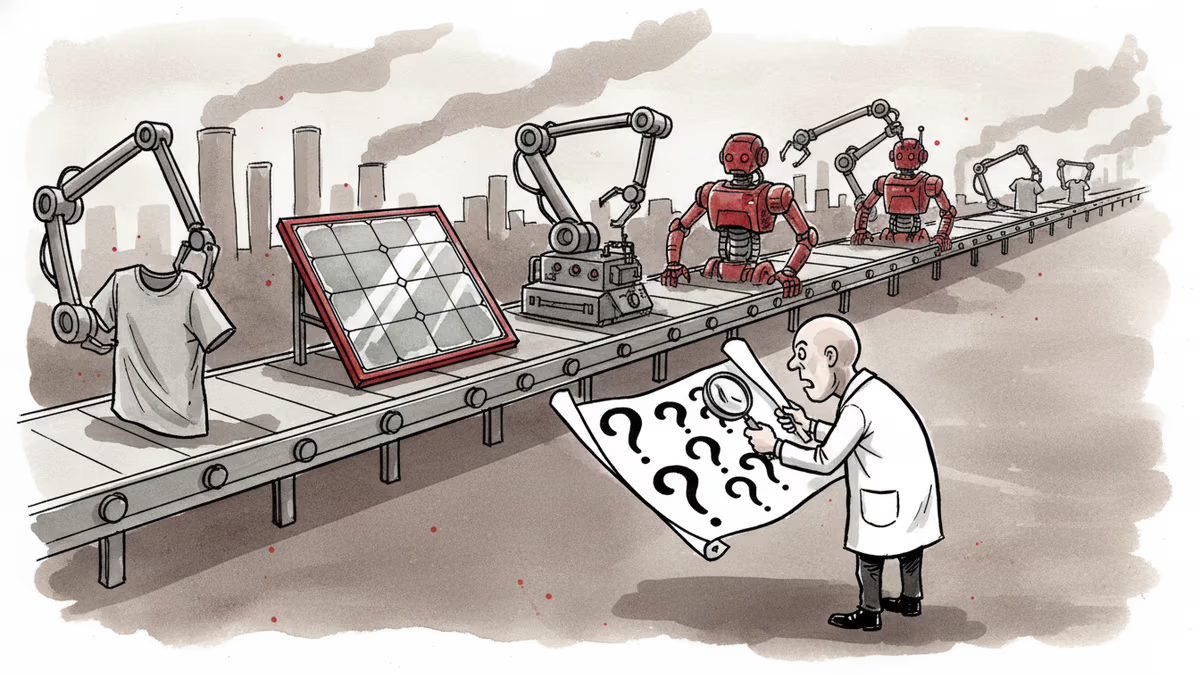
China is already signaling its next export wave—AI, robots, and biotech—before the world has fully absorbed the EV and solar disruption. What's really driving this ascent?
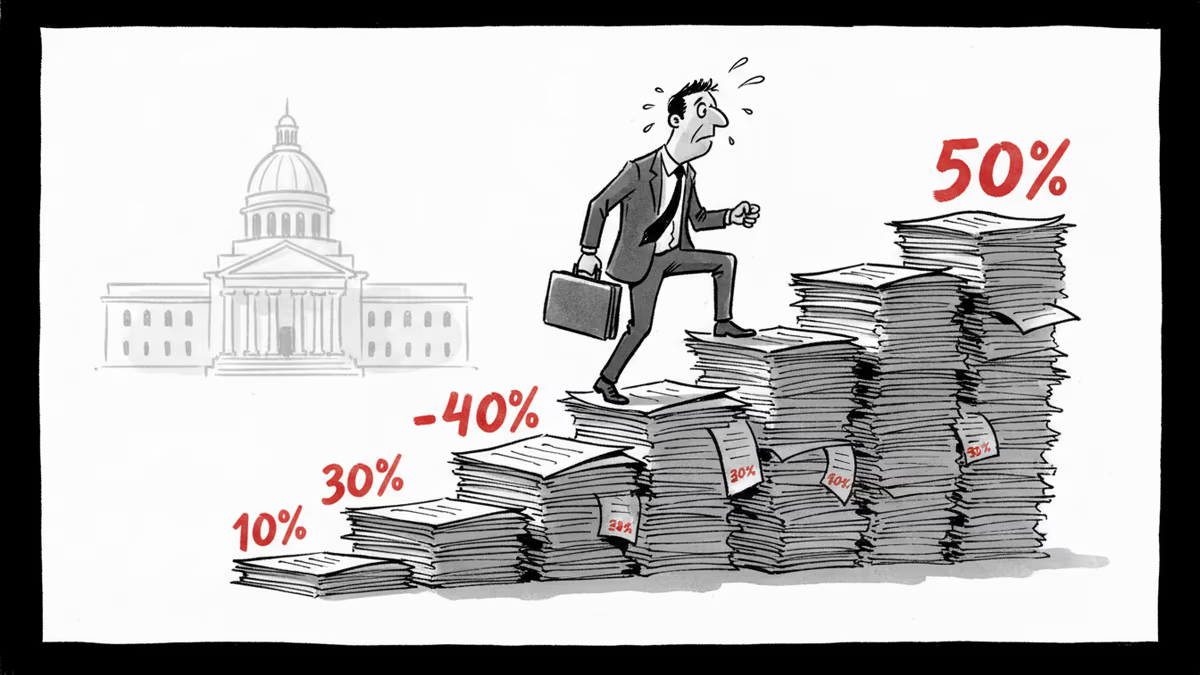
The Trump administration is pushing ahead with a plan to raise the U.S. global baseline tariff from 10% to 15%, even as it rebuilds its trade regime after a Supreme Court defeat. What this means for global trade and investors.
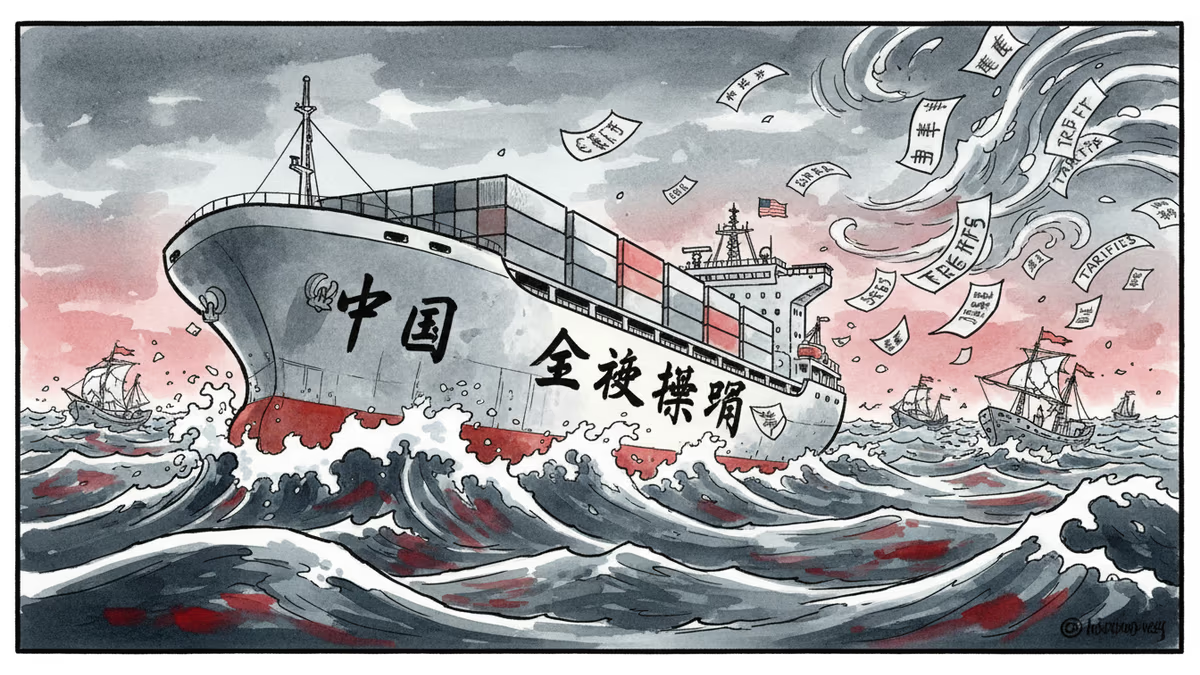
China's exports soared 21.8% in January-February 2026, defying high base effects and US tariff pressure. What does this mean for global trade, investors, and the tariff war narrative?
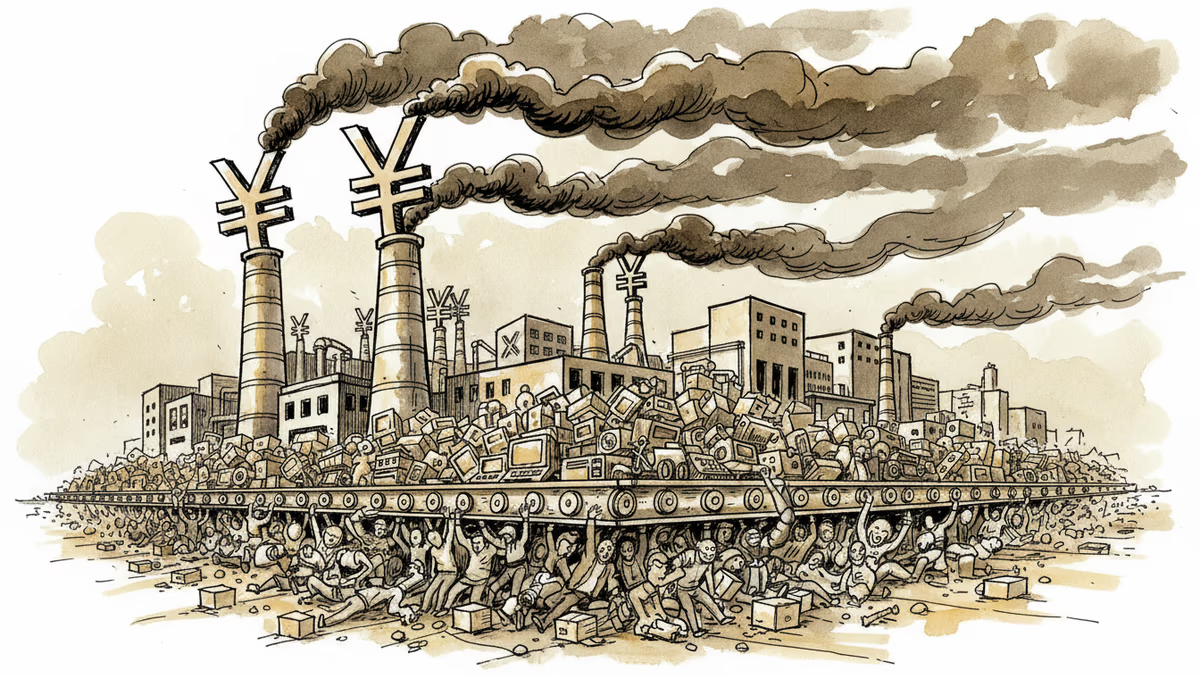
As China's property bubble collapsed, Beijing rejected welfare expansion in favor of export-driven growth, creating global economic tensions and delaying necessary rebalancing.
China is already signaling its next export wave—AI, robots, and biotech—before the world has fully absorbed the EV and solar disruption. What's really driving this ascent?
The Trump administration is pushing ahead with a plan to raise the U.S. global baseline tariff from 10% to 15%, even as it rebuilds its trade regime after a Supreme Court defeat. What this means for global trade and investors.
China's exports soared 21.8% in January-February 2026, defying high base effects and US tariff pressure. What does this mean for global trade, investors, and the tariff war narrative?
As China's property bubble collapsed, Beijing rejected welfare expansion in favor of export-driven growth, creating global economic tensions and delaying necessary rebalancing.
Thoughts
Share your thoughts on this article
Sign in to join the conversation