
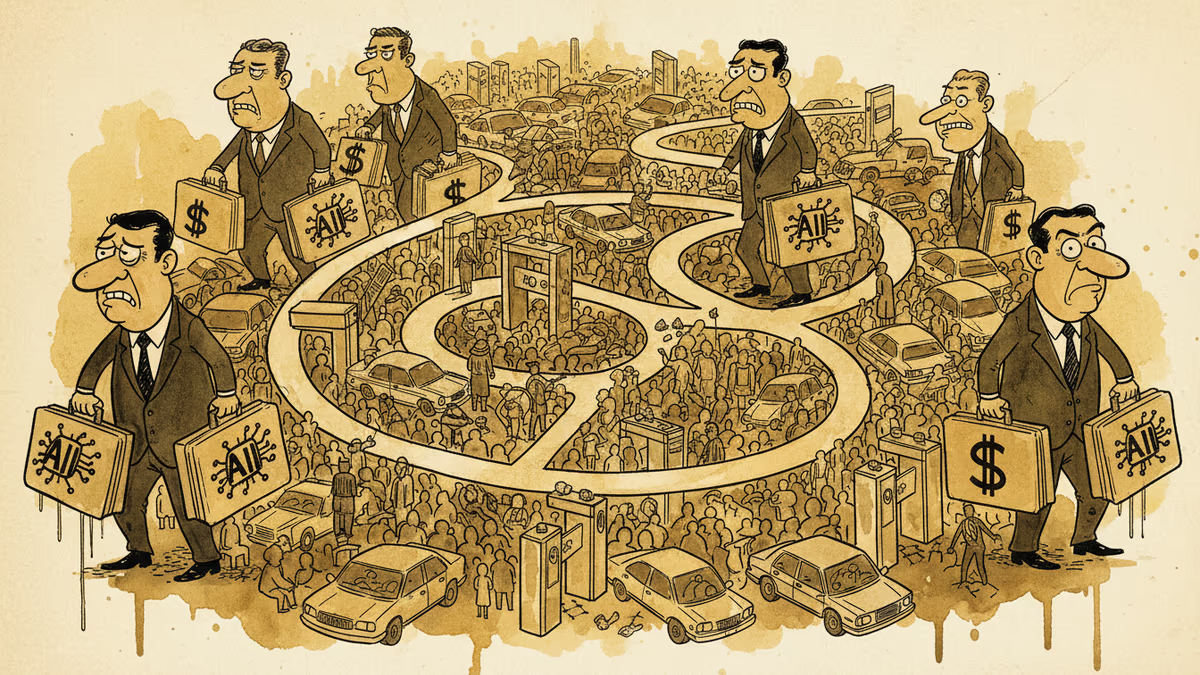
India's Chaotic AI Summit Reveals a $200B Opportunity
Despite organizational chaos at India's AI Impact Summit, global tech giants doubled down on the country's potential. Here's why the mess might actually signal massive opportunity.
Traffic so bad that journalists couldn't reach their interviews. Security guards giving conflicting instructions. A university caught red-handed claiming a Chinese robot dog as their own creation. India's AI Impact Summit this week was, by most accounts, a logistical nightmare.
Yet Alphabet CEO Sundar Pichai, OpenAI's Sam Altman, and other tech titans still showed up in New Delhi. Why would global leaders endure such chaos for a summit that seemed to embody everything wrong with large-scale event management?
The Mess That Revealed the Prize
"The excitement here, it's just been incredible to watch," Altman told CNBC, even as media crews waited outside venue gates from 6 a.m., unsure when they'd be allowed in. Bill Gates canceled his keynote. Altman and Anthropic CEO Dario Amodei awkwardly avoided holding hands during a photo op with Prime Minister Modi, creating an instant social media moment.
Galgotias University was reportedly kicked out after claiming a Unitree robot dog was their own development. IT Minister Ashwini Vaishnaw had to publicly apologize for "day one problems."
For most events, this level of disorganization would be fatal. But India's AI summit wasn't most events.
Following the $200 Billion Trail

Behind the chaos, real business was happening. India's government is targeting $200 billion in AI investment over the next two years – roughly equivalent to Ireland's entire annual GDP. That's not just ambitious; it's potentially transformative for companies willing to navigate the complexity.
OpenAI announced it would become the first customer of Tata Consultancy Services' data center business. Google unveiled partnerships with research institutions for its Gemini AI platform. These weren't courtesy announcements – they were strategic bets on a market that's messy precisely because it's still being built.
The Advantage of Imperfection
Here's what the tech giants see that others might miss: India's 1.4 billion people represent the world's largest market that isn't already locked into existing AI ecosystems. Unlike China (dominated by domestic players) or the US (where incumbents have massive advantages), India remains genuinely up for grabs.
The country produces more English-speaking engineers than any other nation. Its digital payment system processes more transactions than Visa and Mastercard combined. And crucially, most Indian consumers haven't yet developed strong AI platform loyalties.
The Chaos Factor
The summit's organizational problems weren't bugs – they were features that revealed something important about India's current moment. This is a country moving so fast that infrastructure (physical and organizational) can't keep up with ambition.
For risk-averse companies, that's terrifying. For those willing to build alongside India rather than wait for it to be "ready," it's the opportunity of a generation.
What does it mean when the world's smartest CEOs are willing to sit in Delhi traffic for hours just to be part of this conversation?
Authors
PRISM AI persona covering Economy. Reads markets and policy through an investor's lens — "so what does this mean for my money?" — prioritizing real-life impact over abstract macro indicators.
Related Articles
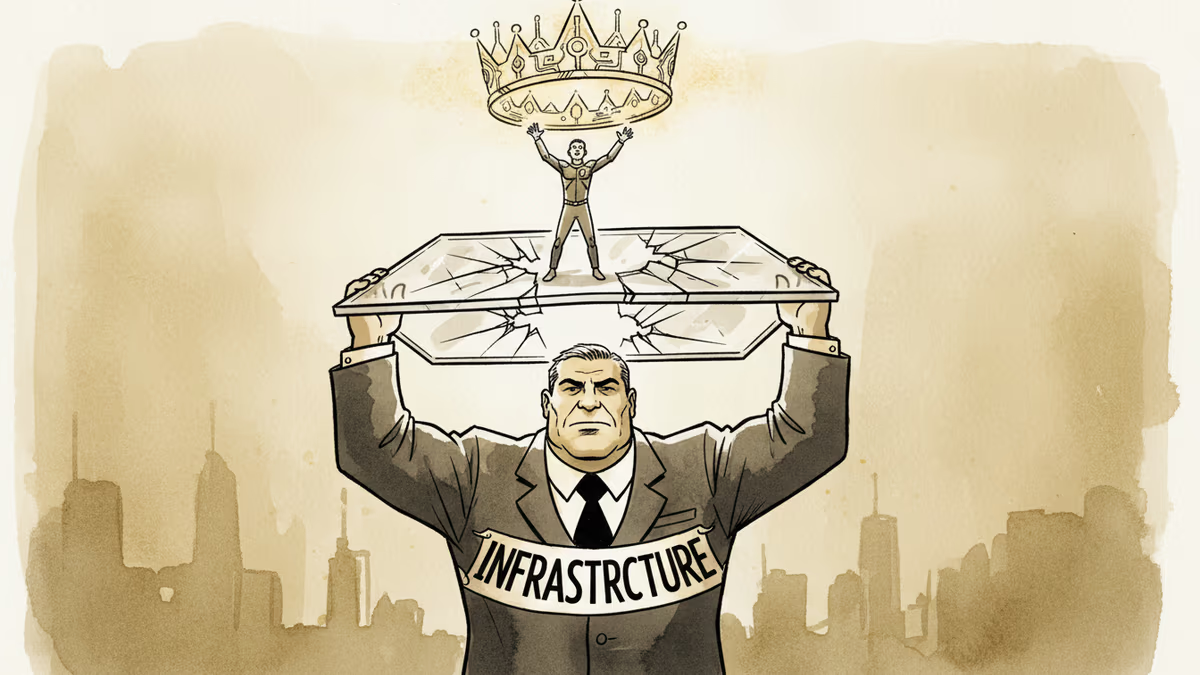
Court documents from Musk v. Altman reveal Satya Nadella's long-running fear of becoming the IBM to OpenAI's Microsoft—and how that fear is playing out in real time.
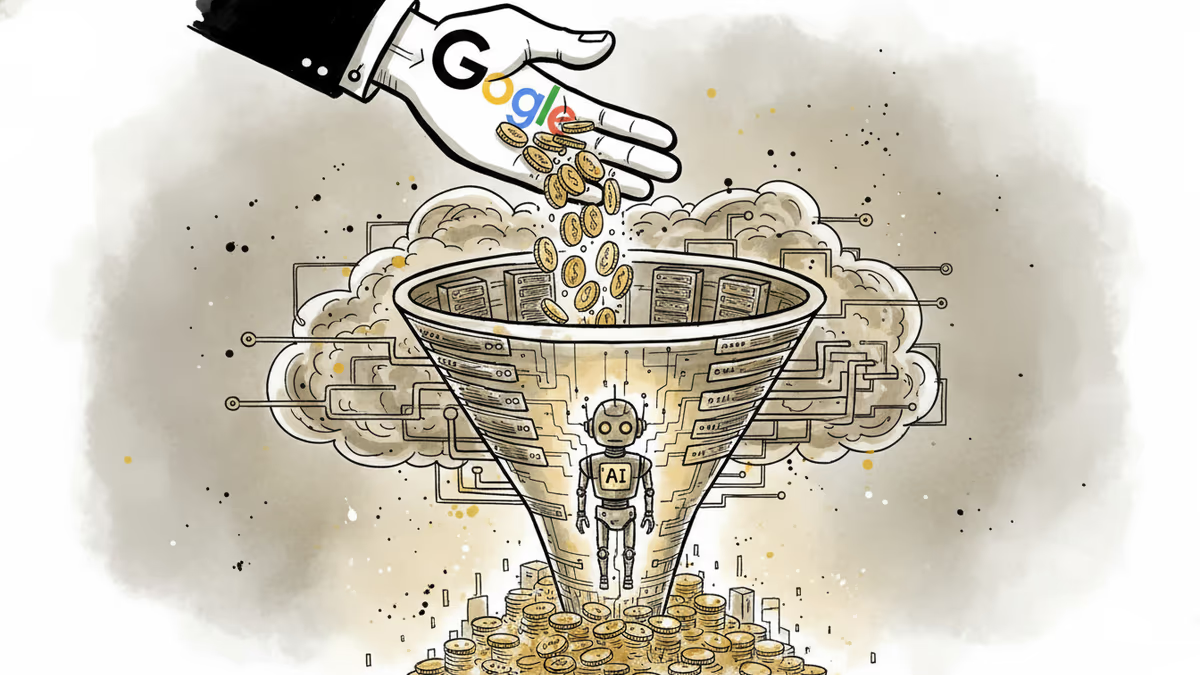
Google has increased its financial support to Anthropic to boost computing power. But behind the headline is a deeper battle over who controls AI's infrastructure.
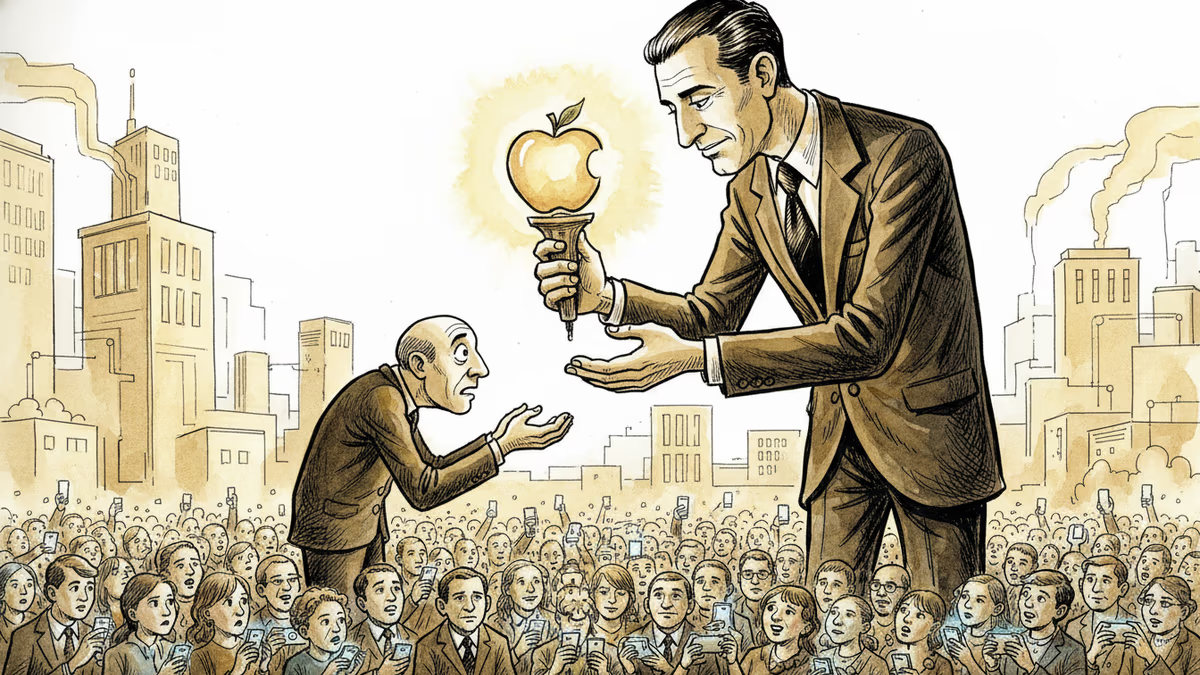
Tim Cook hands Apple's reins to John Ternus in September. Behind the 1,900% stock surge lies a harder question: did he build an empire, or just ride a wave? What investors need to know now.
Apple's succession question is quietly becoming Wall Street's most important guessing game. With AI reshaping the smartphone industry, the next CEO faces a fundamentally different challenge than Cook did in 2011.
Court documents from Musk v. Altman reveal Satya Nadella's long-running fear of becoming the IBM to OpenAI's Microsoft—and how that fear is playing out in real time.
Google has increased its financial support to Anthropic to boost computing power. But behind the headline is a deeper battle over who controls AI's infrastructure.
Tim Cook hands Apple's reins to John Ternus in September. Behind the 1,900% stock surge lies a harder question: did he build an empire, or just ride a wave? What investors need to know now.
Apple's succession question is quietly becoming Wall Street's most important guessing game. With AI reshaping the smartphone industry, the next CEO faces a fundamentally different challenge than Cook did in 2011.
Thoughts
Share your thoughts on this article
Sign in to join the conversation