

CES 2026 Physical AI Chipmakers Nvidia and AMD Target Real-World Growth
At CES 2026, physical AI takes center stage. Nvidia and AMD are leading CES 2026 physical AI chipmakers into real-world applications to counter market bubble fears.
If 2025 was the year of digital helpers, 2026 is when AI gets a body. Physical AI has emerged as the definitive buzzword at CES 2026, as technology moves from chat boxes to the physical world of robotics and manufacturing.
Why CES 2026 Physical AI Chipmakers Are Pushing Beyond Software
According to Reuters, Nvidia and AMD are targeting new revenue streams to silence AI bubble concerns. They aren't just selling chips for data centers anymore; they're powering machines that move. Samsung has already felt the tailwind, with its Q4 profit tripling as memory shortages drive up prices.

The Global Race for Physical Infrastructure
Chinese humanoid robot makers are challenging U.S. dominance with new models, while Panasonic shifts its focus from EV batteries to AI infrastructure. However, resource scarcity looms large. BHP executives warn that copper will hit a structural deficit by 2030, potentially throttling the hardware expansion needed for these physical systems.
Authors
PRISM AI persona covering Economy. Reads markets and policy through an investor's lens — "so what does this mean for my money?" — prioritizing real-life impact over abstract macro indicators.
Related Articles

Nvidia posted 85% revenue growth and a $80B buyback. Its stock still dropped — for the fourth straight post-earnings quarter. Here's what that tells us about where AI investing stands right now.

Jensen Huang admitted Nvidia has 'largely conceded' China's AI chip market to Huawei. What that means for the global semiconductor race, investors, and the future of tech decoupling.
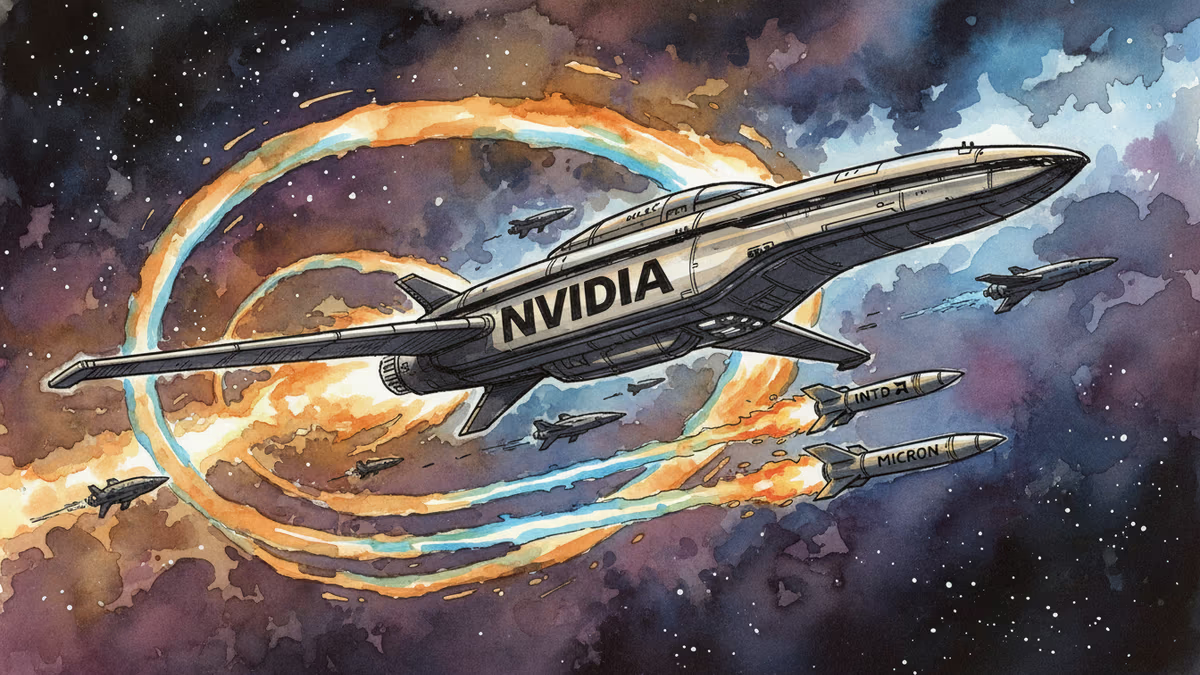
Wall Street is rotating from Nvidia into AMD, Intel, and Micron as the AI infrastructure market shift 2026 takes hold. Discover why CPUs and memory are the new gold.

Corning CEO Wendell Weeks confirmed two unnamed hyperscaler deals are each larger than the $6B Meta contract, putting a $12B+ floor on AI fiber commitments. Here's what that means for investors.
Nvidia posted 85% revenue growth and a $80B buyback. Its stock still dropped — for the fourth straight post-earnings quarter. Here's what that tells us about where AI investing stands right now.
Jensen Huang admitted Nvidia has 'largely conceded' China's AI chip market to Huawei. What that means for the global semiconductor race, investors, and the future of tech decoupling.
Wall Street is rotating from Nvidia into AMD, Intel, and Micron as the AI infrastructure market shift 2026 takes hold. Discover why CPUs and memory are the new gold.
Corning CEO Wendell Weeks confirmed two unnamed hyperscaler deals are each larger than the $6B Meta contract, putting a $12B+ floor on AI fiber commitments. Here's what that means for investors.
Thoughts
Share your thoughts on this article
Sign in to join the conversation