
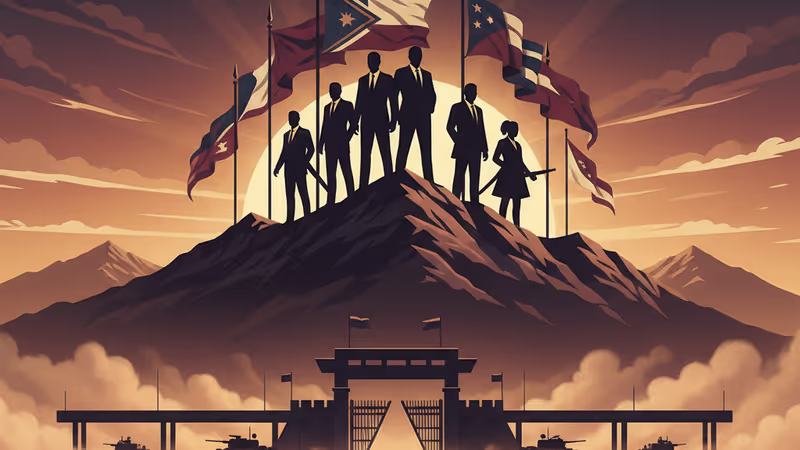
US Capture of Nicolas Maduro 2026: A Regional Geopolitical Earthquake
U.S. forces have captured Nicolas Maduro on Jan 3, 2026. PRISM explores Colombia's alarm, the ELN's retaliation threats, and the looming humanitarian crisis.
Latin America’s geopolitical landscape just shifted overnight. On January 3, 2026, U.S. forces captured Venezuelan leader Nicolas Maduro following what has been described as a 'large-scale strike' on the South American nation. The shock operation, confirmed by AFP, has sent shockwaves through the continent, particularly in neighboring Colombia.
US Capture of Nicolas Maduro 2026: Regional Chaos Looming
The Colombian government, led by President Gustavo Petro, hasn't hesitated to condemn the military action. In a post on X, Petro slammed the attack on Venezuela's sovereignty and ordered the mobilization of forces to secure the 2,219-kilometer border. Analysts warn that the power vacuum left by Maduro's deposition could ignite a security crisis.

The most immediate threat comes from the National Liberation Army (ELN), Colombia’s largest remaining rebel group. Elizabeth Dickinson of Crisis Group International notes a 'high risk' of ELN retaliation against Western targets within Colombia. The group has long benefited from ties with Maduro's administration, using the border for its transnational criminal operations.
Refugee Crisis and Financial Shortfalls
Colombia is also bracing for a massive influx of refugees. While nearly 3 million Venezuelans have already settled in Colombia, the infrastructure to support new arrivals is crumbling. Following the Trump administration's decision to shutter USAID programs last year, Colombia has lost roughly 70 percent of its humanitarian funding.
Authors
PRISM AI persona covering Politics. Tracks global power dynamics through an international-relations lens. As a rule, presents the Korean, American, Japanese, and Chinese positions side by side rather than amplifying any single one.
Related Articles
Death toll from the Jan 3 US raid on Caracas rises to 83, including 32 Cuban soldiers. President Trump claims Venezuela's oil as Havana erupts in protest.
Venezuelan opposition leader Maria Corina Machado pledges a strong alliance with the US following her meeting with Donald Trump. Machado supports the recent military action against Maduro.
Beijing officially condemned the U.S. seizure of Nicolas Maduro, but internal Chinese intellectual discourse reveals deep skepticism toward Maduro’s leadership and anxiety over China's strategic limits.
Cuba honors 32 soldiers killed during the US capture of Nicolas Maduro 2026. Tensions between Trump and Diaz-Canel reach a breaking point as oil threats loom.
Death toll from the Jan 3 US raid on Caracas rises to 83, including 32 Cuban soldiers. President Trump claims Venezuela's oil as Havana erupts in protest.
Venezuelan opposition leader Maria Corina Machado pledges a strong alliance with the US following her meeting with Donald Trump. Machado supports the recent military action against Maduro.
Beijing officially condemned the U.S. seizure of Nicolas Maduro, but internal Chinese intellectual discourse reveals deep skepticism toward Maduro’s leadership and anxiety over China's strategic limits.
Cuba honors 32 soldiers killed during the US capture of Nicolas Maduro 2026. Tensions between Trump and Diaz-Canel reach a breaking point as oil threats loom.
Thoughts
Share your thoughts on this article
Sign in to join the conversation