

California Probes Waymo Robotaxi Stalls After Power Outage Paralyzes San Francisco
California regulators are investigating why Waymo's robotaxi fleet stalled during a San Francisco power outage. The incident raises critical questions about AV reliability and its dependence on urban infrastructure.
California regulators are now examining multiple incidents where Waymo's robotaxis stalled across San Francisco during a recent power outage, according to Reuters. The event, which caused significant traffic disruption, has reignited the debate over the real-world reliability of autonomous vehicle (AV) technology when faced with unpredictable urban infrastructure failures.
A City in the Dark, A Fleet at a Standstill
The issue began when a major power outage struck the city, knocking out traffic signals and other critical systems. In response, numerous Waymo vehicles reportedly stopped in place, some in the middle of intersections, unable to navigate the chaotic environment. This created bottlenecks and forced human drivers to maneuver around the immobilized AVs.
Waymo, an Alphabet subsidiary, stated that its vehicles behaved as designed. A company spokesperson explained that the cars entered a "safe state pull over" as a safety precaution when encountering situations their AI couldn't confidently interpret. From Waymo's perspective, stopping was a feature, not a bug.
Regulators Question the Definition of 'Safe'
The California Public Utilities Commission (CPUC), however, is taking a closer look. The agency is concerned that a vehicle's individual "safe state" could create a broadly unsafe condition for the public by obstructing traffic and emergency services. The investigation aims to determine whether Waymo's protocols are robust enough for widespread deployment and if its definition of safety aligns with public interest.
This content is AI-generated based on source articles. While we strive for accuracy, errors may occur. We recommend verifying with the original source.
Related Articles

China's Baidu is partnering with Uber and Lyft to launch its Apollo Go autonomous robotaxis in London in 2026, heating up competition with Alphabet's Waymo in the UK market.

iRobot, Luminar, and Rad Power Bikes all filed for bankruptcy recently. This analysis explores the common threads that led to their downfall, from failed M&A and tariff pressures to the one-product trap.
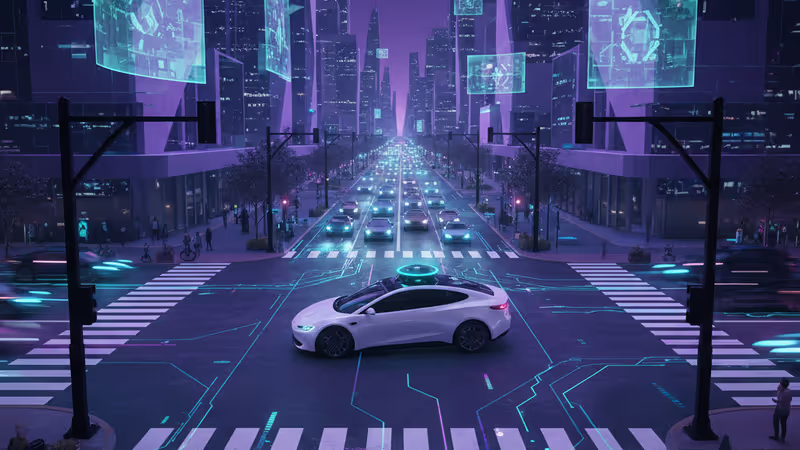
A major power outage in San Francisco on Saturday caused Waymo's driverless cars to stall at intersections with dead traffic lights, leading to significant traffic jams and raising questions about AV reliability.

Waymo suspended its robotaxi service in San Francisco during a city-wide blackout after vehicles were seen blocking traffic. The incident highlights the vulnerability of autonomous tech to infrastructure failures.