
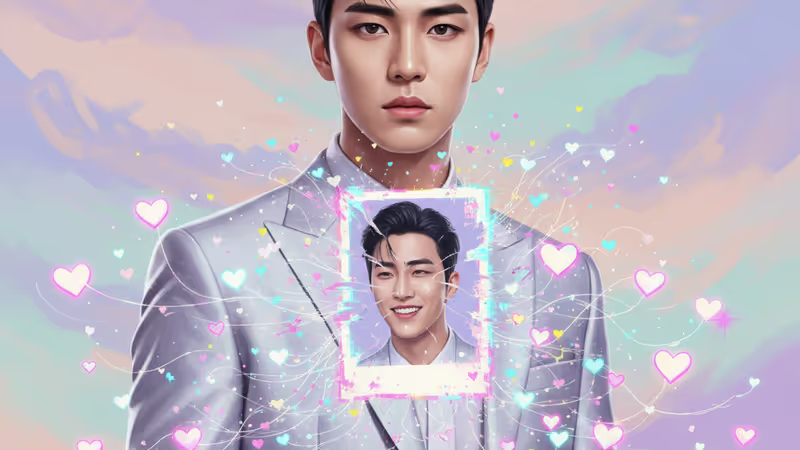
BTS's V Deletes a Photo: More Than a Rumor, It's a Warning Shot for the Parasocial Economy
BTS's V deleted an Instagram photo with Park Bo Gum. Our analysis reveals why this signals a major crisis in the idol-fan relationship and the creator economy.
The Lede: Beyond Celebrity Gossip
When a globally recognized cultural asset like BTS's V makes a deliberate digital move—posting and then deleting a benign photo with a friend—it's not just fan-service gone awry. It's a critical data point signaling a stress fracture in the multi-billion dollar parasocial economy. For executives in tech, media, and luxury branding, this seemingly minor event is a flare sent up from the front lines, revealing the escalating risks of weaponized fan engagement and the inherent instability of platform-mediated authenticity.
Why It Matters: The Volatility of Idol-Led Marketing
V's removal of the photo with actor Park Bo Gum, allegedly in response to intense fan "shipping" and speculative rumors, has immediate second-order effects. For a brand like Celine, which leverages V's ambassadorship for immense cultural cachet, this incident highlights the operational risk of idol marketing. The very fan engagement that drives impressions and sales can pivot in an instant, creating an unintended, uncontrollable narrative that forces the brand's star asset to retreat from public-facing interactions.
This demonstrates a core vulnerability: when your marketing strategy relies on the 'authentic' social media presence of an idol, you are also subject to the whims and pressures of their digital environment. The line between engagement and harassment is porous, and an idol's need for self-preservation can directly conflict with a brand's need for visibility.
The Analysis: From Fan Cafes to Algorithmic Prisons
Having chronicled K-Pop's evolution for two decades, the shift is stark. First-generation idols existed in a walled garden, their interactions carefully managed by agencies through official fan cafes. The advent of global platforms like Instagram and Weverse was heralded as a democratization of the idol-fan relationship, promising unprecedented direct access and intimacy.
However, we are now witnessing the dark side of that paradigm. Idols like V are no longer just artists; they are individual media hubs performing a constant, delicate dance of public relations. The speculative "shipping" culture, while a powerful engagement driver, represents a loss of narrative control. When fans, fueled by algorithmic amplification, begin creating narratives that cause personal distress—even in jest—the idol is forced to act. V's deletion is not an act of petulance; it's a public redrawing of a personal boundary in a space designed to erase them. He is asserting control where the platform and the fan culture have wrested it away.
The Authenticity Paradox in Action
This incident is a textbook case of the 'Authenticity Paradox'. Brands and fans demand authenticity, but when a genuine moment—like a warm embrace between long-time friends—is uploaded, it is immediately processed by the fan-culture machine, distorted, and amplified. The artist's response must then be to retreat from that authentic moment to protect its integrity and the well-being of those involved. The very system that demands authenticity makes its performance untenable.
PRISM Insight: The Parasocial Feedback Loop as a Systemic Risk
From a tech perspective, the problem lies within the architecture of the platforms themselves. The algorithms governing X and Instagram are optimized for a single metric: engagement. They do not, and cannot, differentiate between healthy admiration and obsessive, narrative-distorting speculation. This creates a dangerous feedback loop:
- Intense Content Drives Engagement: The most speculative or dramatic fan theories get the most replies, likes, and shares.
- Algorithm Amplifies Intensity: The platform's algorithm identifies this content as "highly engaging" and pushes it to a wider audience, including the idol themselves.
- Idol Is Forced to React: The amplified pressure forces a reaction (a deletion, a clarifying statement), which itself becomes a new, even more engaging, content event.
For investors in entertainment agencies like HYBE or the tech platforms themselves, this isn't just a PR issue. It's a systemic risk to the long-term viability of their talent. The psychological toll of living inside this algorithmic pressure cooker leads to artist burnout, withdrawal from platforms, and a potential degradation of the very idol-fan connection these companies monetize.
PRISM's Take: The Inevitable Correction
V's decision to delete the photo should be interpreted as a strategic act of self-regulation in an unregulated digital space. It is a quiet but clear signal that the current model of total access and algorithmically-fueled parasocial relationships is unsustainable. The 'product'—the artist's life and relationships—is being damaged by the distribution channel. We are heading for a market correction. The future of the creator and idol economy will belong not to the platforms that offer the most access, but to those that provide the best tools for boundary management, sophisticated moderation, and the preservation of artists' mental well-being. V's simple act of hitting 'delete' is a demand for a better system.
Related Articles
Beyond gossip: An analysis of how aespa Winter's alleged tattoo tests the K-Pop business model, fan culture, and the future of idol authenticity.

KBS's 2025 Song Festival is no mere concert. It's a strategic pivot into a global IP, signaling a new battleground for K-Pop's future.

A viral clip of KATSEYE's Lara reveals a critical flaw in K-Pop's global expansion model, pitting legacy beauty standards against Western fan values.

Min Hee Jin's new label OOAK is launching a boy group, not a NewJeans rival. Our analysis breaks down this strategic pivot in the K-Pop creator economy.