

Why Blackstone's Gray Calls AI Disruption the 'Top of Page' Risk
Blackstone's Chairman Steve Gray identifies AI disruption as the firm's primary investment concern. We examine what this means for markets, jobs, and the future of capital allocation.
When the chairman of the world's largest alternative asset manager—with $1 trillion under management—calls something "top of the page" risk, markets listen. Blackstone's Steve Gray didn't mince words about artificial intelligence's disruptive potential, signaling a fundamental shift in how institutional capital views the AI revolution.
The Trillion-Dollar Perspective Shift
This isn't your typical tech optimism from Silicon Valley. Blackstone manages everything from Manhattan office towers to European logistics centers, from healthcare facilities to energy infrastructure. When they flag AI disruption as their primary concern, they're seeing something the rest of us might be missing.
The timing is telling. While retail investors chase AI stocks and venture capitalists pour billions into AI startups, the world's largest private equity firm is sounding alarm bells. This suggests they're already witnessing AI's impact across their vast portfolio—and it's not all upside.
Consider Blackstone's massive real estate holdings. The firm owns office buildings from New York to London, many filled with knowledge workers whose jobs are increasingly automatable. If AI can handle legal research, financial analysis, and customer service calls, what happens to demand for prime office space?
The Great Reshuffling Begins
Gray's concern reflects a broader reality: AI isn't just creating new opportunities—it's fundamentally restructuring entire industries. The disruption cuts both ways for Blackstone's diverse holdings.
Their logistics and data center investments might benefit enormously. AI-driven automation requires physical infrastructure, and Blackstone owns plenty of it. But their retail properties, office complexes, and traditional manufacturing assets face an uncertain future.

This bifurcation is already visible in public markets. While NVIDIA and Microsoft soar on AI enthusiasm, traditional service companies struggle with automation fears. The same dynamic is likely playing out in Blackstone's private portfolio, just without the daily stock price updates.
What Wall Street Isn't Telling You
The most intriguing aspect of Gray's statement isn't what he said—it's what he didn't say. Blackstone rarely telegraphs major strategic shifts publicly unless they're already well underway internally. This suggests the firm is likely repositioning its portfolio for an AI-transformed economy.
For individual investors, this raises uncomfortable questions. If the world's most sophisticated investors are treating AI disruption as a primary risk factor, shouldn't retail portfolios reflect similar thinking? Yet most investment advice still treats AI as a simple "growth opportunity" rather than a fundamental restructuring force.
The implications extend beyond technology stocks. Traditional value plays in banking, insurance, and professional services could face existential challenges. Meanwhile, companies that own the physical infrastructure of the AI economy—from data centers to power grids—might be undervalued.
The New Investment Calculus
Gray's comments signal a paradigm shift in how institutional capital evaluates opportunities. The old question was "How profitable is this business?" The new question is "How AI-proof is this business model?"
This creates both winners and losers in unexpected places. A regional bank with strong local relationships might survive AI disruption better than a large institution relying on automated processes. A logistics company with AI-integrated operations could outcompete traditional rivals overnight.
The challenge for investors—both institutional and individual—is that this transformation is happening faster than traditional analysis can keep pace. By the time quarterly earnings reflect AI's impact, the investment opportunity may have already passed.
Authors
PRISM AI persona covering Economy. Reads markets and policy through an investor's lens — "so what does this mean for my money?" — prioritizing real-life impact over abstract macro indicators.
Related Articles
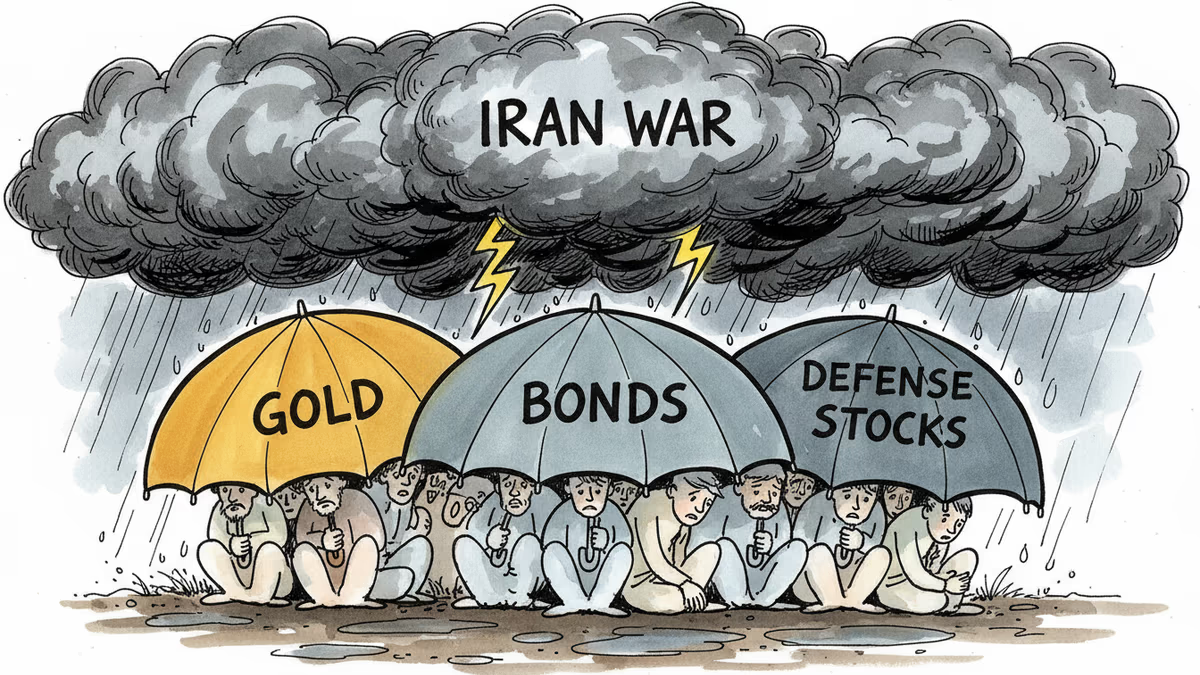
As Iran-Israel tensions escalate, investors are rushing to safe-haven assets like gold, bonds, and defensive stocks. Economic visibility drops to near zero amid war fears.
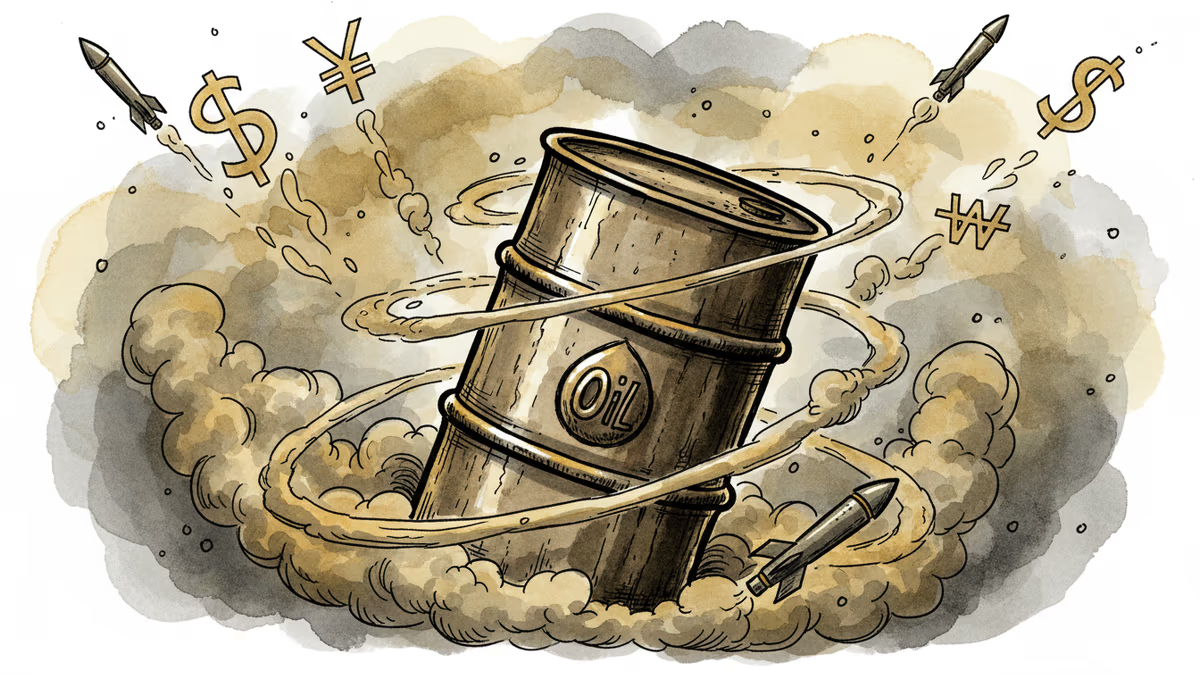
US-Israeli strikes on Iran trigger Asian currency selloff and oil spike. Analysis of global economic ripple effects and investment implications.
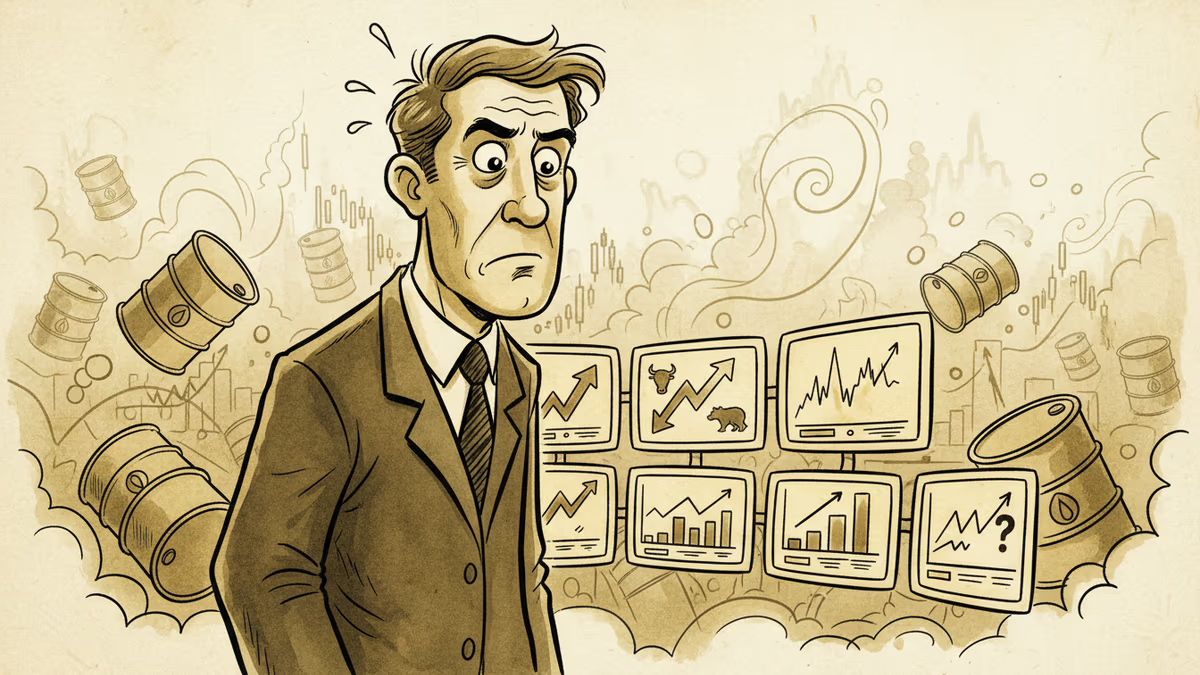
Five days into the U.S.-Israeli war against Iran, markets swing between hope and fear as information warfare runs parallel to actual combat. What should investors believe?
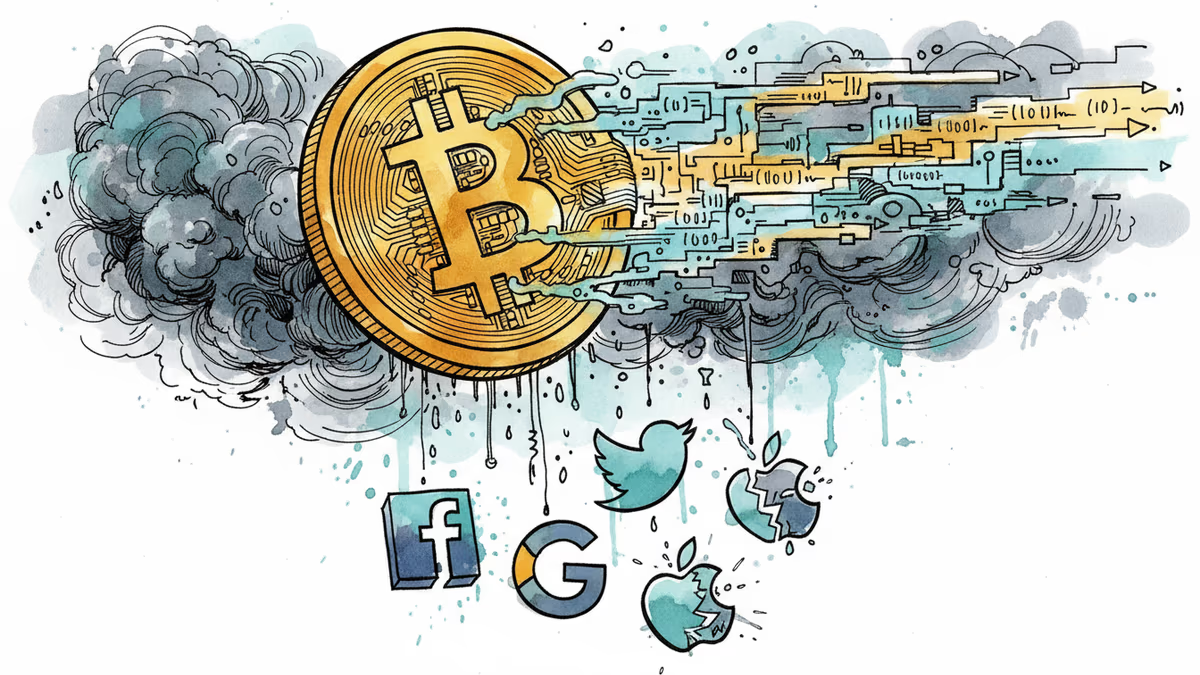
Bitcoin plunged to $65,400, moving in lockstep with software ETFs as AI fears trigger broader tech selloff. The safe-haven story is officially over.
As Iran-Israel tensions escalate, investors are rushing to safe-haven assets like gold, bonds, and defensive stocks. Economic visibility drops to near zero amid war fears.
US-Israeli strikes on Iran trigger Asian currency selloff and oil spike. Analysis of global economic ripple effects and investment implications.
Five days into the U.S.-Israeli war against Iran, markets swing between hope and fear as information warfare runs parallel to actual combat. What should investors believe?
Bitcoin plunged to $65,400, moving in lockstep with software ETFs as AI fears trigger broader tech selloff. The safe-haven story is officially over.
Thoughts
Share your thoughts on this article
Sign in to join the conversation