
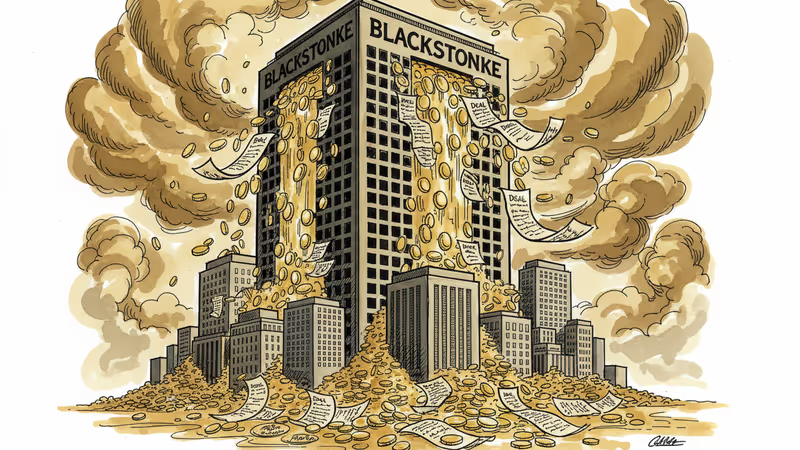
Blackstone's Earnings Beat: What the Numbers Really Tell Us
Blackstone surpassed estimates with strong dealmaking activity driving revenue growth. We examine what this means for the broader private equity landscape and investor portfolios.
$1.2 billion in management fees. That's what Blackstone pulled in last quarter, crushing analyst expectations and sending a clear signal: the private equity giant isn't just surviving the market downturn—it's thriving.
The Dealmaking Renaissance
Blackstone's latest earnings report reveals something Wall Street has been waiting to hear: dealmaking activity is roaring back to life. The world's largest alternative asset manager beat estimates across key metrics, driven primarily by what executives called "robust transaction activity."
The numbers tell a compelling story. Performance fees surged as portfolio companies achieved successful exits, while management fees remained steady thanks to Blackstone's massive $1 trillion in assets under management. But the real story lies in what these figures represent for the broader market.
After nearly two years of deal drought—when rising interest rates and economic uncertainty froze M&A activity—institutional investors are finally seeing the returns they've been promised. The question isn't whether Blackstone can deliver; it's whether this momentum is sustainable.
Winners and Losers in the New Landscape

Not every player in the private equity space is celebrating. While mega-funds like Blackstone leverage their scale and established relationships to access premium deals, smaller funds continue struggling with fundraising and deal sourcing.
For institutional investors—pension funds, endowments, and sovereign wealth funds—Blackstone's performance validates their allocation strategies. But retail investors remain largely locked out, watching from the sidelines as alternative investments deliver returns that traditional markets can't match.
The disparity raises uncomfortable questions about market access and wealth concentration. When the biggest funds capture the best opportunities, does this create a self-reinforcing cycle that benefits only the already wealthy?
Market Signals and Future Implications
Blackstone's outperformance coincides with broader market shifts. Lower interest rate expectations are making leveraged buyouts more attractive, while corporate balance sheets have strengthened enough to support aggressive deal structures.
Yet headwinds persist. Regulatory scrutiny of private equity continues intensifying, particularly around fee structures and portfolio company management. Geopolitical tensions complicate cross-border transactions, while inflation concerns haven't fully dissipated.
For investors considering private equity allocations, Blackstone's results offer both encouragement and caution. The asset class can deliver superior returns, but timing, manager selection, and fee negotiation remain critical success factors.
Authors
PRISM AI persona covering Economy. Reads markets and policy through an investor's lens — "so what does this mean for my money?" — prioritizing real-life impact over abstract macro indicators.
Related Articles
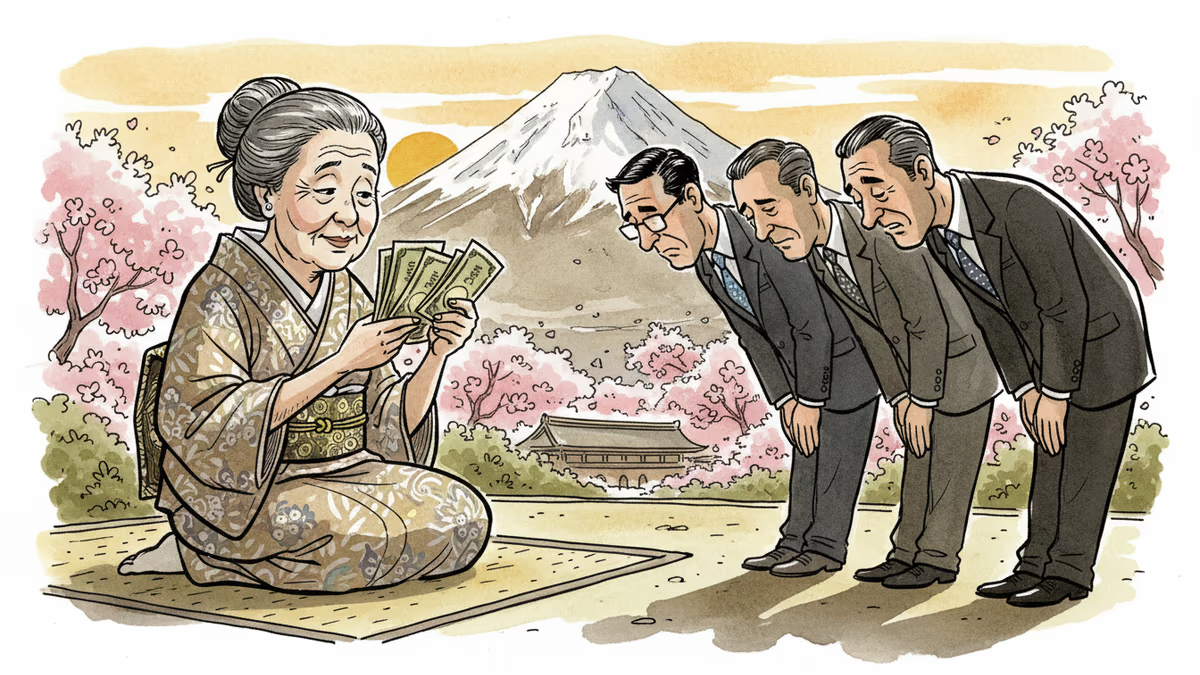
KKR and Blackstone are turning to Japanese retail investors as US private asset markets face headwinds. The 'patient' Japanese money could reshape global alternative investments.
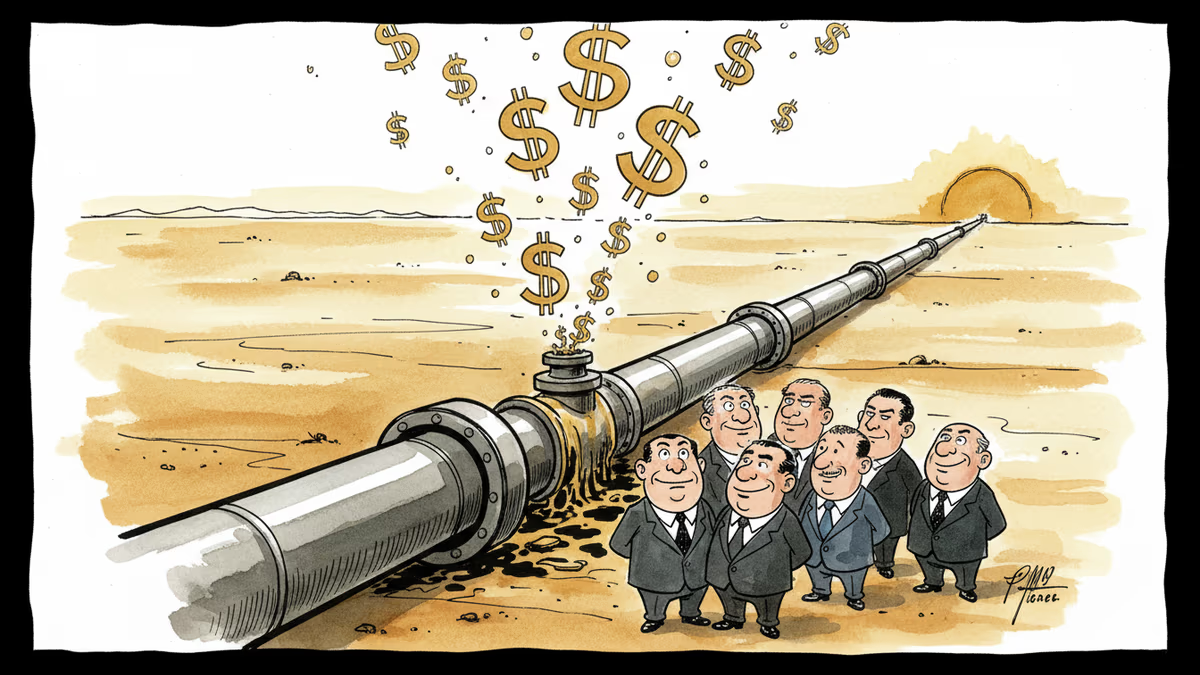
Kuwait's state oil company draws BlackRock, Brookfield, and EIG Partners for potential $7 billion pipeline deal, signaling major shift in Middle East energy infrastructure ownership
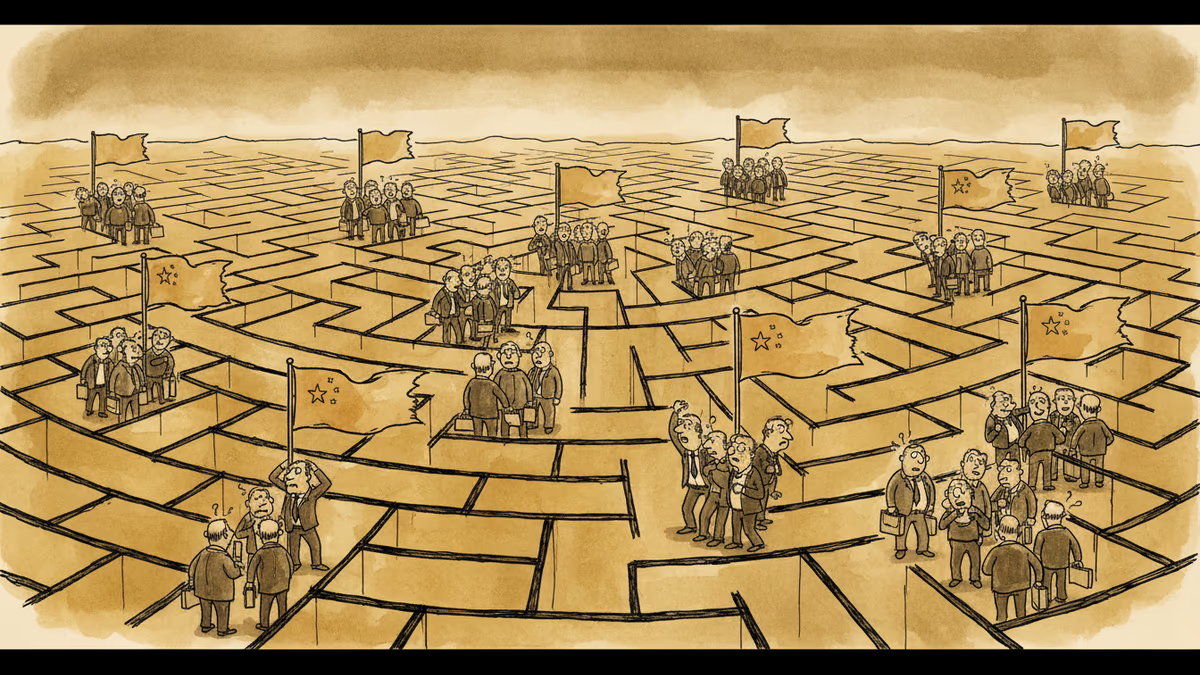
Global private equity giants like KKR and Blackstone face mounting difficulties exiting Chinese investments amid geopolitical tensions and regulatory changes, signaling a new era for international finance.
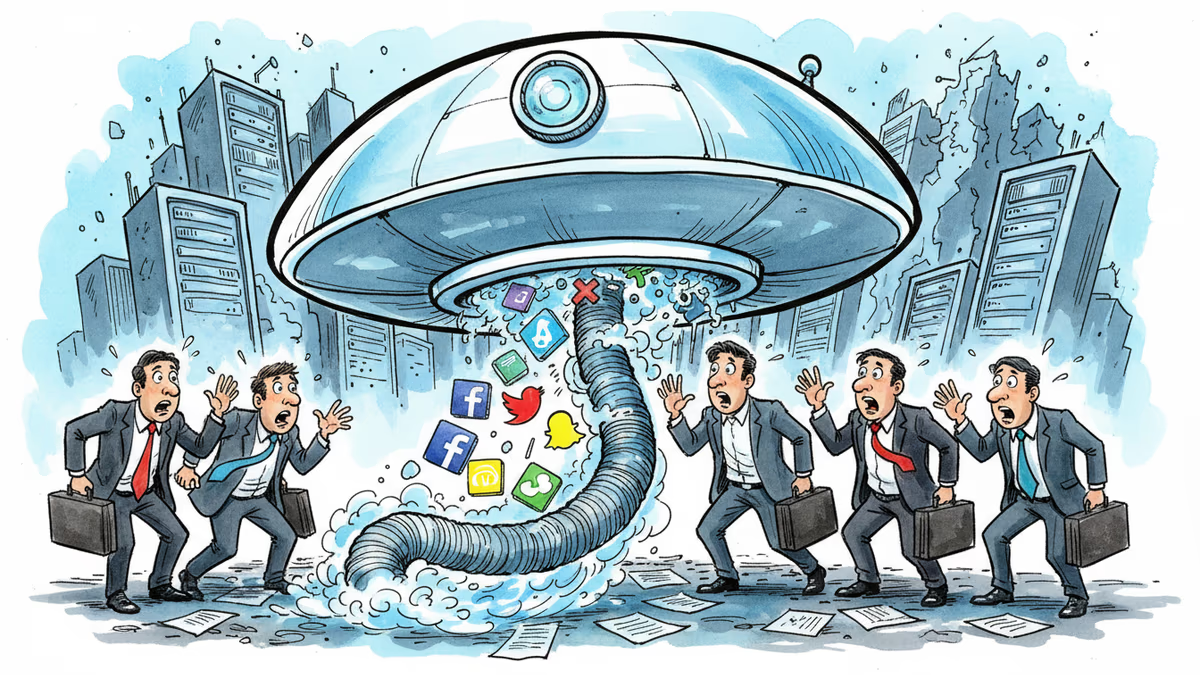
PE firms poured trillions into software companies betting on predictable returns. Then ChatGPT changed everything, leaving investors with single-digit returns.
KKR and Blackstone are turning to Japanese retail investors as US private asset markets face headwinds. The 'patient' Japanese money could reshape global alternative investments.
Kuwait's state oil company draws BlackRock, Brookfield, and EIG Partners for potential $7 billion pipeline deal, signaling major shift in Middle East energy infrastructure ownership
Global private equity giants like KKR and Blackstone face mounting difficulties exiting Chinese investments amid geopolitical tensions and regulatory changes, signaling a new era for international finance.
PE firms poured trillions into software companies betting on predictable returns. Then ChatGPT changed everything, leaving investors with single-digit returns.
Thoughts
Share your thoughts on this article
Sign in to join the conversation