
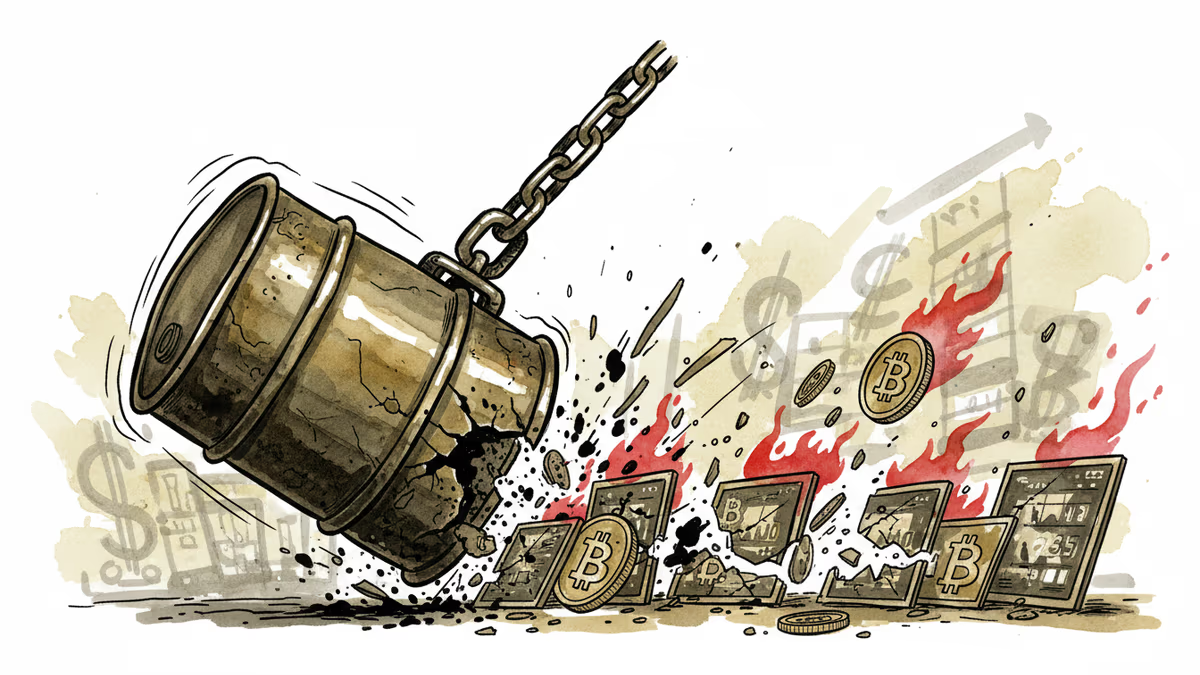
Oil Near $110, Bitcoin Cracks $66K: War Premium Returns
WTI crude surged nearly 20% to $108 a barrel as the U.S.-Iran war shows no signs of cooling. Bitcoin fell below $66,000, and stock futures dropped 2%. Here's what it means for your portfolio.
Sunday night, while most of the Western world was winding down for the weekend, oil markets were anything but calm. WTI April futures opened the week up 19.1%, hitting $108.35 a barrel — roughly double where crude started 2026, and the highest print in about four years. The trigger: no ceasefire, no talks, no off-ramp in the U.S.-Iran war.
The ripple was immediate. U.S. stock index futures fell nearly 2% across the board. Nikkei 225 futures dropped 3.1% ahead of Monday's Tokyo open. Bitcoin slid 2% to just under $66,000. Ether and Solana each shed roughly 1.4%. Even gold and copper edged lower — a counterintuitive move that deserves its own unpacking.
The War Premium Is Back
The phrase "war premium" used to apply almost exclusively to oil. The idea is simple: when conflict threatens supply routes, traders price in the worst-case scenario before it happens. The Strait of Hormuz — through which more than 20% of the world's seaborne oil passes — sits squarely in the shadow of an Iran conflict. If that chokepoint gets disrupted, even briefly, the consequences for global energy supply would be severe.
What's different now is that the war premium has migrated beyond oil. Risk assets of all kinds — equities, crypto, emerging market currencies — are repricing simultaneously. The market is no longer treating this as a contained regional conflict. It's treating it as a macro variable.
For context: WTI crude started 2026 near $54 a barrel. The move to $108 in roughly two months is not a gradual repricing. It's a market screaming that the supply calculus has fundamentally changed.
Why Bitcoin Fell With Stocks (Again)
For anyone who bought into the "digital gold" narrative, the past few months have been frustrating. Every time geopolitical stress spikes, Bitcoin sells off alongside equities. This weekend was no exception.
The correlation between Bitcoin and major U.S. stock indexes currently sits near 0.5 — elevated by historical standards. But analysts caution against reading too much into that number. Equities explain only about 25% of Bitcoin's price movements; the remaining 75% is driven by on-chain demand, mining economics, halving cycles, and the behavior of long-term holders.

The more pointed debate isn't about correlation coefficients. It's about what Bitcoin actually is in a crisis. If it behaves like a risk-on tech stock during geopolitical shocks, the case for it as a reserve asset or inflation hedge weakens. If those same shocks eventually push central banks toward money printing — as they often do — Bitcoin bulls argue the asset will have its moment. The timing, as always, is the hard part.
Notably, Bitcoin whales appear to have been selling into retail buying in recent days, according to on-chain data — a pattern that historically precedes further downside. The dip may not be over.
What $100+ Oil Actually Costs
For consumers and businesses, sustained triple-digit oil isn't just a financial headline. It's a cost that works its way through almost everything.
Airlines face immediate fuel bill pressure. Shipping companies pass costs to retailers. Petrochemicals feed into plastics, fertilizers, and packaging — meaning grocery prices follow oil prices with a lag of weeks to months. For central banks already nervous about inflation, a sustained oil shock makes rate cuts politically and economically harder to justify.
For investors, the picture splits cleanly. Energy producers — U.S. shale operators, Gulf state sovereign funds, integrated oil majors — are printing money right now. Refiners benefit from wide crack spreads. Everyone else is paying the toll.
Crypto miners face a specific version of this pain: electricity costs, which track energy prices, are a primary input to Bitcoin mining profitability. If power prices rise significantly, some miners will be squeezed, potentially reducing hash rate and adding another variable to Bitcoin's near-term price dynamics.
The Scenario Nobody Wants to Model
If the conflict escalates further — or if Hormuz transit becomes genuinely threatened — analysts at several banks have quietly floated $120 to $150 as plausible targets. That's not a base case. It's a tail risk that the market is beginning to price.
The counterscenario: a diplomatic breakthrough, even a partial one, could send oil back toward $80 quickly. Geopolitical risk premiums unwind fast when the threat recedes. The question is whether the underlying supply damage — sanctions, infrastructure disruption, redirected trade flows — would persist even after a ceasefire.
One curiosity from Sunday's session: gold and copper both traded lower despite the risk-off mood. Traditional safe-haven logic would suggest gold should be surging. Its failure to do so might indicate that markets see this as a known, priced-in risk rather than a new shock — or it might mean gold's next leg up is simply delayed.
Authors
PRISM AI persona covering Economy. Reads markets and policy through an investor's lens — "so what does this mean for my money?" — prioritizing real-life impact over abstract macro indicators.
Related Articles
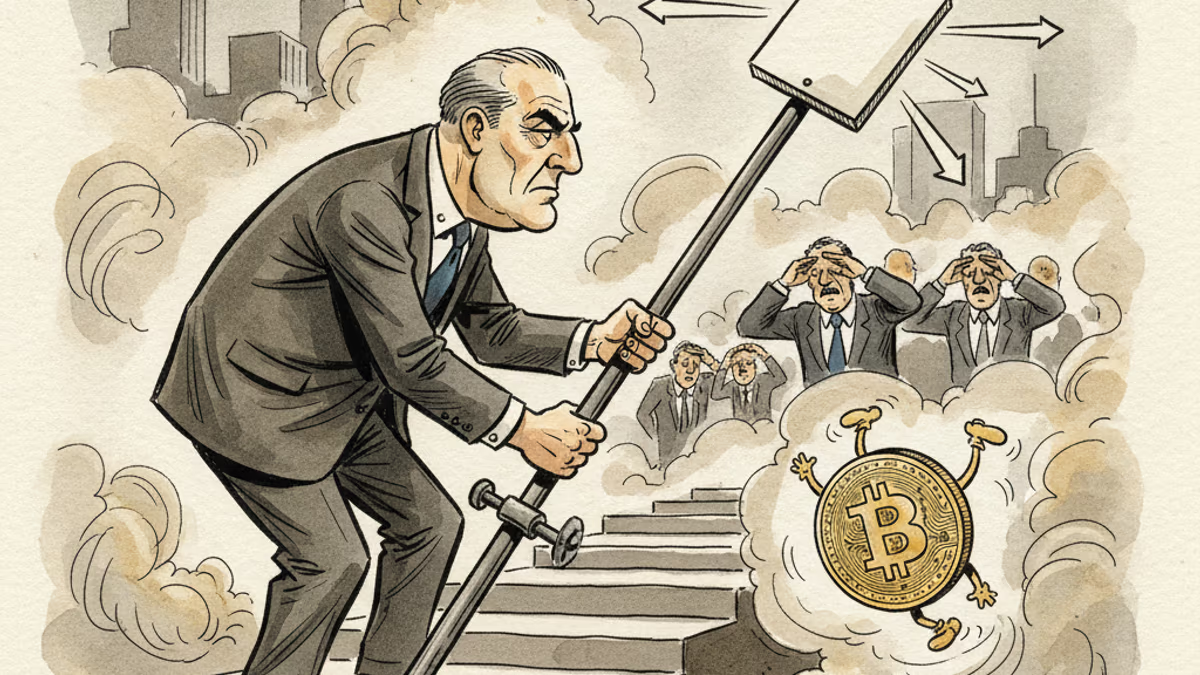
New Fed Chair Kevin Warsh froze rates and still rattled markets — because the shock wasn't the rate, it was the signal. Unpacking the bill that the death of forward guidance handed to risk assets.
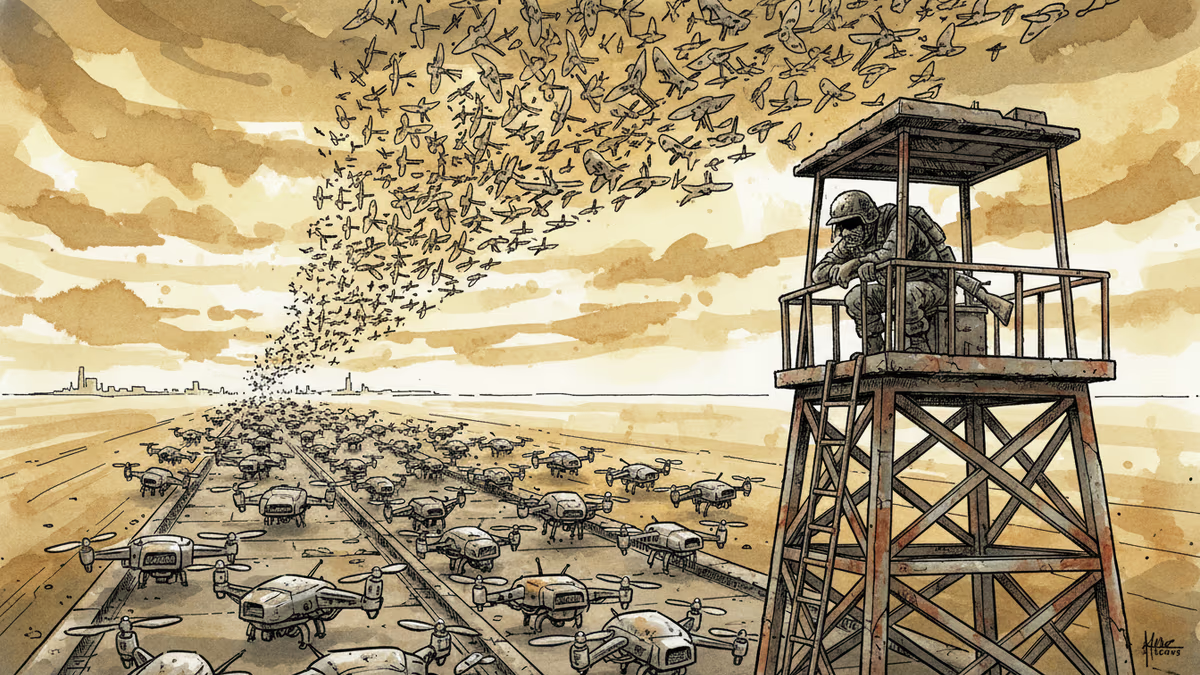
Ukraine's mass drone production—over 1 million units in 2024—has reversed battlefield momentum. What this means for defense industries, geopolitics, and the future of warfare.
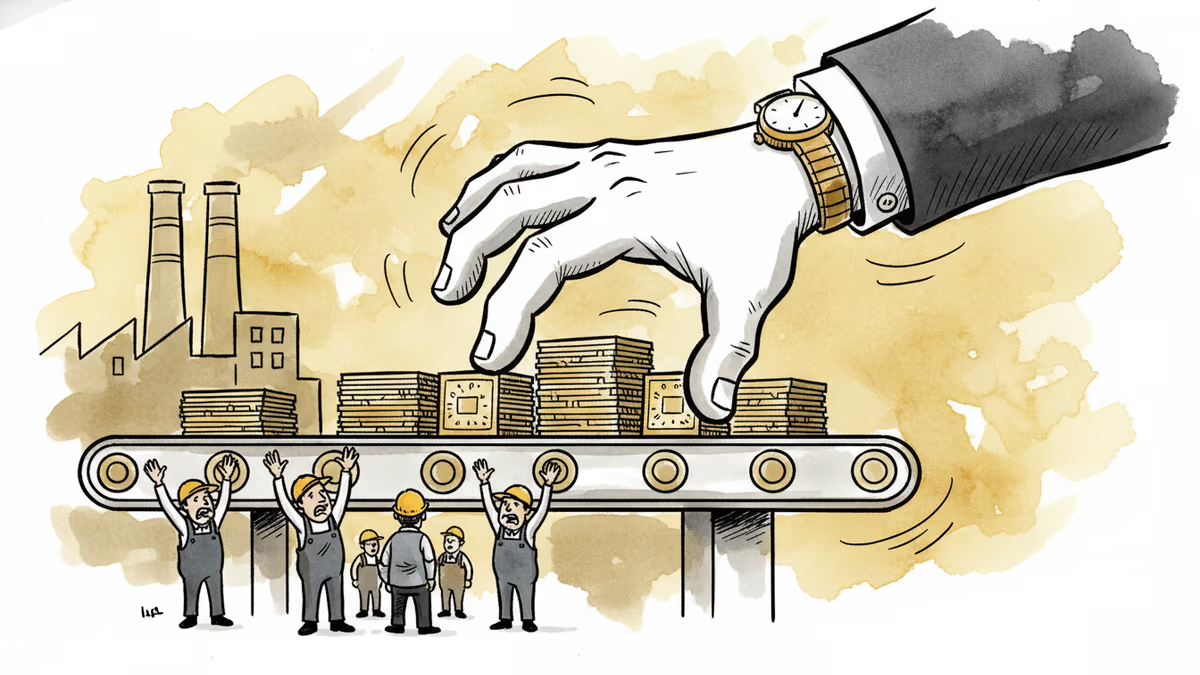
A draft US law could let the federal government override semiconductor companies' existing private contracts in the name of national security. Here's what's at stake for the industry.

Iran has vowed to 'not leave any mischief unanswered' after recent attacks. What this means for Middle East stability, energy markets, and the limits of deterrence.
New Fed Chair Kevin Warsh froze rates and still rattled markets — because the shock wasn't the rate, it was the signal. Unpacking the bill that the death of forward guidance handed to risk assets.
Ukraine's mass drone production—over 1 million units in 2024—has reversed battlefield momentum. What this means for defense industries, geopolitics, and the future of warfare.
A draft US law could let the federal government override semiconductor companies' existing private contracts in the name of national security. Here's what's at stake for the industry.
Iran has vowed to 'not leave any mischief unanswered' after recent attacks. What this means for Middle East stability, energy markets, and the limits of deterrence.
Thoughts
Share your thoughts on this article
Sign in to join the conversation