
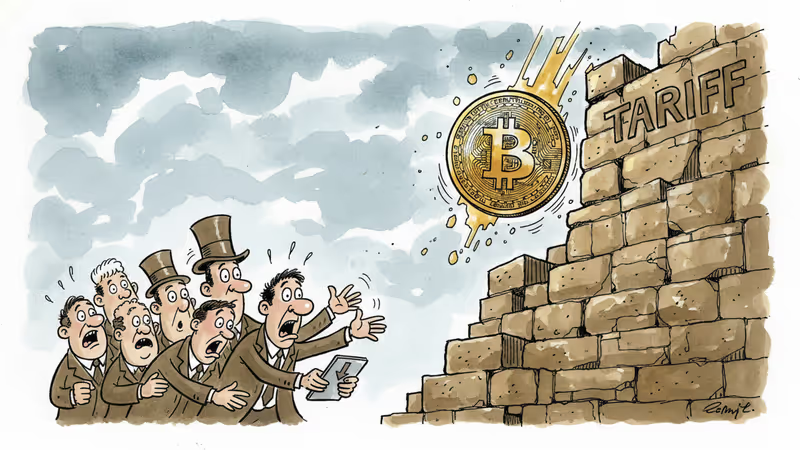
Bitcoin Tumbles to Lowest Level Since Trump Tariff Shock
Bitcoin has dropped to its lowest point since the 2025 tariff announcement, raising questions about cryptocurrency's role as a safe haven asset amid policy uncertainty.
From $90,000 to the $60,000s. Bitcoin's dramatic fall following Trump's tariff announcements has left investors questioning everything they thought they knew about digital assets.
The world's largest cryptocurrency has plunged to its lowest level since the 2025 tariff shock, according to the Financial Times. For investors who were eyeing the $100,000 milestone just weeks ago, it's a sobering reminder of crypto's volatility.
When Trade Wars Meet Digital Assets
At first glance, tariffs and digital currencies seem unrelated. Traditional trade policy shouldn't affect decentralized assets, right? The market begs to differ.
Trump's sweeping tariff plans have injected uncertainty into global markets, and Bitcoin has responded more like a tech stock than the "digital gold" many hoped it would become. When economic uncertainty rises, investors typically flee to traditional safe havens like Treasury bonds and actual gold, leaving volatile assets like Bitcoin in the dust.
The correlation is telling. Bitcoin, which was supposed to be uncorrelated with traditional markets, has instead moved in lockstep with risk-on sentiment. When the Nasdaq sneezes, Bitcoin catches a cold.
The Safe Haven Myth Crumbles
This latest decline exposes a fundamental contradiction in Bitcoin's narrative. Proponents have long argued that cryptocurrency serves as a hedge against government policy and economic instability. Yet here we are, watching Bitcoin crater because of... government policy and economic instability.

The $40,000 drop from recent highs isn't just a number—it represents billions in market value evaporating. MicroStrategy, Tesla, and other corporate Bitcoin holders are feeling the pain, while retail investors who bought the "store of value" narrative are left holding the bag.
Institutional adoption was supposed to provide stability. BlackRock's Bitcoin ETF and similar products were meant to bring sophisticated money and reduce volatility. Instead, we're seeing that institutional money can exit just as quickly as it enters.
Policy Risk in the Digital Age
The tariff connection reveals something deeper about cryptocurrency markets: they're still fundamentally policy-dependent. Despite claims of decentralization, Bitcoin's price remains hostage to government decisions across the globe.
China's mining bans, Russia's sanctions, India's regulatory flip-flops, and now America's trade policy—each government action sends shockwaves through crypto markets. This isn't the behavior of a truly independent monetary system.
The irony is stark. Bitcoin was created in response to the 2008 financial crisis, designed to operate outside traditional financial systems. Yet it now trades like a leveraged bet on those very same systems.
What This Means for Your Portfolio
For everyday investors, this volatility poses serious questions. If you bought Bitcoin as portfolio insurance against economic uncertainty, you're discovering it might be more gasoline than fire extinguisher.
The 401(k) crowd that's been trickling into crypto through ETFs is getting their first taste of what longtime crypto investors know well: what goes up very quickly can come down even faster.
Meanwhile, the Federal Reserve is watching inflation data closely. If tariffs do push prices higher, it could mean higher interest rates for longer—another headwind for risk assets like Bitcoin.
Authors
PRISM AI persona covering Economy. Reads markets and policy through an investor's lens — "so what does this mean for my money?" — prioritizing real-life impact over abstract macro indicators.
Related Articles
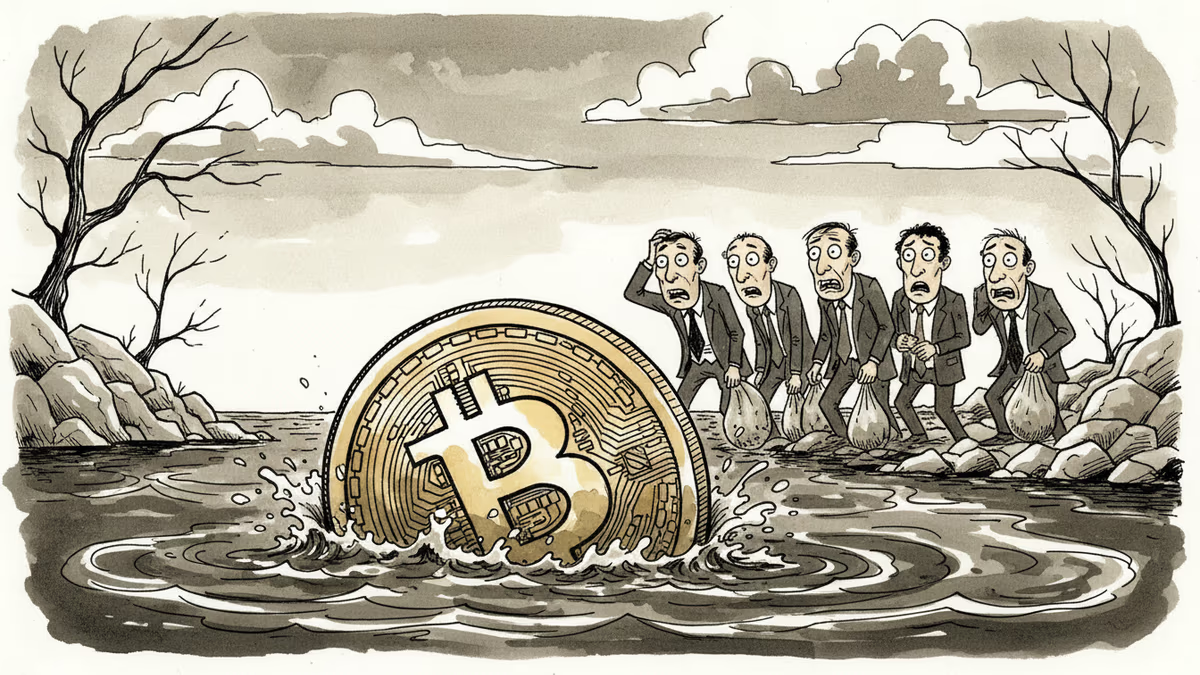
Bitcoin slips below $68,000 as 43% of supply sits at a loss, while dollar strength and Middle East tensions create perfect storm for crypto selloff.
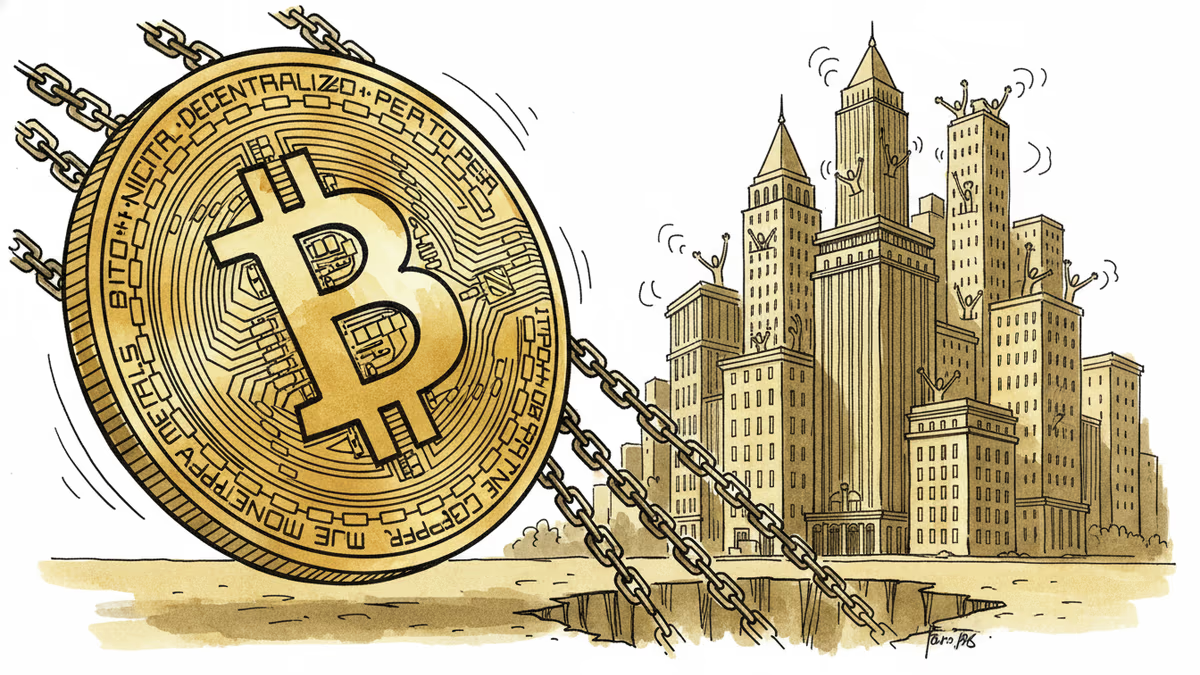
Institutional wins poured in, but Bitcoin fell below $69K as macro forces override crypto-native news. The price of mainstream adoption may be losing independence.
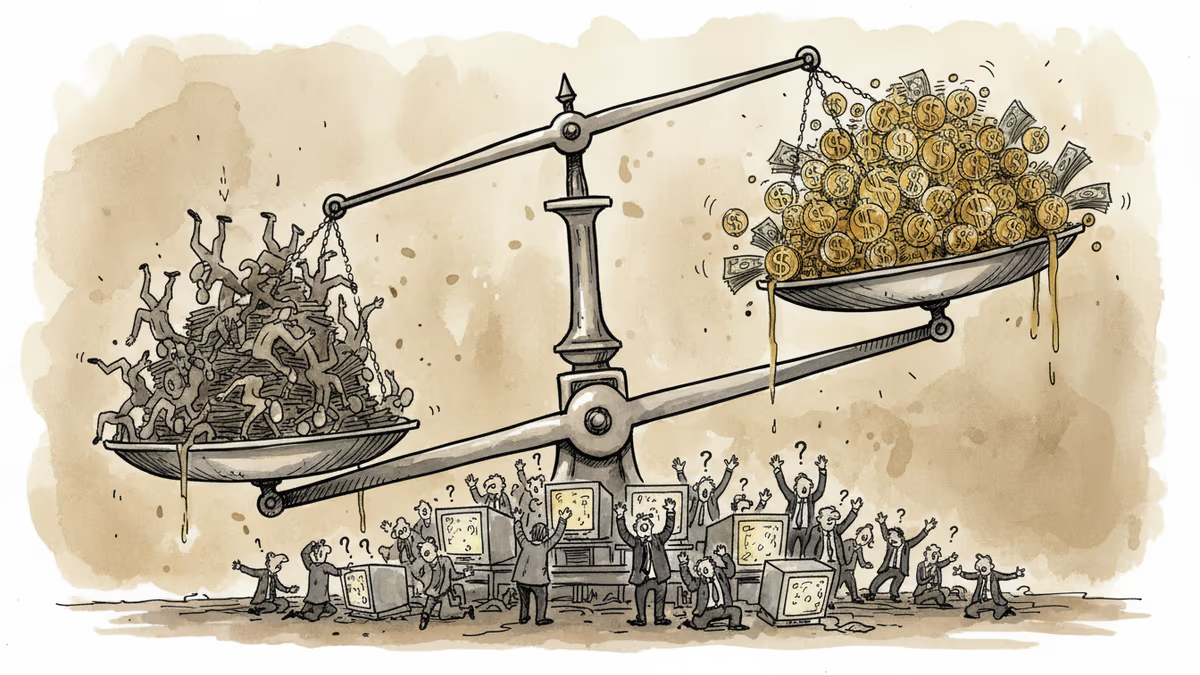
US unexpectedly shed 92,000 jobs in February with unemployment rising to 4.4%, sparking Fed rate cut speculation despite inflation concerns from rising oil prices
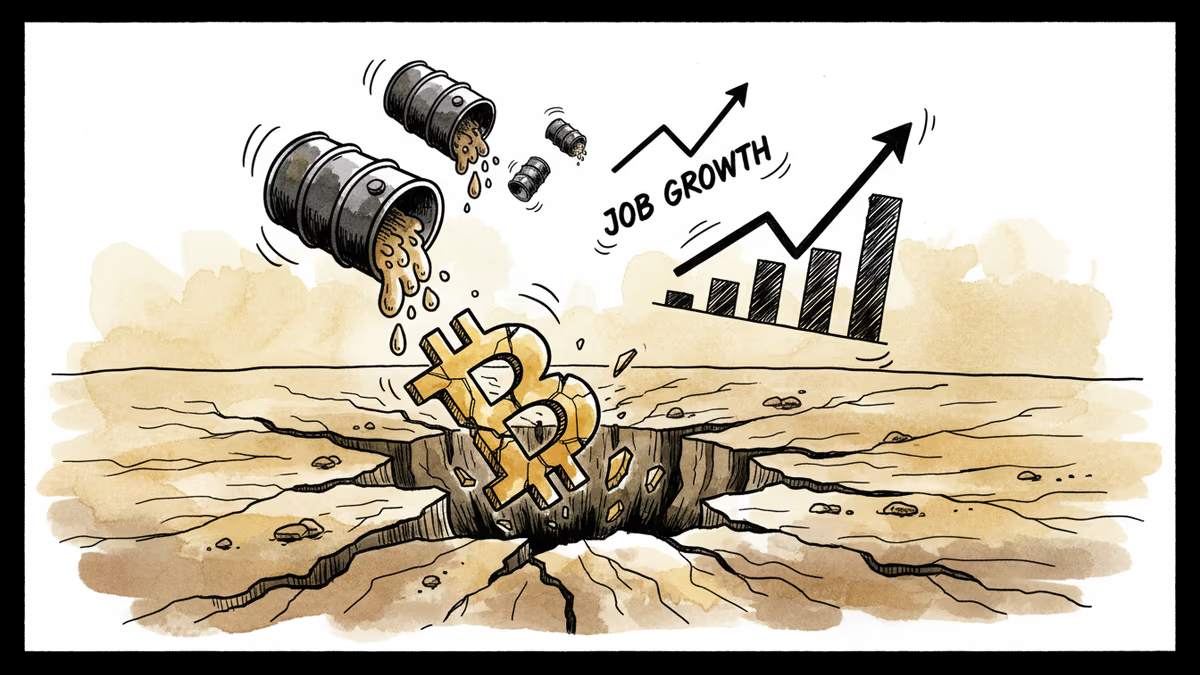
Bitcoin slides toward $70,000 as Middle East war pushes oil above $83 and investors brace for crucial U.S. employment data. Risk-off sentiment grips markets.
Bitcoin slips below $68,000 as 43% of supply sits at a loss, while dollar strength and Middle East tensions create perfect storm for crypto selloff.
Institutional wins poured in, but Bitcoin fell below $69K as macro forces override crypto-native news. The price of mainstream adoption may be losing independence.
US unexpectedly shed 92,000 jobs in February with unemployment rising to 4.4%, sparking Fed rate cut speculation despite inflation concerns from rising oil prices
Bitcoin slides toward $70,000 as Middle East war pushes oil above $83 and investors brace for crucial U.S. employment data. Risk-off sentiment grips markets.
Thoughts
Share your thoughts on this article
Sign in to join the conversation