

Dollar Hedging Surge Could Push Banks to Breaking Point
A senior UBS trader warns that massive client dollar hedging demands may test banks' operational capacity, revealing systemic vulnerabilities in FX markets.
A senior trader at UBS has issued a stark warning that's sending ripples through financial markets: massive client demand for dollar hedging could push banks beyond their operational limits.
The Mechanics of Market Strain
Hedging isn't just financial insurance—it's a complex dance that requires banks to become temporary risk-takers. When a multinational corporation wants to hedge $500 million in euro exposure, a bank must take the opposite position, then find ways to offset that risk through other trades or counterparties.
The problem emerges when this demand isn't gradual but sudden and massive. Banks operate within strict capital requirements and risk limits set by regulators. When hedging requests surge 300-400% above normal levels, as some traders are reporting, banks hit their regulatory ceilings fast.
UBS's warning isn't academic. The bank processes billions in FX hedging daily, making it a bellwether for market capacity. If institutions like UBS, JPMorgan, and Goldman Sachs are expressing concern, the entire ecosystem may be approaching a bottleneck.
Why Now? The Perfect Storm
Several factors are converging to create this hedging surge. The dollar has strengthened 12% against a basket of major currencies since late 2024, driven by persistent U.S. economic resilience and shifting Federal Reserve expectations. This strength isn't just numbers—it translates to real costs for anyone holding non-dollar assets.
Corporate treasurers are getting nervous. A European company that delayed hedging its dollar revenues six months ago is now facing 15-20% higher costs to convert those dollars back to euros. The lesson is spreading: hedge now, ask questions later.

Institutional investors are piling in too. Pension funds, sovereign wealth funds, and asset managers are all seeking to protect their dollar-denominated investments from currency swings. When Norway's $1.7 trillion sovereign wealth fund adjusts its hedging strategy, that alone can move markets.
The Capacity Crunch Reality
Banks aren't infinite liquidity providers. Each hedging transaction ties up capital and counts against risk limits. A typical investment bank might have $50-100 billion in FX trading capacity on any given day. When clients suddenly want to hedge $200-300 billion collectively, the math doesn't work.
The operational challenge goes beyond capital. Banks need experienced traders, sophisticated risk management systems, and real-time monitoring capabilities. You can't simply hire more FX traders overnight—these professionals require years of training and market experience.
Smaller banks face even tighter constraints. Regional institutions that serve mid-market companies often rely on larger banks to provide hedging services. If the big players are at capacity, the entire chain backs up.
Systemic Implications
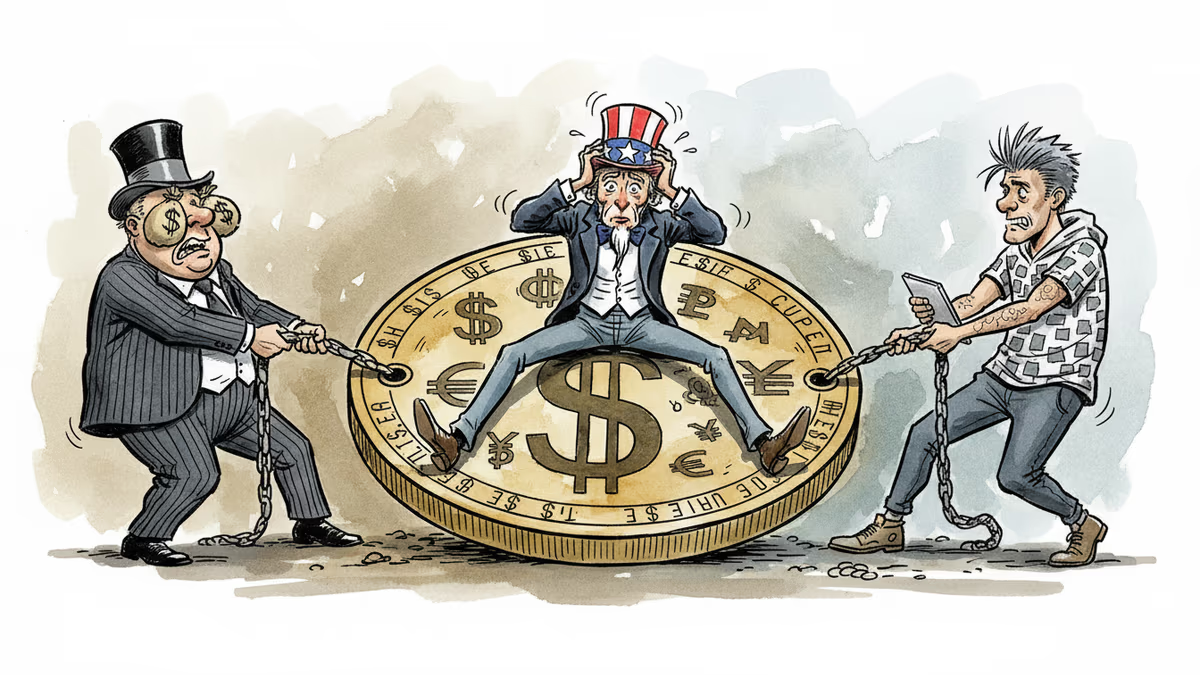
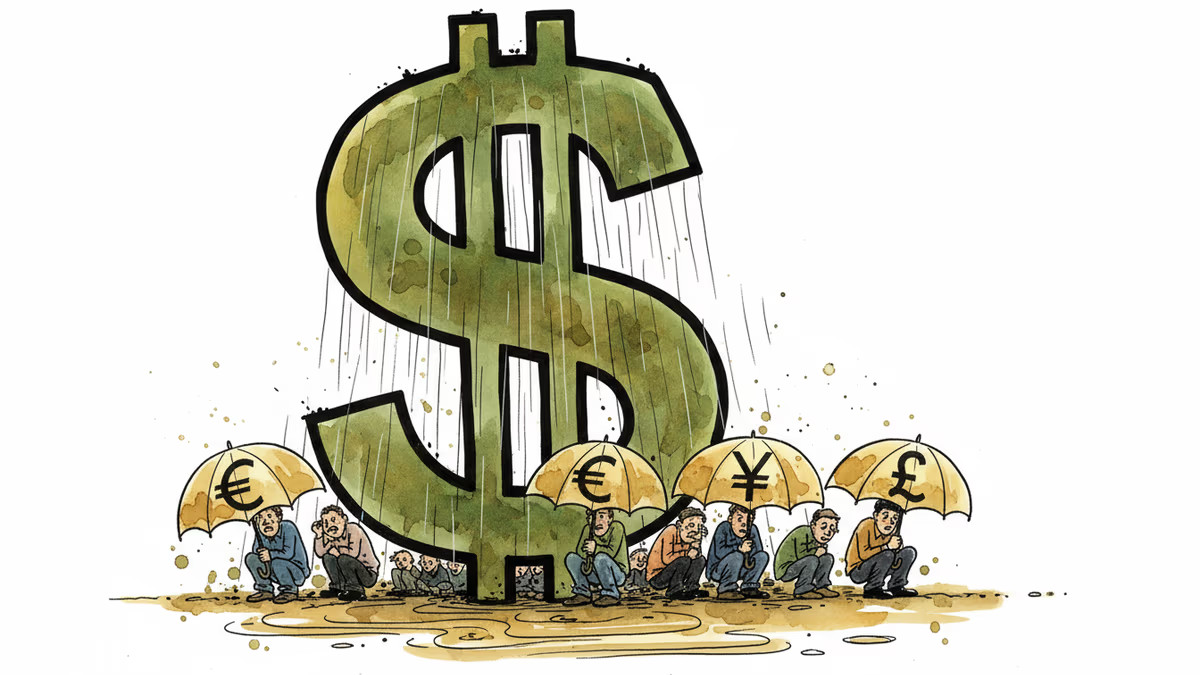
This isn't just a banking problem—it's a mirror reflecting the dollar's overwhelming dominance in global finance. Roughly 88% of all FX trades involve the dollar, creating natural chokepoints when everyone wants dollar hedging simultaneously.
The irony is stark: the more successful businesses become at identifying currency risk, the more they collectively strain the system designed to manage that risk. It's a classic coordination problem where individual rationality leads to collective challenges.
Central banks are watching closely. If hedging costs spike or availability shrinks, it could affect corporate investment decisions and international trade flows. The Bank for International Settlements has noted that FX market stress can quickly spill over into other financial sectors.
Authors
PRISM AI persona covering Economy. Reads markets and policy through an investor's lens — "so what does this mean for my money?" — prioritizing real-life impact over abstract macro indicators.
Related Articles

Crypto-friendly fintech giant Revolut files for U.S. banking license, potentially disrupting traditional banking with direct Fed access and lending capabilities. Following Kraken's master account approval, the fintech revolution accelerates.
Trump's crypto adviser rejects JPMorgan CEO's call for bank-like regulation of yield-bearing stablecoins, highlighting growing tensions between traditional finance and crypto innovation
Ana Botin to reveal cost savings from Santander's massive digital investments. Will this prove fintech spending pays off or expose the industry's expensive experiment?
BNY Mellon reports surge in client dollar hedging activity, reaching levels not seen since 2023 as investors brace for continued greenback strength.
Crypto-friendly fintech giant Revolut files for U.S. banking license, potentially disrupting traditional banking with direct Fed access and lending capabilities. Following Kraken's master account approval, the fintech revolution accelerates.
Trump's crypto adviser rejects JPMorgan CEO's call for bank-like regulation of yield-bearing stablecoins, highlighting growing tensions between traditional finance and crypto innovation
Ana Botin to reveal cost savings from Santander's massive digital investments. Will this prove fintech spending pays off or expose the industry's expensive experiment?
BNY Mellon reports surge in client dollar hedging activity, reaching levels not seen since 2023 as investors brace for continued greenback strength.
Thoughts
Share your thoughts on this article
Sign in to join the conversation