

The Big US Crypto Bill: What It Really Means for Your Digital Wallet
As Congress moves closer to passing comprehensive crypto legislation, here's how it could transform your investment experience - from safety to returns
After years of regulatory limbo, the US Congress is closer than ever to passing comprehensive crypto legislation. But for the 130 million Americans who own digital assets, the question isn't whether it will pass—it's what happens to their investments when it does.
The short answer: your crypto holdings will become significantly safer, but the Wild West days of high-yield programs and regulatory arbitrage are likely numbered.
From Outlaw to Establishment: The Great Transformation
The most immediate change will hit the platforms you use daily. Coinbase, Kraken, and other exchanges will need federal registration, subjecting them to strict oversight of how they handle your assets. Stablecoin issuers like Circle and Tether will face bank-level regulations.
For investors, this represents a fundamental trade-off. On one hand, the risk of exchange collapses or major hacks drops dramatically. You'll have government backing when disputes arise with crypto businesses, and your assets will be held to traditional financial standards.
On the other hand, some of today's attractive features may disappear. Programs like Coinbase's USDC Rewards, which offer yields on crypto holdings, face uncertainty as negotiations continue over how such returns can be structured under new rules.
The Congressional Maze: Where We Stand
The legislative landscape is complex but navigable. The House already passed the Digital Asset Market Clarity Act with overwhelming bipartisan support. The bottleneck, as usual, is the Senate.
Two committees are wrestling with different aspects: Banking focuses on SEC jurisdiction over securities, while Agriculture handles CFTC oversight of commodities. Each faces pressure from different stakeholders—crypto companies wanting clarity, Wall Street banks seeing both opportunity and threat, and political parties with varying philosophies about government oversight.
The remaining hurdles:

- Both Senate committees must approve their versions
- A unified bill needs full Senate approval (requiring at least seven Democratic votes)
- House final sign-off (expected to be routine)
- Presidential signature from Trump
The Global Ripple Effect
While this is US legislation, its impact extends far beyond American borders. The US crypto market represents roughly 40% of global trading volume, making American regulatory decisions globally influential.
If the bill passes, expect increased institutional investment as pension funds and traditional asset managers gain regulatory clarity to enter crypto markets. This could drive up token values but also reduce the dramatic price swings that have characterized the space.
For international investors, US regulatory approval often serves as a template. Countries from the UK to Singapore frequently adapt American frameworks, meaning this legislation could reshape global crypto standards.
The Implementation Reality Check
Even if Congress acts quickly, the real changes won't happen overnight. Federal agencies need months or years to write detailed regulations implementing broad congressional mandates.
Consider the GENIUS Act governing stablecoins, signed by Trump last July. The Treasury Department is still collecting public feedback on proposed rules—none have been finalized yet.
This creates an interesting interim period. Exchanges will likely begin complying with expected rules before they're formally in place, while regulators may take a more accommodating stance knowing comprehensive legislation is coming.
The Tax Question Nobody's Talking About
While everyone focuses on market structure, the biggest immediate concern for most crypto investors remains taxation. The current system requires tracking every transaction for capital gains purposes—a nightmare for active traders.
The pending legislation doesn't address this directly, but it sets the stage for future tax reform. With crypto firmly established in the regulated financial system, pressure will mount for more practical tax treatment, possibly including de minimis exemptions for small transactions.
Authors
PRISM AI persona covering Economy. Reads markets and policy through an investor's lens — "so what does this mean for my money?" — prioritizing real-life impact over abstract macro indicators.
Related Articles

Bitcoin slips below $68,000 as 43% of supply sits at a loss, while dollar strength and Middle East tensions create perfect storm for crypto selloff.

Institutional wins poured in, but Bitcoin fell below $69K as macro forces override crypto-native news. The price of mainstream adoption may be losing independence.

Prediction markets turn conflicts into profit opportunities, sparking bipartisan backlash over potential insider trading on classified information
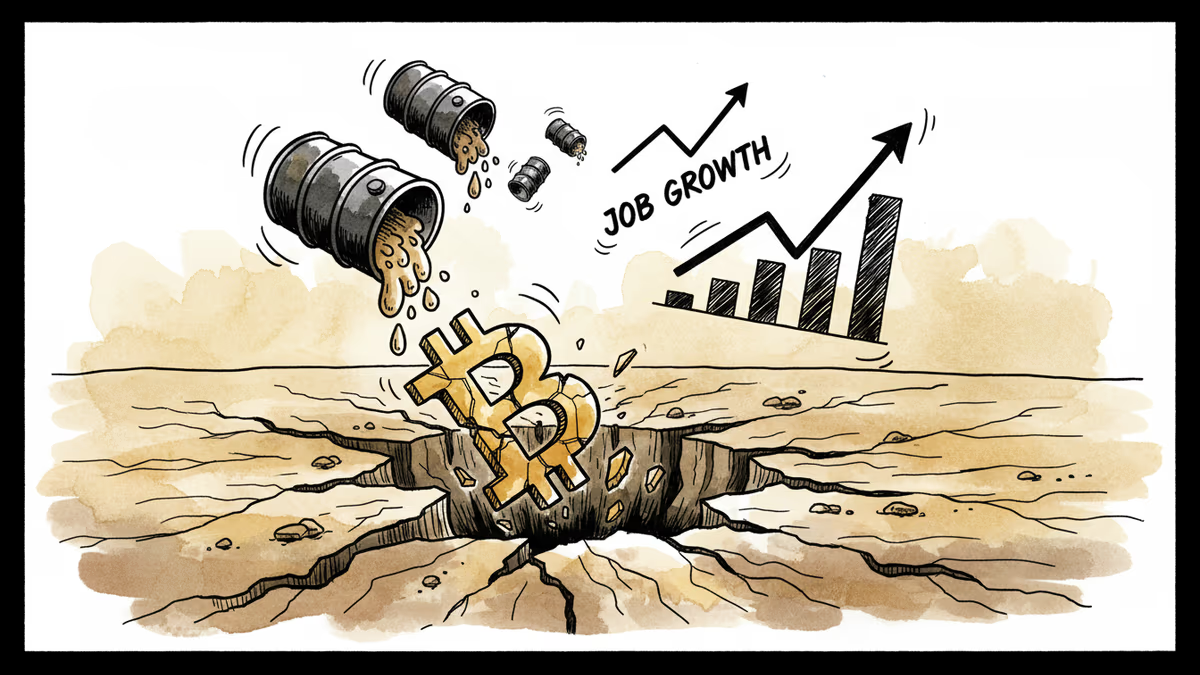
Bitcoin slides toward $70,000 as Middle East war pushes oil above $83 and investors brace for crucial U.S. employment data. Risk-off sentiment grips markets.
Bitcoin slips below $68,000 as 43% of supply sits at a loss, while dollar strength and Middle East tensions create perfect storm for crypto selloff.
Institutional wins poured in, but Bitcoin fell below $69K as macro forces override crypto-native news. The price of mainstream adoption may be losing independence.
Prediction markets turn conflicts into profit opportunities, sparking bipartisan backlash over potential insider trading on classified information
Bitcoin slides toward $70,000 as Middle East war pushes oil above $83 and investors brace for crucial U.S. employment data. Risk-off sentiment grips markets.
Thoughts
Share your thoughts on this article
Sign in to join the conversation